# Dog Dandruff and Dry Skin: What Those White Flakes Are Really Telling You
Author: PurePalsLab Research Team
Reviewed by: Veterinary advisory panel
Reading time: 9 minutes
—
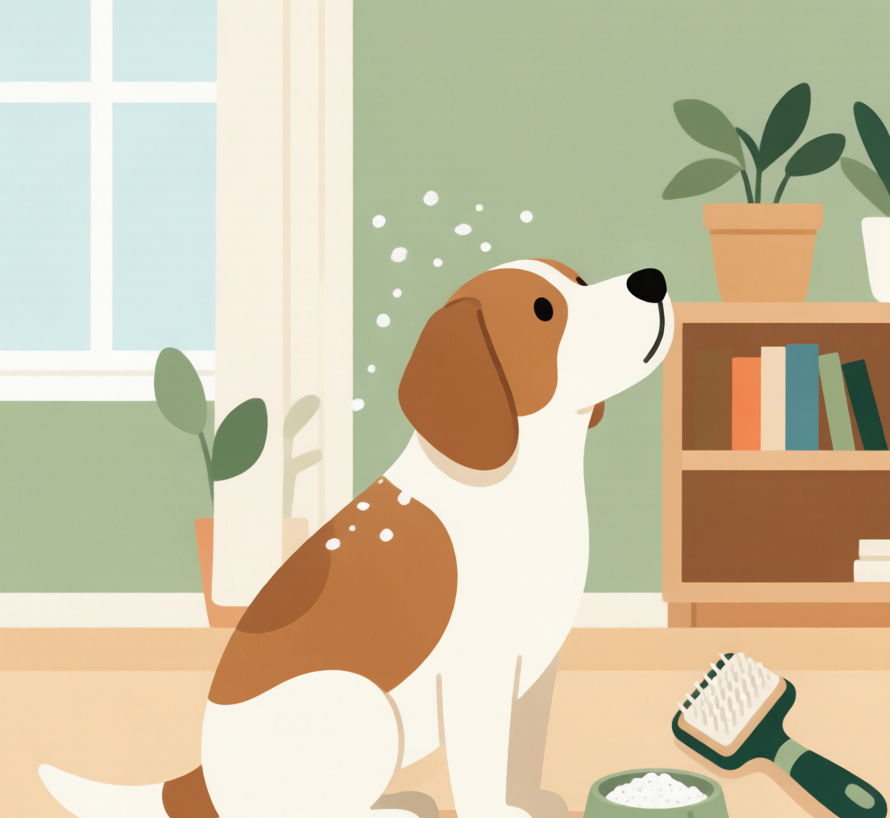
If you have brushed your dog, seen white flakes drift through the air like a tiny snowstorm, and wondered what is going on, you are not alone. Dandruff in dogs is common, but it is rarely the mystery it seems. Those flakes are dead skin cells, and when you see them in numbers, it usually means the skin is turning over too fast, drying out, or reacting to something. The trick is figuring out which.
This guide walks you through dog dandruff and dry skin from the ground up. Why the flakes show up, the difference between dry skin and dandruff, the common causes, when it is a symptom of something deeper, and what you can do at home. By the end you will know whether your dog needs a moisturizing shampoo, a change in diet, or a trip to the vet.
—
The Short Answer
Dog dandruff is visible dead skin, and it happens when the skin’s normal renewal process speeds up, dries out, or gets irritated. Common causes include dry air and bathing too often, a diet low in essential fatty acids, allergies, or an underlying skin condition. For mild dandruff, you can start at home by brushing regularly, bathing with a gentle moisturizing dog shampoo and not over-bathing, adding omega-3 fatty acids to support the skin barrier, and making sure your dog is well-hydrated. See a vet if the flaking is severe or spreading, if there are bald patches, red or inflamed skin, a bad smell, heavy scratching, greasy or crusty patches, or if the dandruff comes with weight loss, a poor appetite, or lethargy. Most simple dandruff improves with better skin care and nutrition, but severe or persistent flaking deserves a professional look.
—
The Difference Between Dry Skin and Dandruff
People use the words almost interchangeably, but they are not quite the same, and the difference matters for what you do next.
Dry skin is a condition of the skin itself. The skin loses moisture and its protective oils, so it feels tight, rough, or itchy. Dry skin may or may not produce visible flakes, but it is often the underlying reason flakes appear.
Dandruff is the visible symptom. It is the dead skin cells that flake off and sit in the coat or float away when you brush. You can think of dry skin as the cause and dandruff as the sign, though dandruff can also come from oily, irritated skin, which is a different situation.
There is also something worth knowing called “walking dandruff.” This is not actually dandruff at all, it is a mite called cheyletiella that makes tiny flakes that appear to move across the skin. If you see flakes that seem to be moving, that is a mite problem that needs a vet, not a moisturizing routine.
—
Why Dog Dandruff Happens: The Common Causes
Most dandruff falls into a few familiar buckets. Here is what your vet will be thinking about, and what you can look for yourself.
Dry air and over-bathing. This is the most common and most easily fixed cause. Dry indoor air, especially in winter, pulls moisture out of the skin. Bathing too often, or using a harsh shampoo, strips the natural oils that keep skin and coat healthy, leaving it dry and flaky. The fix is gentler care, not more washing.
A diet low in essential fatty acids. The skin barrier depends on fatty acids to stay healthy. A diet that does not provide enough of them can leave the skin dry and prone to flaking. This is a nutrition problem, and it responds well to adding good fats.
Allergies. Food allergies and environmental allergies both show up in the skin. An allergic dog often has itchy, flaky skin, sometimes along with red patches or extra scratching. If dandruff comes with itching, allergies are a likely contributor. Our skin allergies guide and skin problems overview go deeper into this.
Underlying skin conditions. Dandruff can be a sign of a skin condition, from seborrhea to a fungal or bacterial infection. Seborrhea, for example, can cause greasy, flaky skin, which is a different situation from simple dry dandruff. These need a vet to diagnose.
Parasites. As mentioned, cheyletiella (“walking dandruff”) causes flaking, and other parasites can irritate the skin enough to produce flakes too. Persistent flaking with scratching should always make you consider parasites.
Poor overall health. Sometimes dandruff is a side effect of a dog not feeling well. Hormonal conditions, a poor appetite, or chronic illness can show up in the skin. If dandruff comes with weight loss, lethargy, or a poor appetite, it is a clue pointing beyond the skin.
—
What You Can Do About It at Home
For mild dandruff, a few everyday habits genuinely help, and most of them are things you already have the power to change.
Brush your dog regularly. Brushing removes loose flakes and dead skin, stimulates the skin, and spreads the coat’s natural oils. It is simple, free, and one of the most effective things you can do.
Bathe the right way, not more often. Use a gentle, moisturizing dog shampoo, and avoid over-bathing. A moisturizing or oatmeal-based shampoo can help, but too much washing backfires by stripping oils. Follow your shampoo’s guidance and let your dog’s skin respond.
Add omega-3 fatty acids to the diet. Essential fatty acids support the skin barrier from the inside out, and a dog with dry, flaky skin is often one whose diet is short on them. The EPA and DHA in our Omega 3-6-9 Complete Fatty Acid Complex are a daily, food-based way to support skin and coat health as part of a normal, healthy baseline. This pairs well with what our salmon oil article covers about the benefits of fatty acids. It is support for everyday wellness, not a treatment for a skin condition, and it works best alongside good nutrition.
Keep your dog hydrated. Fresh, clean water at all times helps keep skin moist from the inside. A dog that drinks well is a dog whose skin is in a better position to stay healthy.
Use a humidifier if the air is dry. If you live somewhere dry or your heating makes the indoor air parched, a humidifier in the room where your dog sleeps can ease dry skin over time.
—
When Dandruff Means a Vet Visit
Mild flaking that improves with better grooming and nutrition is usually nothing to worry about. But dandruff is worth a vet visit when it is severe, persistent, or comes with other signs. Call your vet if your dog has:
- Severe or spreading flaking, or large, greasy, crusty patches.
- Bald patches or thinning fur alongside the flakes.
- Red, inflamed, or irritated skin under the fur.
- Heavy scratching, biting, or licking with the flaking.
- A bad smell from the skin or coat.
- Flakes that appear to move, which suggests a mite problem.
- Dandruff with weight loss, a poor appetite, or lethargy.
Each of these points toward a specific cause, from mites to seborrhea to an infection, and a vet is the one who can identify it and treat it properly. Do not keep trying home remedies if the flaking is getting worse or spreading, that is the signal to switch from home care to professional care.
—