
# Puppy Teething and Biting: What’s Happening, and How to Get Through It
Author: PurePalsLab Research Team
Reviewed by: Veterinary advisory panel
Reading time: 10 minutes
—
There is a moment, somewhere around week fourteen, when the sweet little eight-week puppy you brought home suddenly becomes a piranha. Shoes vanish. Your hands are treated like chew toys. The couch leg develops teeth marks. If this is your first puppy, it is easy to worry that you have done something wrong, or that you have a “bad” dog. You have not. You are watching a puppy go through one of the most physically uncomfortable stretches of its entire life.
A puppy’s mouth hurts for weeks on end, and biting is the only tool they have to investigate and relieve it. The good news: this phase is normal, it is temporary, and the way you respond now shapes how your dog uses its mouth for the rest of its life.
This guide walks through what is actually happening in your puppy’s mouth, how to tell normal teething from something that needs a vet, and practical ways to protect your furniture and your fingers without damaging your bond.
—
The Short Answer
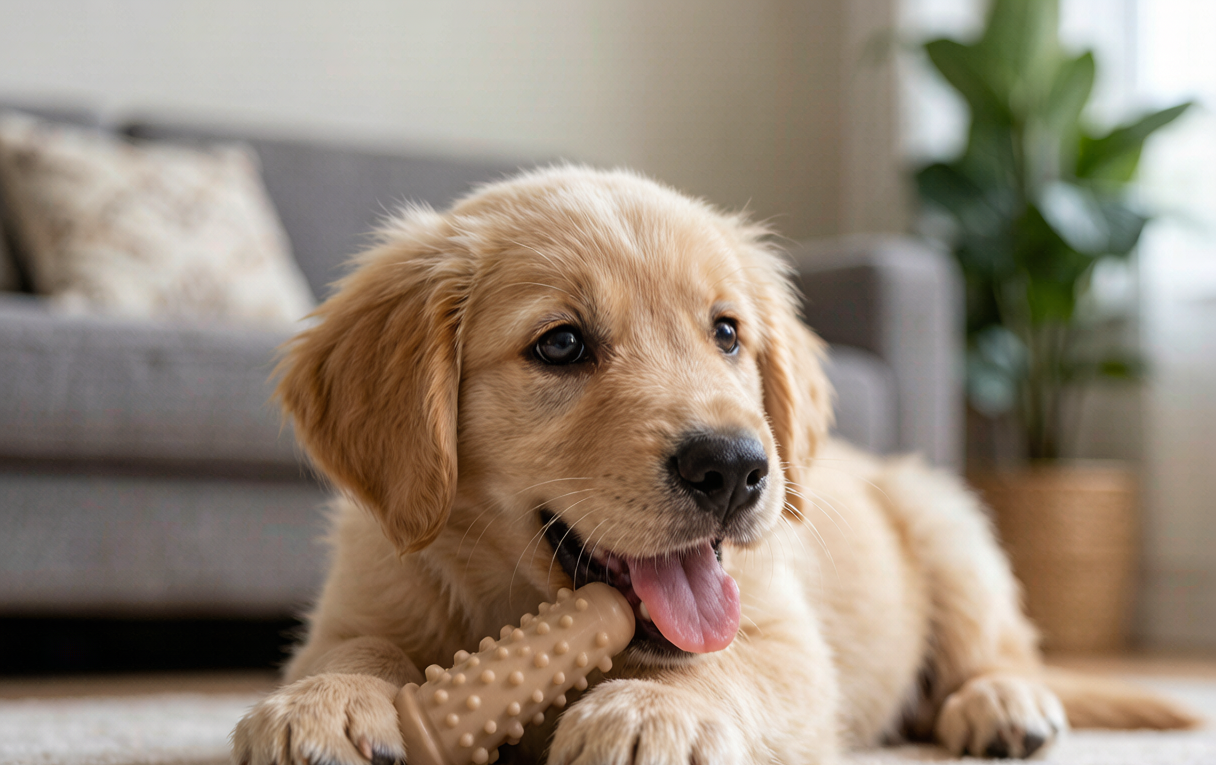
Puppy teething starts around 12 to 16 weeks of age and runs until roughly six months, when the full set of 42 adult teeth is in. During that stretch your puppy’s mouth is genuinely sore, and biting hands, shoes, and furniture is normal exploration plus self-soothing, not aggression. You can ease it with cold items like a frozen washcloth or a stuffed Kong, and teach bite inhibition by redirecting to toys and withdrawing attention the moment teeth touch skin. Watch for retained baby teeth (a double row, especially the fangs), heavy bleeding, or a puppy that refuses food, all of which need a vet. For the growth phase itself, steady daily nutrition supports the whole body as those new teeth come in.
—
The Puppy Teething Timeline
Dogs do not keep their first set of teeth. Puppies are born without visible teeth, then grow a full set of 28 deciduous (baby) teeth starting around three to four weeks of age. Those milk teeth are small, sharp, and meant to be temporary.
The real shift begins around 12 to 16 weeks of age, when the permanent teeth start pushing up from below and the roots of the baby teeth begin to dissolve. By roughly six months, most puppies have their full set of 42 adult teeth. Some small breeds finish a little later, and some large breeds a little earlier, but this window is the rule of thumb.
What this means in practice is that your puppy has a solid two to three months where new teeth are erupting almost constantly. That is a long stretch of low-grade mouth pain for a creature that also happens to be curious, mouthy, and full of energy.
A few things are worth knowing about this process:
- The baby teeth should fall out on their own. As the adult tooth comes up, it absorbs the root of the baby tooth, and the loose tooth eventually drops out. You may find tiny teeth on the floor. You may never find them, because many puppies swallow them while eating. Both are normal.
- Bleeding is usually minor. A little pink on a chew toy is common. Active, heavy bleeding is not.
- The canine teeth (the long fangs) and the premolars tend to cause the most discomfort, because they are large and slow to erupt.
How to Tell Your Puppy Is Teething
Not every puppy shows obvious signs, but most show at least a few. Here is what to watch for:
- Increased mouthing and nipping. This is the big one. The puppy that ignored your hands at eight weeks is now obsessed with them.
- Chewing everything. Furniture, shoes, remote controls, baseboards. The chewing is often frantic and indiscriminate.
- Red, swollen gums. Lift the lip and look. The gum line where a new tooth is coming in will look inflamed.
- Drooling. More saliva than usual, sometimes with a little blood-tinged foam.
- Reduced appetite or fussy eating. Hard kibble might suddenly seem less appealing because the mouth is sore. Some puppies eat slower or tilt their head.
- Pawing at the mouth or rubbing the face on the floor.
- A slight odor from the mouth, which is normal during teething but should not be foul.
None of these alone is alarming. Together, they paint the picture of a puppy whose mouth simply hurts.
Why Puppies Bite Hands (and Why It Isn't Aggression)
This is the part new owners misunderstand most. A puppy that bites your hand is not being dominant, angry, or mean. Puppies explore the world with their mouths the way human babies put everything in theirs. On top of that, their gums ache, and biting down on something creates counter-pressure that temporarily relieves the soreness, much like rubbing a bruise.
There are really three overlapping reasons a young puppy bites:
- Exploration. “What is this? Is it food? Is it fun?” The mouth is the test.
- Teething pain. The bite is self-soothing.
- Arousal and play. During rough play, puppies bite because that is how they play with littermates. They have not yet learned that human skin is not a littermate’s ear.
The goal is not to stop the puppy from ever using its mouth. The goal is to teach what is acceptable to bite and how hard is too hard. This is called bite inhibition, and the window to teach it well is short, roughly the first four months of life.
How to Soothe a Teething Puppy
You cannot give a puppy painkillers meant for people, and you should not. But there are safe, simple things that genuinely help.
Cold helps more than anything. Cold numbs the gum and reduces inflammation. Try:
- A clean washcloth, wet, twisted, and frozen. Let the puppy chew and suck on it.
- Frozen carrots (for puppies old enough to safely chew them, and only under supervision, since a chunk could be a choking risk for very small breeds).
- Rubber teething toys that can be soaked in water and frozen. The classic Kong, stuffed with a little plain yogurt or wet food and frozen, is a favorite for good reason.
- Ice cubes in a bowl of water for a quick cool-down, though some puppies get over-excited by loose ice.
Texture matters. Soft rubber gives, hard nylon does not. During peak teething, softer is better. Save the very hard bones and antlers for later, because they can crack a still-developing adult tooth.
Rotate toys. Puppies get bored fast. Keep three or four teething toys in rotation and swap them daily so they feel novel.
Supervise, always. Unsupervised puppies will eat things they should not. Teething makes the urge to chew worse, not better, so this is exactly when foreign-body ingestion happens. If you cannot watch, the puppy goes in a pen or crate with approved chew items only.
How to Stop the Biting (Without Breaking Trust)
Training a puppy not to bite hands is less about punishment and more about consistent redirection. Here is a sequence that works for most families.
1. Never use your hands as toys. This sounds obvious and it is the mistake almost everyone makes. Wiggling fingers to entice play teaches the puppy that hands are fair game. Keep play hands-free: use toys.
2. Redirect, don’t just say no. When the puppy goes for your hand, calmly offer a toy instead. The instant the mouth touches the toy, praise. You are not just stopping the biting, you are teaching the right target.
3. Use a withdrawal, not a scold. If the puppy keeps biting, stand up, fold your arms, and turn away for ten to twenty seconds. Attention, even negative attention, is a reward. Removing it teaches that biting ends the fun.
4. A short “yelp” can work. Littermates teach bite inhibition by yelping when a bite is too hard. A sudden high-pitched “ow” followed by immediate disengagement mimics that. Some puppies respond well. Some get more excited, so read your dog and drop this method if it backfires.
5. Tire the puppy out in the right way. Overtired puppies bite more, just like overtired toddlers. A short training session, a sniff walk, and a forced nap often fixes “bad” behavior that is really just exhaustion.
6. Make sure the basics are covered. Hunger, full bladder, lack of sleep, and boredom all raise the bite rate. A puppy on a good routine bites less.
One caution: do not hold the puppy’s mouth shut, never hit the muzzle, and avoid spray bottles for this. Those approaches can create fear or, worse, teach the puppy that hands near the face predict something unpleasant, which backfires badly later when you need to handle its mouth for care.
When It's More Than Just Teething
Most puppy biting is normal. A few things are not, and they warrant a call to your vet.
- Retained deciduous teeth (a “double row”). If a baby tooth does not fall out but the adult tooth has already erupted next to it, you now have two teeth in one spot. This is common with the upper canine teeth. Left alone, it crowds the adult tooth and traps food and bacteria. A vet usually removes the baby tooth under anesthesia during a spay or neuter.
- A broken or discolored tooth. Trauma or a bad chew can fracture a tooth. If the pulp is exposed, that is painful and infected, not just cosmetic.
- Heavy or continuous bleeding from the mouth.
- Swelling in the face or a visibly swollen jaw, which can indicate an abscess or embedded foreign object.
- Refusing all food for more than a day, not just eating slowly.
- A puppy that seems truly unwell (lethargic, feverish, vomiting) alongside mouth symptoms.
If your puppy is under sixteen weeks and you are unsure, a quick photo sent to your clinic’s nurse line often settles it. When in doubt, the cost of one call is nothing next to the cost of a dental infection.
It is also worth knowing the difference between normal teething and a gastrointestinal emergency. Puppies that eat non-food items during their chew phase can develop a blockage, and certain breeds are especially at risk at this age. Our guide on puppy bloat signs covers the urgent abdominal red flags every new owner should recognize.
Nutrition During the Growth Phase
A puppy’s body is building bone, muscle, nerve tissue, and a functioning immune system at a rate it will never match again. The mouth is part of that system. While no supplement replaces a balanced puppy diet or your vet’s guidance, steady daily nutrition supports the whole growth process, including the tissues around those new teeth.
A broad multivitamin formulated for dogs can help fill routine gaps during this demanding stage. Our 26-in-1 Multivitamin Soft Chews include vitamin C, the B-complex vitamins, zinc, and omega-3 fatty acids that contribute to skin, gum, and immune health, alongside prebiotic FOS for digestive balance. The soft chew format is easy for a puppy in the middle of teething to take, and the feeding guide starts at the smallest body weights, so young dogs are within range.
It is everyday wellness support, not a treatment for teething pain or a substitute for veterinary dental care. The fastest fix for a sore puppy mouth is still a frozen washcloth and a good toy.
The needs of a dog shift dramatically across a lifetime. The same puppy that is chewing your shoes today will eventually need a different wellness plan as it ages. Our senior dog supplements guide looks at what changes as dogs enter their later years, which is a useful bookend to the puppy stage you are in right now.
Frequently Asked Questions
At what age do puppies start teething?
Most puppies begin around 12 to 16 weeks of age, when the adult teeth start erupting and push out the baby teeth. The process generally wraps up near six months, when the full set of 42 adult teeth is in.
How long does the biting phase last?
For most dogs, the intense mouthing peaks between 12 and 20 weeks and settles considerably by six months as the adult teeth finish coming in. Bite-inhibition training done early makes the difference between a puppy that grows out of it and one that does not.
Is it normal for puppies to bleed while teething?
A small amount of pink on a toy is common and harmless. Bright red, active bleeding, or blood in the saliva that does not stop, is not normal and should be checked.
My puppy has two rows of teeth. Is that okay?
A temporary overlap happens, but a persistent double row, especially the upper fangs, means a baby tooth is stuck. Vets usually remove it during a routine spay or neuter to protect the adult tooth’s position. Mention it at your next visit.
What can I give a teething puppy to chew safely?
Frozen wet washcloths, frozen rubber toys like a stuffed Kong, and supervised frozen carrots are good options. Avoid very hard items such as antlers, hooves, and cooked bones during this stage, because they can crack a developing tooth.
Disclaimer
This article is for general education only and is not a substitute for veterinary advice. Teething timelines and symptoms vary by breed and individual puppy. If you are unsure whether something in your puppy’s mouth is normal, contact your veterinarian. Product references describe nutritional supplements and are not intended to diagnose, treat, cure, or prevent any disease.
References
- American Kennel Club. “Puppy Teething: When It Happens and How to Survive It.”
- VCA Animal Hospitals. “Deciduous and Permanent Teeth in Dogs.”
- American Veterinary Medical Association. “Puppy Socialization and Bite Inhibition.”
- Veterinary Partner (VIN). “Retained Deciduous Teeth in Dogs.”