
# What Home Remedy Can I Give My Dog for Diarrhea? A Straight-Talk Home Plan (and When It’s Not Enough)
Author: PurePalsLab Research Team
Reviewed by: Veterinary advisory panel
Reading time: 11 minutes
—
It is 2 a.m. Your dog woke you up with that urgent, scratchy whine at the bedroom door. You let him out, and what he left on the grass was nothing like his normal business. Loose, watery, maybe a little sloppy at the end. Now you are standing in the kitchen in your pajamas wondering the same thing every owner asks: what can I actually do about this at home, right now, without a vet visit?
I have been there more times than I can count, both with my own dogs and in the message we get from owners who write in at all hours. So let me give you the version I wish someone had handed me the first time. Not the vague “monitor and see,” but an actual order of operations: how to tell if it is safe to handle at home, what to do step by step, and the hard line where home care stops and a vet becomes necessary. If your dog is also vomiting on top of the diarrhea, stop here and read our dog vomiting home plan first, because that changes the picture.
—
The Short Answer
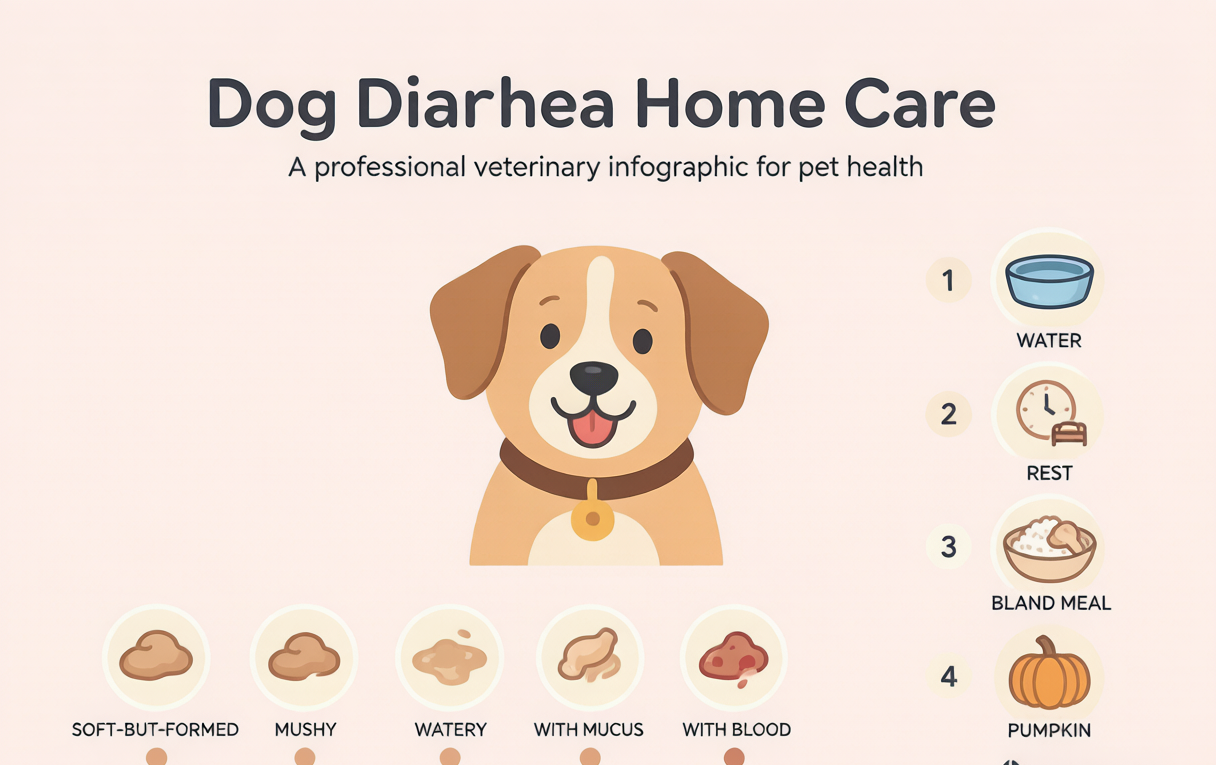
For a healthy adult dog with mild diarrhea and no other signs of illness, the standard home approach is: keep water flowing, offer a short food rest of 12 to 24 hours, then switch to a plain bland diet for a day or two, and let the gut settle. Plain canned pumpkin, boiled chicken with white rice, and a good probiotic can all help support recovery. But this only applies to a dog who is acting otherwise normal. If your dog is a puppy, senior, or already sick, if there is blood, if it has lasted more than 24 to 48 hours, or if there is any vomiting with it, that is no longer a home problem and you should call a vet.
—
First, the Quick Triage: Home Care or Vet Visit?
Before you reach for anything, do this two-minute check. It decides whether everything below applies to you or whether you should skip straight to a phone call.
Safe to try home care if all of these are true:
- Your dog is an otherwise healthy adult (not a puppy, not a senior with health conditions, not pregnant).
- Your dog is acting normal: energetic, eating, drinking, playing.
- The stool is loose but not pure liquid, and there is no bright red blood.
- Your dog is not vomiting.
- The diarrhea just started, within the last day.
Call a vet right away if any of these are true:
- Your dog is a puppy, especially under six months. Dehydration can hit them fast.
- There is blood in the stool, black tarry stool, or the diarrhea is mostly liquid.
- Your dog is vomiting too, or refusing water, or acting lethargic and weak.
- Your dog has an existing health condition, is on medication, or is pregnant.
- You suspect your dog ate something toxic, like chocolate, grapes, or anything from a label you cannot read.
When in doubt, the safe move is a phone call. A vet can tell you in two minutes whether this one needs a visit, and that call is free. Guessing wrong with a sick dog is expensive; guessing wrong with a puppy can be dangerous. This is not a place to be brave.
—
What the Poop Is Trying to Tell You
Diarrhea is not one thing, and the details matter more than you might think. Before you treat anything, look at what came out. It is not glamorous, but it is genuinely useful information.
| What you see | Likely meaning | What to do |
|---|---|---|
| Soft but formed, a little loose | Minor upset, dietary change, or mild stress | Home care is fine; monitor |
| Soft pile, no shape, mushy | Common food sensitivity or overeating | Home bland diet usually helps |
| Watery, no solid form | Irritation lower in the gut, or fast transit | Keep fluids up; watch closely |
| Mucus on the stool | Could be irritation or inflammation in the colon | Home care for a day, then vet if it persists |
| Bright red blood | Active bleeding in the lower gut | Call a vet |
| Black, tarry, sticky | Digested blood from higher up | Call a vet now, this is urgent |
| Small, frequent, straining with little result | May be constipation or a different issue entirely | Talk to a vet |
Two things to notice here. First, the color and texture genuinely narrow things down, so it is worth actually looking before you clean it up. Second, the red flags are the things you cannot fix at home. Blood, especially black sticky stool, is never a home remedy situation. That is a vet call every time.
—
The Home Protocol, Step by Step
Here is the actual sequence I use and that vets commonly recommend for mild, uncomplicated diarrhea in an otherwise healthy adult dog. Do these in order, and give each step a little time to work.
Step 1: Keep Water Flowing
This is the single most important step, and the easiest to get wrong. Diarrhea pulls water out of the body, so your dog can become dehydrated faster than you would expect, even while still drinking. Make sure fresh water is always available and encourage small, frequent sips.
To check for dehydration at home, try this: gently lift the skin between your dog’s shoulder blades and let go. In a well-hydrated dog it snaps back immediately. If it stays up for a moment or slowly settles, that is a sign of dehydration. Another check is the gums: they should be moist and pink. Dry, sticky gums are a warning. If you see either of these, or your dog will not drink, call a vet. Fluid therapy at a clinic is sometimes the safest way to rehydrate, and that is not something home care replaces.
Step 2: A Short Food Rest (Done Right)
For a healthy adult dog, a brief rest for the digestive tract is a common first step. That means holding food for about 12 to 24 hours so the gut has a chance to settle. This is not starvation, and it should not be prolonged. Puppies, seniors, and dogs with health conditions should not fast without veterinary guidance, because they can drop blood sugar or dehydrate quickly.
Keep water available through the rest, and skip the food. Twelve hours is often enough for a mild case. If your dog seems distressed, is pacing, or you are at all unsure, you do not have to fast. Feeding smaller, blander meals is a gentler option that also works.
Step 3: The Bland Diet, Done Right
After the food rest, introduce a plain, easily digestible diet in small amounts. The classic and well-tolerated option is boiled chicken (no skin, no seasoning) mixed with plain white rice, or boiled ground turkey with plain rice or cooked pumpkin. The goal is simple food that does not challenge the gut.
Start with small portions, split into two or three meals a day, rather than one big meal. A common ratio is about one part chicken to two parts rice, plain. Keep it bland. No butter, no oil, no spices, no sauce. Feed this for a day or two, and as the stool firms up, you can start mixing in small amounts of your dog’s regular food, gradually, over a few days.
Step 4: Pumpkin, the Overhyped Tool That Actually Works
Plain canned pumpkin gets a lot of attention, and for once the hype is mostly deserved, with one big caveat: it has to be plain pumpkin, not pumpkin pie filling. The pie filling has sugar and spices that will make things worse. Look for a label that says just “pumpkin” and nothing else.
Pumpkin works partly because it is a source of soluble fiber, which can help firm up loose stool by absorbing water. A small spoonful mixed into the bland food is a reasonable addition for a mid-size dog, a bit less for a small dog. Give it a day and see how the stool responds. If it helps, great. If not, no harm done, and you can drop it.
Step 5: Probiotics, for the Recovery Phase
Once the acute episode is settling, supporting the gut flora is a sensible next step, because diarrhea tends to wipe out the balance of good bacteria along with the bad. This is where a quality dog probiotic earns its place in the recovery plan. Our 12 Billion CFU Multi-Strain Probiotic includes eight bacterial and yeast strains plus prebiotics and digestive enzymes designed to support gut flora restoration and normal digestion. It is a support step for recovery, not a treatment for the diarrhea itself, so use it alongside the bland diet rather than instead of it. If you want the deeper look at how probiotics work in the gut, our probiotics for dogs guide covers the evidence.
A related note on diet and the gut: for some dogs, ongoing loose stool is tied to how much inflammatory fat is in the diet, which is why omega-3 fatty acids sometimes show up in digestive-support conversations. If you want the wider picture on omega-3 for dogs, our fish oil guide walks through the evidence.
—
When to Skip Home Care and Call the Vet
There is a limit to what home care handles, and crossing it costs time you may not have. Put the phone down and call the vet if any of these appear:
- Diarrhea lasts more than 24 to 48 hours without improving. A day is usually fine; two days of no progress means it is time for professional help.
- Your dog stops drinking or will not eat. That is a fast road to dehydration.
- There is blood, whether bright red or black and tarry.
- Your dog is vomiting too. Diarrhea plus vomiting is a different, more serious situation. Read our dog vomiting home plan and call a vet.
- Your dog is lethargic, weak, or just “off.” Acting normal is the green light; acting sick is the red light.
- It is a puppy, senior, or a dog with a known health condition.
The honest truth is that most mild dog diarrhea resolves on its own or with gentle home care. But the ones that do not are the ones that matter, and they are not always obvious from the outside. If your gut says something is wrong, trust it. That instinct is usually right.
—
How to Stop It From Coming Back
Once your dog is back to normal, a little prevention goes a long way. Most repeat diarrhea in otherwise healthy dogs comes from a few predictable places.
Food changes done too fast. Switching your dog’s food abruptly is one of the most common causes of loose stool. When you change food, mix the new in gradually over 7 to 10 days. This is worth repeating because nearly every owner, including me, has made this mistake at least once.
Random eating. Dogs find things. Squirrels, garbage, things on the sidewalk. Keeping an eye on what your dog picks up, and keeping tempting trash out of reach, prevents a huge share of these episodes.
Stress and excitement. Some dogs get loose stool when they are anxious, whether from travel, new people, or a big change in routine. If that matches your dog’s pattern, keeping routines steady and giving a calm environment can help more than any supplement.
Underlying gut sensitivity. Some dogs simply have a more sensitive digestive tract. For those dogs, a consistent routine, a steady diet, and supporting the gut with a probiotic can make a real difference over time. If your dog has repeated episodes with no obvious trigger, that is worth a conversation with your vet, because it can point to something that needs attention beyond home care.
—
Frequently Asked Questions
Can I give my dog human anti-diarrhea medicine like Imodium?
No, not without a vet’s say-so. Human anti-diarrhea drugs like loperamide (Imodium) can be dangerous for dogs, especially certain breeds, and dosing is easy to get wrong. There are also causes of diarrhea where these drugs make things worse. Never guess with over-the-counter human medicine. If you think your dog needs medication, call your vet and let them decide what is safe.
How can I tell if my dog is dehydrated?
Try the skin test: gently lift the skin between the shoulder blades and let go. It should snap back immediately in a healthy dog. If it stays up or settles slowly, that suggests dehydration. Dry, sticky gums and lethargy are additional warning signs. If you see any of these, or your dog will not drink, call a vet.
How long does dog diarrhea usually last?
Mild diarrhea in a healthy adult dog often improves within 12 to 48 hours with rest and a bland diet. If it lasts longer than 24 to 48 hours without improving, or is accompanied by other signs like vomiting, blood, or lethargy, it is time to call a vet rather than continue home care.
Is it okay to feed my dog plain rice long-term?
No, plain white rice is not a complete diet. It is useful for a day or two as part of a bland recovery meal because it is easy to digest, but it lacks the nutrients a dog needs long-term. Use it for the recovery phase, then transition back to a balanced, complete dog food once the stool firms up. —
Bottom Line
For a healthy adult dog with mild diarrhea and no red flags, the home plan is straightforward: keep water flowing, give a short food rest, then offer a plain bland diet with a little pumpkin, and support recovery with a good probiotic. Most cases settle within a day or two. The key is knowing the line, because diarrhea becomes a veterinary problem fast in puppies, in dogs that are vomiting, in dogs with blood in the stool, or in any dog that stops drinking and acting normal. Watch the stool, watch your dog, and when in doubt, make the call. A two-minute conversation with a vet can save you a lot of worry.
And if this episode came right after a change in food, that is likely your culprit, and it is one you can prevent next time with a slow 7-to-10-day transition. When in doubt about anything, your vet is always the best next step.
—
References
- Cummings School of Veterinary Medicine, Tufts University — Canine nutrition and gastrointestinal health resources. vetmed.tufts.edu
- American Kennel Club (AKC) — Canine digestive health and dietary guidance for pet owners. akc.org
- Veterinary Practice News — Canine gastrointestinal health and supplement reporting. veterinarypracticenews.com
—
Disclaimer: This article is for informational purposes only and is not a substitute for professional veterinary advice, diagnosis, or treatment. These statements have not been evaluated by the FDA. This product is not intended to diagnose, treat, cure, or prevent any disease. Always consult a licensed veterinarian for any health concern regarding your pet.