
# Dog Bad Breath: What That Smell Is Telling You, and What Actually Fixes It
Author: PurePalsLab Research Team
Reviewed by: Veterinary advisory panel
Reading time: 10 minutes
—
I still remember the morning my vet said the words that changed how I think about dog breath. A friend’s senior Lab had been getting compliments for weeks on his “extra-sweet” breath, that almost fruity smell we all tend to write off as just a quirk. It was not cute. That sweet smell turned out to be a sign of diabetes, and by the time they tested, his blood sugar was dangerously high. The breath was never the problem. It was the alarm bell.
Here is the thing most owners get wrong. Dog bad breath is rarely “just” bad breath. The mouth is connected to everything else, and the specific smell, plus what is going on in the rest of the dog, points somewhere specific. Sometimes that somewhere is dental plaque, which is common and very fixable. Sometimes it is the gut. And occasionally, as my friend learned, it is a signal that belongs in a vet’s office sooner rather than later. This guide is about telling those apart, so you know when fresh breath is a brushing job and when it is a clue you should not ignore.
—
The Short Answer
Most dog bad breath comes from the mouth, specifically dental disease, and regular brushing plus professional cleanings help. But the smell matters. A sour, decaying smell usually means plaque and gum disease. A sweet, fruity smell can point to diabetes. A smell like urine or ammonia can point to kidney problems. A very bad, almost rotten smell can mean an infection or even a foreign object stuck in the mouth. The key move is to check the rest of your dog: if they are also drinking a lot, losing weight, or not eating, that breath is a red flag, not a cosmetic issue, and it is worth a vet visit.
—
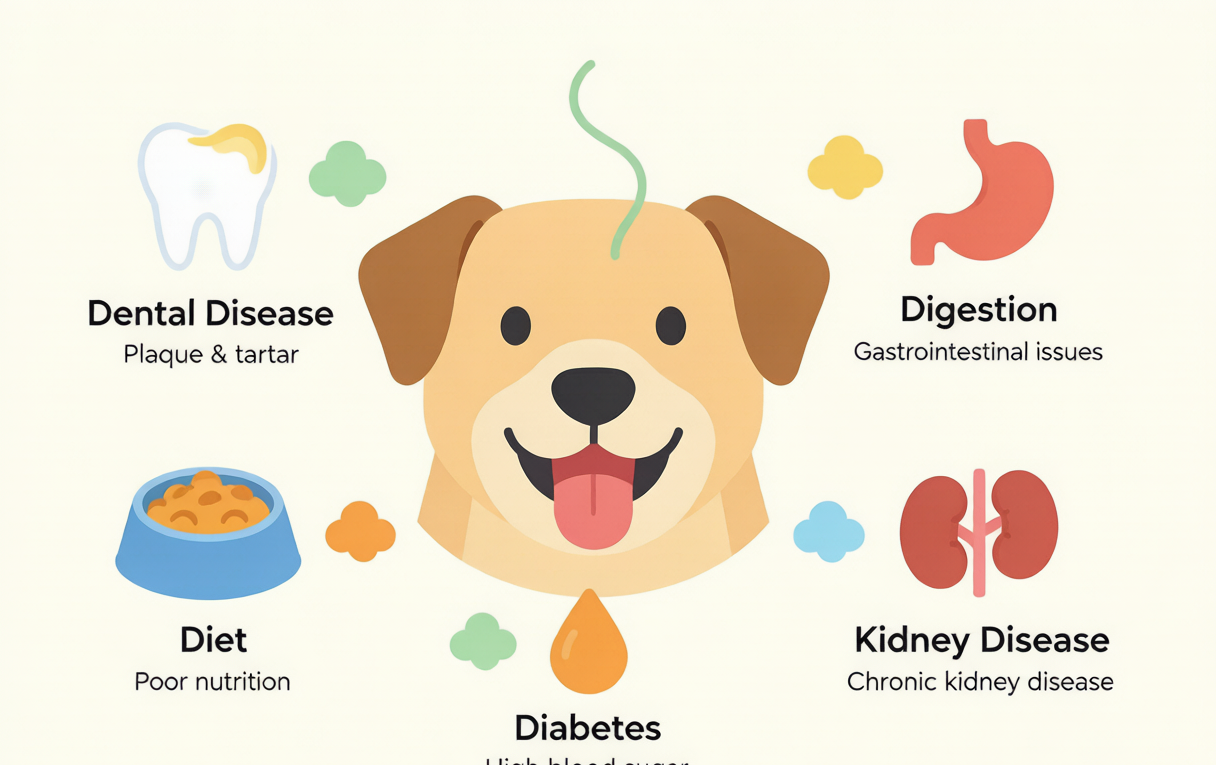
The Five Root Causes of Dog Bad Breath
Almost every case of dog bad breath falls into one of five buckets. Knowing which one you are in changes everything about how to fix it.
| Root cause | How common | Main driver | Typical smell |
|---|---|---|---|
| **Dental disease** | Very common | Plaque and tartar building up on teeth | Sour, decaying, "doggy" |
| **Diet and digestion** | Common | Food particles, soft food residue, gut issues | Mild to moderate, varies |
| **Foreign object or infection** | Less common | Something stuck in the mouth, an abscess, an infected wound | Sharp, rotten, putrid |
| **Kidney disease** | Less common but serious | Waste products building up in the body | Like urine or ammonia |
| **Diabetes** | Less common but serious | Ketones building up from uncontrolled blood sugar | Sweet, fruity, like acetone |
The pattern to notice: the more common causes live in the mouth and the gut, and the more serious ones show up with that distinctive smell plus other symptoms. Dental disease is by far the most likely culprit for a typical dog. But you cannot assume it is always that, which is why the smell check below is worth doing.
—
What That Specific Smell Is Telling You
Here is the part that most articles skip, because it requires you to get close enough to actually smell your dog’s breath, which nobody loves. But it is genuinely the most useful diagnostic you have at home. Not as a substitute for a vet, but as a way to know what to ask about.
A sour, “doggy,” decaying smell. This is the classic dental one. Plaque builds up, bacteria multiply, and the byproducts smell. If you can also see yellowish-brown tartar on the teeth or red, swollen gums, dental disease is almost certainly the story. This one is common, very treatable, and not an emergency.
A sweet, fruity, or “nail polish remover” smell. This is the one to take seriously. That smell is a sign of ketones, which can build up when a dog’s blood sugar is too high, as in diabetes, or when the body is breaking down fat too fast. If your dog has this smell and is also drinking and peeing more than usual, or losing weight despite eating normally, get them to a vet. Do not wait to “see if it passes.”
A smell like urine or ammonia. That points toward the kidneys. When kidneys are not filtering waste properly, those waste products build up in the blood and the dog can literally smell of it. This is more common in senior dogs. If you notice this along with increased drinking, more urination, or a drop in appetite, it is worth a vet check rather than brushing.
A sharp, rotten, putrid smell. This is different from ordinary plaque smell. It is more offensive and usually one-sided, and it often means something is actually wrong in the mouth: a stuck piece of food or a bone fragment, an infected tooth, or a wound. Sometimes you can even see it if you look carefully. A persistent one-sided bad smell that does not improve with cleaning is worth a professional look, because a foreign object or an infected tooth will not fix itself.
A general, mild odor with no strong character. Often this is just diet and ordinary buildup. It is the least concerning category, and it is usually the one that responds best to the home routine below.
—
When Bad Breath Is a Red Flag, Not a Cosmetic Problem
Fresh breath is nice, but that is not what this article is really about. The question that matters is whether the breath is a window into something else. So here is the honest checklist for when bad breath stops being a brushing problem.
See a vet soon if your dog has bad breath plus any of these:
- Drinking and urinating much more than usual (points to diabetes or kidney disease).
- Losing weight while still eating (points to diabetes or another metabolic issue).
- Not eating, or dropping food from the mouth while chewing (points to tooth pain or a mouth problem).
- Swollen or bleeding gums, loose teeth, or a visible growth in the mouth.
- Bad breath that is one-sided, very rotten, or does not improve after weeks of home care.
- A puppy with very bad breath, or a senior dog whose breath suddenly turns bad.
The reason this matters: dental disease is common and treatable, and catching it early saves teeth and pain. But the sweet and the ammonia smells are the ones you cannot brush away, and they point to conditions that are far easier to manage early. If the breath has one of those two characters, or if there is any other sign of illness, let a vet weigh in. That is the responsible call every time.
—
The Daily Oral Care Routine That Actually Works
For the common dental-and-diet kind of bad breath, there is a routine that genuinely helps, and it does not have to be complicated. Consistency beats intensity here, meaning a little bit every day beats a big effort once a month.
Brush the teeth. This is the gold standard, and it works better than anything else. Use a toothpaste made for dogs, never human toothpaste, because human toothpaste is not safe for dogs to swallow. A soft-bristle brush or a finger brush is fine. Start slow, let your dog get used to it, and aim for a quick pass most days. Even a few times a week makes a real difference.
Offer dental chews and toys. These help mechanically scrape off plaque as your dog chews. Look for products with the Veterinary Oral Health Council (VOHC) seal, which means they have been shown to actually reduce plaque and tartar. Chews are a good complement to brushing, not a replacement.
Add water additives or wipes if brushing is a struggle. Some dogs simply will not let you brush. In that case, dental water additives and dental wipes are a reasonable fallback. They are less effective than brushing, but far better than nothing, and they fit dogs who fight the brush.
Schedule professional cleanings. No amount of home care fully replaces a professional dental cleaning, which removes tartar above and below the gum line while your dog is under anesthesia. How often depends on your dog, but many vets recommend one every one to two years, more often for small breeds and dogs prone to tartar. Your vet can tell you what fits your dog.
—
Diet and the Gut-Mouth Connection
Here is a piece that surprises people. Some bad breath has less to do with the teeth and more to do with what is happening in the gut. The digestive tract runs the whole length of the body, and the mouth is the start of it. When digestion is off, or when the balance of gut bacteria shifts, it can show up as an odor that no amount of brushing fixes.
This is where supporting digestion can genuinely help. For dogs whose breath has a digestive component, keeping the gut balanced is a reasonable step. Our 12 Billion CFU Multi-Strain Probiotic includes prebiotics and digestive enzymes designed to support gut flora and normal digestion, and supporting a healthy gut is one angle on diet-related mouth odor. If you want the deeper picture on gut health, our probiotics for dogs guide walks through the evidence.
Diet texture matters too. Dogs who eat only soft food tend to build up plaque faster, because chewing hard kibble and dental chews naturally scrapes the teeth. Mixing in some crunch, whether through kibble, dental chews, or safe chew toys, supports dental health alongside whatever you feed. And if a food change is involved, doing it gradually over 7 to 10 days keeps the gut happy, which is its own contribution to overall mouth freshness.
—
When to See the Vet (and What to Expect)
If your dog has ordinary dental-type breath, a regular checkup is the right place to start, and your vet can assess the teeth and gums. If the breath is sweet, smells like ammonia, or comes with other symptoms, that is a call rather than a wait.
At the visit, expect your vet to look in the mouth, check the teeth and gums, and ask about water intake, appetite, and weight. Depending on what they find, they may recommend a dental cleaning, or they may run blood work to check for diabetes or kidney function if the smell points that way. The good news is that the most common cause, dental disease, is very treatable, and catching the less common causes early is exactly what makes them manageable.
—

Frequently Asked Questions
How do I tell if it’s dental disease or a stomach problem?
Check the character of the smell and the rest of the dog. A sour, decaying smell with visible tartar and red gums points to dental disease. A smell that does not improve with brushing, or that comes with digestive symptoms like frequent vomiting or loose stool, may point to the gut. If there is a sweet or ammonia-like smell, or any other sign of illness, let a vet help sort it out rather than guessing.
How often should my dog’s teeth be professionally cleaned?
Most vets recommend a professional dental cleaning roughly every one to two years, though small breeds and dogs prone to tartar often need it more often. The right interval depends on your dog, so ask your vet at a checkup. Home brushing between cleanings extends the time and keeps the teeth healthier.
Can dog bad breath spread to people?
Gum disease is caused by bacteria, and some of the same bacteria that cause dental disease in dogs can be present in people too. Practicing good hygiene, like washing your hands after touching your dog’s mouth and not letting your dog lick your face or share utensils, is sensible. It is not a reason to panic, but it is a reason to keep reasonable hygiene habits.
Will changing food or adding probiotics fix bad breath?
It depends on the cause. If the breath is mostly dental, brushing and dental cleanings are the answer, and food alone will not fix it. If the breath has a digestive component, a gradual food change and supporting gut health with a probiotic can genuinely help. If the smell is sweet, like ammonia, or comes with other symptoms, no food or supplement replaces a vet check. —
Bottom Line
Dog bad breath is common, and most of the time it is dental disease, which is very treatable with brushing, dental chews, and regular professional cleanings. But the specific smell matters more than most owners realize. A sour, decaying smell is usually plaque. A sweet, fruity smell can signal diabetes. An ammonia smell can signal kidney trouble. And a sharp, one-sided rotten smell can mean something stuck or infected in the mouth. So look past the smell itself and check your dog: are they drinking more, losing weight, or off their food? If yes, that breath is a clue worth taking to a vet. If no, a consistent home care routine and the occasional cleaning are usually all it takes to keep your dog’s breath fresh and their mouth healthy.
And when in doubt, let a professional take a look. Your dog’s breath is telling you something, and a vet is the one best equipped to translate it.
—
References
- American Veterinary Dental College (AVDC) — Canine oral health and dental disease resources. avdc.org
- American Kennel Club (AKC) — Canine dental care and breath guidance for pet owners. akc.org
- Veterinary Oral Health Council (VOHC) — Accepted products for plaque and tartar control. vohc.org
—
Disclaimer: This article is for informational purposes only and is not a substitute for professional veterinary advice, diagnosis, or treatment. These statements have not been evaluated by the FDA. This product is not intended to diagnose, treat, cure, or prevent any disease. Always consult a licensed veterinarian for any health concern regarding your pet.