
# Can Dogs Eat Eggs? Settling the Raw-vs-Cooked Debate With Actual Chemistry
Few dog foods inspire stronger opinions than the humble egg. On one side stands the raw feeding community, for whom eggs, shells and all, are close to a perfect food, packaged by nature with everything a growing wolf needs. On the other side sit generations of veterinary advice warning about salmonella and a mysterious substance in raw egg white that “blocks nutrition.” Between them sits the average owner, holding an egg over the dog bowl and wondering whether to crack it in raw or scramble it first.
Both camps are partly right, which is why the argument never ends. Eggs are one of the most nutritionally complete foods you can offer a dog, and also a food where the preparation genuinely changes the safety and the value. The disagreement is really about two specific risks, and both risks can be described precisely rather than argued about vaguely.
This article settles the question the way it should be settled: what eggs offer nutritionally, what the raw egg white problem actually is and how big it really is, what the bacteria risk amounts to in practice, how to prepare and portion eggs for dogs, and who should skip them. By the end, the egg in your hand will be less mysterious than it was.
—
The Short Answer
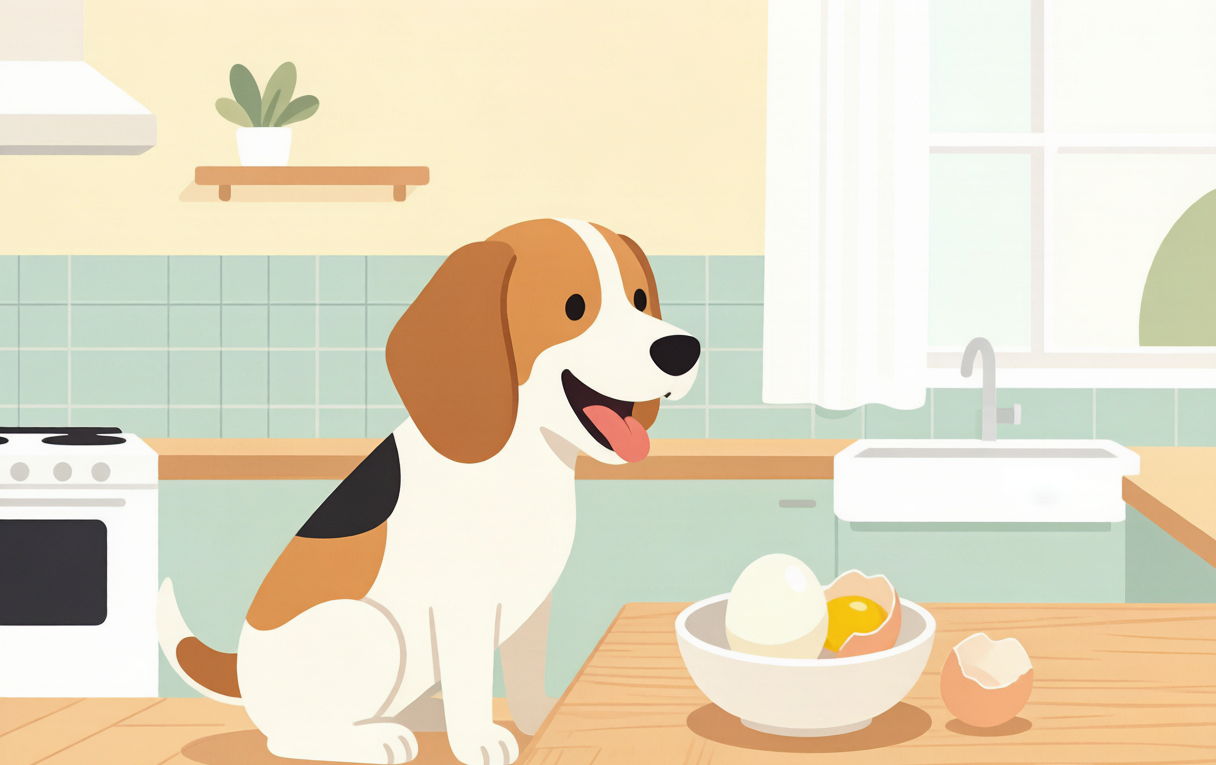
Yes, dogs can eat eggs, and they are an excellent food for them: complete protein, plus choline, vitamin B12, selenium, and vitamin D, in a form dogs digest efficiently. Cook the eggs, plain, no butter, oil, salt, or seasonings, because cooking neutralizes avidin, a protein in raw egg white that binds the B vitamin biotin, and it eliminates salmonella risk. Feed roughly one egg for a large dog or half an egg for a small dog a few times a week rather than daily, and treat eggs as a food to add, not a replacement for a balanced diet. A small minority of dogs are allergic to eggs, so watch for itching, ear flare-ups, or digestive upset after the first servings. Puppies, seniors, and pregnant or nursing dogs can all eat cooked eggs; the raw egg question, along with the details on eggshell calcium, is covered below.
—
What an Egg Actually Delivers
Start with why eggs have the reputation they have. Egg protein is the standard against which other proteins are measured, biologically complete, containing all the essential amino acids a dog needs in close to ideal proportions, and highly digestible when cooked. That combination, completeness plus absorption, is what “biological value” means, and eggs score at the top.
The yolk carries most of the micronutrients: choline for brain and liver function, vitamin B12, selenium, vitamin A, vitamin D, and a dose of omega-3 fatty acids, higher in eggs from hens fed omega-enriched diets, though nowhere near the levels found in dedicated marine sources like the fish oils we cover in our fish oil guide. One egg holds about 70 calories, roughly 6 grams of protein and 5 grams of fat, mostly in the yolk.
For a dog, one egg is a dense little nutritional package. It is also, and this matters, a package built to grow a chick, not to be a complete diet for a dog. Eggs are missing calcium in meaningful quantities, since the chick sources it from the shell, and they carry a fatty acid and mineral profile that works as an addition to a balanced diet rather than a pillar of one. More on how that framing helps later.
Ruling One: The Avidin Problem, Weighed
Here is the chemistry at the heart of the raw egg debate, stated plainly.
Raw egg white contains a protein called avidin. Avidin binds to biotin, one of the B vitamins, with an unusually strong grip, and a biotin molecule captured by avidin cannot be absorbed by the gut. Biotin deficiency in dogs causes skin problems, coat dullness, and, in prolonged cases, neurologic signs. So the folk warning “raw egg whites block nutrition” has a real mechanism behind it.
Now the weighing, which is where the internet usually stops explaining. Avidin is a protein, and heat denatures it. Cook the egg white and the avidin loses its biotin-binding ability almost completely. Meanwhile, the yolk is rich in biotin itself, so a whole raw egg even delivers biotin alongside the avidin that binds some of it. To produce actual biotin deficiency, a dog would need to eat substantial quantities of raw egg white, habitually, without the balancing yolk, over a long period. Deficiency from occasional whole raw eggs is close to theoretical.
The honest conclusion: the avidin risk is real chemistry with a low real-world dose. Cooking neutralizes it entirely, which is the cheapest risk elimination available anywhere in nutrition. If you feed raw eggs occasionally as part of a varied raw diet, the biotin math is unlikely to catch up with your dog. If you are choosing deliberately, cooking costs you nothing and closes the question.
Ruling Two: Salmonella, Weighed
The second objection to raw eggs is bacterial. Salmonella can be present on shells and, less often, inside eggs, and dogs are not magically immune to it.
The weighing here is less comfortable for raw feeding advocates. It is true that canine stomach acid is stronger than ours and that many dogs eat alarming things without consequence. It is also true that dogs can and do contract salmonellosis, with diarrhea, vomiting, and fever, and that infected dogs, even when showing no symptoms, can shed salmonella in their feces for weeks. That last point is the one most raw feeding discussions skip: a dog tolerating raw eggs silently is not the same as a safe dog, because the risk extends to the humans handling the food, the stool, and the dog’s tongue. For households with children, elderly members, or anyone immunocompromised, that matters more than the dog’s own resilience.
Eggs from clean, refrigerated, reputable sources carry low bacterial risk, but low is not zero, and the path to zero is the same ten minutes of boiling that solves the avidin problem. When one cooking step removes both objections simultaneously, the burden of proof shifts to the person arguing for raw. This is why most veterinary guidance lands where it does: cooked eggs, enthusiastically endorsed.
How to Prepare Eggs for Dogs
Boiled is the gold standard. No added fat, no added salt, even cooking, easy storage. Hard boil, cool, chop or crush, done.
Scrambled without additions is acceptable. The trap is human scrambled eggs, butter, milk, salt, maybe onion in the pan. Dogs need none of that. A dry nonstick pan, low heat, nothing added, is fine. Onions and garlic are toxic to dogs, so never share eggs cooked for people.
Fried eggs are the weakest option purely because of the oil or butter, unnecessary calories most dogs do not need.
Eggshell calcium, briefly. Some owners grind washed, dried shells into powder as a calcium supplement, particularly in home-prepared diets where calcium balancing is genuinely difficult. A half teaspoon of finely ground shell provides roughly 1,000 mg of calcium. If you feed a commercial diet, this is unnecessary, since commercial foods are calcium-balanced already, and adding more shifts the calcium-to-phosphorus ratio that food manufacturers already got right. Reserve shell powder for home-prepared diets designed with a veterinary nutritionist.
Portion, Frequency, and Who Should Skip Eggs
Eggs are additions, not staples. The practical ceiling most guides suggest is about one egg per day for a large dog, half an egg for a small dog, but “daily” is the wrong target, a few times a week is the saner rhythm for an otherwise complete diet, keeping the roughly 70 calories per egg inside your dog’s daily budget. Overweight dogs and small breeds feel those calories fastest, so adjust food portions down on egg days, the same discipline we recommend for any treat.
Puppies can eat cooked eggs, and they are a genuinely good growth food, but portion small, a tablespoon of scrambled egg for a young pup, not a whole egg. Senior dogs often benefit, since eggs are soft, aromatic, and easy to digest, a useful tool for an older dog whose appetite is fading, a topic with its own playbook in our guide to dogs refusing food. Pregnant and nursing dogs can use the calorie and protein density.
The one true exclusion is allergy. Egg is among the more common food allergens in dogs, alongside proteins like chicken, beef, and dairy. The pattern to watch for after the first few servings: itchy skin, ear infections flaring, licking at paws, or vomiting and loose stool. Symptoms typically build with repeated exposure rather than appearing at first bite. If they show up, stop the eggs and mention the pattern to your vet.
And the cholesterol question, since it always comes up: dietary cholesterol does not affect canine blood lipids the way it can in humans with certain predispositions. Dogs are good at regulating this, and healthy dogs do not develop human-style cholesterol problems from a few eggs a week.
Where Eggs Fit in a Complete Nutrition Picture
An egg is an excellent food and an incomplete diet. That distinction is the honest way to place eggs in a dog’s routine: they deliver premium protein and a strong micronutrient profile, but they do not by themselves cover the vitamins and minerals a dog needs across the week, and most dogs eating commercial food plus table additions are getting an unbalanced version of “more.”
The clean way to close that gap, if you like adding fresh foods like eggs or the plain yogurt we discuss in our can dogs have yogurt guide, is a daily multivitamin that covers the baseline while the fresh foods stay fun. Our 26-in-1 multivitamin soft chews exist for exactly that use: B-complex vitamins including biotin, vitamin C, zinc, omega-3s, and prebiotic fiber, 200 Chews per bottle, designed to sit under whatever else a dog’s routine includes.
It is not a treatment for any condition, and it does not replace a veterinary prescription diet where one has been advised. It fills the quiet nutritional gap between a good diet and a perfect one, which is the same gap an egg fills, from the other side.

Frequently Asked Questions
Can dogs eat raw eggs?
They physically can, and healthy dogs often tolerate occasional raw eggs, but cooking is the better choice for two reasons. Heat destroys avidin, the raw egg white protein that blocks biotin absorption, and it eliminates salmonella risk to your dog and to the humans around its food and stool. Ten minutes of boiling closes both issues, which is why veterinary guidance overwhelmingly favors cooked.
How many eggs can a dog eat in a week?
Roughly three to four eggs per week suits a large dog, and half that for a small dog, alongside a complete diet. Each egg adds about 70 calories, so reduce regular food slightly on egg days if weight is a concern. Daily eggs are not necessary, and a few times a week captures the nutritional benefit without unbalancing the diet.
Are eggshells good for dogs?
Eggshells are a usable calcium source when ground finely, about 1,000 mg of calcium per half teaspoon of powder, and they make sense in home-prepared diets that need calcium balancing. Dogs eating commercial food do not need extra calcium, since those diets are already balanced, and adding unneeded calcium can disrupt the calcium-to-phosphorus ratio. Never feed large shell fragments, which can irritate or obstruct.
Can puppies eat eggs?
Yes, cooked and plain. Eggs are a dense growth food with complete protein and choline. Portion small, a spoonful or two of scrambled or mashed boiled egg for a young puppy rather than a whole egg, introduced gradually like any new food. Avoid raw eggs for puppies, whose immune systems are still developing.
Can eggs upset a dog’s stomach?
They can, in two ways. Some dogs are genuinely allergic to egg protein, with itching, ear inflammation, or digestive upset that builds over repeated exposures, and these dogs should not have eggs at all. More often, mild upset comes from a sudden dietary addition or from eggs cooked with butter, milk, or seasonings rather than the egg itself. Introduce eggs gradually, feed them plain, and stop if symptoms appear.
Disclaimer
This article is for general education only and is not veterinary advice. Dogs with pancreatitis, kidney disease, diabetes, or food allergies may need specific dietary restrictions, including around high-fat or high-protein additions like eggs. Consult your veterinarian before making significant changes to your dog’s diet, especially for puppies, seniors, pregnant or nursing dogs, or dogs with existing health conditions. Product references describe nutritional supplements and are not intended to diagnose, treat, cure, or prevent any disease.
References
- American Kennel Club. “Can Dogs Eat Eggs?”
- Cummings School of Veterinary Medicine at Tufts University. “Eggs for Dogs: Nutritional Considerations.”
- Merck Veterinary Manual. “Biotin in Animal Nutrition.”
- Centers for Disease Control and Prevention. “Salmonella and Eggs.”
- Veterinary Clinics of North America: Small Animal Practice. “Food Allergy in Dogs.”