
# Dog Ear Infection: What the Smell, the Discharge, and the Head Shaking Are Telling You
It usually announces itself at three in the morning. Your dog starts shaking their head so hard their ears slap against the skull, then stops to dig at one ear with a hind paw, over and over. When you lean in close, you catch it: a smell that is somewhere between stale bread and old sneakers. Dog owners know that smell, and vets hear the description on the phone before the appointment is even made.
Ear infections sit near the top of the list of reasons dogs visit the vet, and the internet is full of advice about them, from garlic oil to hydrogen peroxide. Most of that advice is written for a generic “ear infection” that does not actually exist, because what lives in the canal, yeast, bacteria, mites, or a grass awn buried at the bottom, changes everything about the right treatment. This guide walks through how to read the evidence in front of you, what the vet is doing when they take a swab, and which parts of prevention actually hold up.
—
The Short Answer
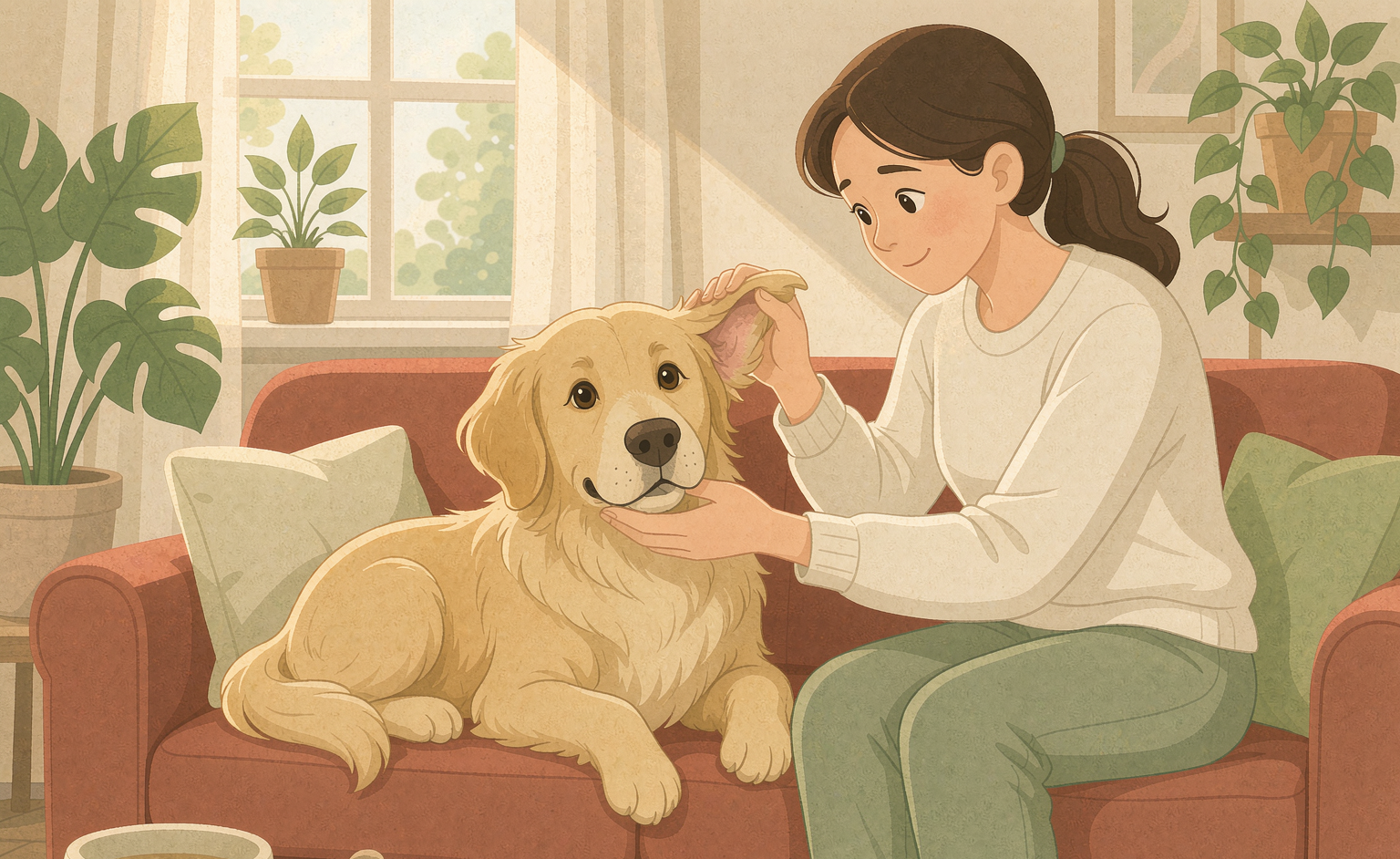
Most dog ear infections are an overgrowth of yeast or bacteria inside the ear canal, usually triggered by moisture, allergies, or the shape of the ear itself. The infection itself needs a vet to identify, because drops that kill yeast do nothing for bacteria and can make a resistant infection worse. What you do at home matters for the next infection, not the current one: keep the ears dry, manage the allergies underneath, and support the skin barrier that keeps yeast in check. Head tilting, a swollen ear flap, or pain when the mouth opens moves it from routine to urgent.
—
Why Dog Ears Get Infected So Easily
The reason dogs beat humans in ear infection frequency comes down to plumbing. A dog’s ear canal is L-shaped. The vertical portion drops down from the opening you can see, then takes a near right-angle turn into a horizontal canal that runs inward toward the eardrum. Water, wax, debris, and inflammatory gunk all have to travel up and around that bend to leave. Gravity fights the exit at every step.
A human ear canal is a short, mostly straight tube. What goes in tends to come back out. In a dog, what goes in settles at the bottom of the L, where it stays warm, dark, and humid, which is precisely the environment yeast and bacteria wait for.
Then selection made it worse for certain breeds. Heavy, floppy ears, think Cocker Spaniel, Basset Hound, Labrador Retriever, act like a lid on a pot, trapping humidity against the canal. Poodles and Schnauzers grow hair inside the canal that holds debris in place. Shar-Peis have canals so narrow that even mild swelling pinches them shut. None of these breeds is doomed, but their owners do end up on a first-name basis with ear cleaner bottles.
One more piece of anatomy worth knowing: the eardrum sits at the far end of the horizontal canal. Some medications are safe in a canal with an intact eardrum and dangerous behind a ruptured one, which is a big reason the “just use these leftover drops” shortcut is a gamble and not a plan.
The Decoder: Reading Discharge, Smell, and Behavior
You can get surprisingly far toward knowing what is growing in there before you ever reach the clinic, at least in the “likely” sense. The three clues are what the discharge looks like, what the ear smells like, and how the dog behaves.
Dark brown, waxy, with a musty odor. Discharge that looks like coffee-colored candle wax and smells like a bakery that needs cleaning points to yeast, usually Malassezia pachydermatis. This yeast lives on normal dog skin in small numbers. In a warm, inflamed, humid canal it multiplies into a thick brown layer. The itching is significant but the pain is usually moderate.
Yellow to green, pus-like, with a foul or sweetish odor. This points to bacteria. The discharge looks like something a wound would produce rather than wax. Bacterial infections tend to hurt more, and dogs often flinch when the ear base is touched. The two usual suspects are Staphylococcus pseudintermedius, which is common and usually responsive, and Pseudomonas aeruginosa, which is the one nobody wants: painful, slimy, and famous for shrugging off first-choice antibiotics.
Black, dry, and crumbly like coffee grounds. With almost frantic itching, this is the classic picture of ear mites, Otodectes cynotis. These are far more common in kittens and puppies than in adult dogs, and they spread between pets that sleep together, so a multi-pet household may need to treat everyone.
Sudden, violent shaking in one ear only, in summer. During grass seed season, a foxtail awn can ride down the canal and lodge against the eardrum. The dog goes from fine to frantic over hours, and the shaking does not let up. This is a same-day vet visit, because an awn left in place can perforate the eardrum and migrate deeper.
The decoder is for narrowing odds, not for skipping the vet. Discharge colors overlap, mixed infections are common, and the only way to know for certain is a microscope slide. Which is the next thing to understand.
What the Vet Actually Does, and Why It Matters
The visit usually starts with an otoscope, a lighted cone that lets the vet see down the canal. They are checking the canal walls for swelling, the discharge character, and whether the eardrum is intact. Then comes the step that separates real medicine from internet advice: cytology. The vet rolls a swab of debris onto a slide, stains it, and reads it under the microscope right there in the exam room.
On that slide, yeast look like purple snowmen or footprints, cocci appear as round dots in clusters, and rods are elongated. Fifteen minutes of staining tells the vet which drug class to reach for. Guessing does the reverse. Antifungal drops against a rod-shaped Pseudomonas infection buy that bacterium another two weeks of comfortable reproduction, and every partially treated infection selects for hardier survivors.
This is also why vets ask you not to fill the ear with olive oil or cleanser before the appointment. Oils and creams coat the debris and can blur the slide, or dilute the sample into a false negative. A dirty ear that reads as clean is how infections get missed.
The recheck deserves a mention, because it is the step owners skip most. Canals look and feel better days before they are actually clear, so treatment gets stopped early and the infection roars back a few weeks later. Most vets want to look down the canal again before ending treatment, and in stubborn Pseudomonas cases they may culture the discharge to identify exactly which antibiotic still works.
The Real Driver Is Usually Something Else
Here is the uncomfortable truth about recurrent ear infections: the ear is often the messenger, not the culprit. Most dogs who get infection after infection have an underlying condition creating the inflammation that yeast and bacteria then colonize.
Food allergy and environmental allergy, atopy, are the biggest players. Allergic inflammation changes the canal lining and the local immune defenses, turning a canal into a petri dish. Dogs with year-round ear trouble, or ears that flare the same time each season, are frequently fighting allergies, not bad luck with bacteria. The general itching guide walks through how to tell allergy-driven scratching from other causes.
Swimming is the classic water-related trigger, and it is manageable: dry the ears after every swim, and ask your vet about a drying cleaner for dogs who live in the water.
Hypothyroidism sits quietly behind some recurrent cases, especially in middle-aged dogs who are also gaining weight or losing coat quality. When a dog’s ears keep re-infecting and allergies have been ruled out, thyroid testing is a reasonable ask.
And a single infection with a clear trigger, one swim weekend, one grass awn, is a different animal from the third infection in three months. The first is an event. The second is a signal to hunt for a driver.
When It Stops Being an Outer-Ear Problem
Two complications turn a routine ear infection into a same-day appointment.
The swollen ear flap. Violent head shaking can rupture a blood vessel inside the ear flap, and the flap fills with blood into a warm, squishy pillow shape. This is an aural hematoma. Left alone it often heals into a permanently crinkled ear, so most vets drain or surgically correct it. The treatment that matters most is the one that stops the shaking, which means treating the ear infection driving it.
The head tilt. A dog that holds the head tilted, walks in circles, falls toward one side, or shows jerky eye movements may have an infection that has pushed through the eardrum into the middle or inner ear. These dogs are genuinely sick, sometimes nauseous from vertigo, and need prompt treatment. Pain when yawning or opening the mouth wide belongs on the same warning list. If you see a head tilt, the calendar question of “maybe next week” is over.
Home Care That Helps, and Home Care That Harms
Helps: drying the ears after swimming or baths, checking them weekly for early redness or smell, cleaning with a vet-approved cleaner on the schedule your vet sets for that dog, and staying ahead of the allergies underneath. The step-by-step ear cleaning guide covers technique in detail, including the filler-and-massage method and why the head shake afterward is part of the process.
Harms: hydrogen peroxide, which damages healthy tissue in a raw canal. Alcohol-based cleaners on an inflamed ear, which burn, and dogs remember. Vinegar solutions, popular online, are acidic enough to hurt an ulcerated canal and are not appropriate mid-infection without a vet’s go-ahead. Cotton swabs, which pack wax deeper toward the bend. And any oil or home brew in a possibly ruptured ear, which can reach the middle ear and cause real damage.
The pattern to notice: nearly everything that harms was invented for a healthy ear or a human ear, and gets applied to a sick dog’s ear because it was in the cabinet.
The Prevention Stack, In Order
- Control the driver. If allergies are behind the infections, that is where prevention lives, and it is worth a dermatology conversation for dogs on their fourth round. Food-elimination trials and allergy management do more for ears than any cleaner.
- Keep canals dry. After swimming, a dry cotton ball at the opening, not down the canal, plus a vet-approved drying cleanser for water dogs. Moisture is the single most controllable yeast trigger.
- Clean on purpose, not on a schedule you invented. Some dogs need weekly cleaning, some need none at all. The cleaning guide above explains how to find your dog’s frequency, and over-cleaning healthy ears is its own mild irritant.
- Feed the skin barrier. The lining of the ear canal is skin, and it depends on the same nutrients as the rest of the coat. A targeted nutritional layer can help maintain the normal yeast balance of the skin, which includes the ears: our yeast balance soft chews pair a botanical blend of Pau d’Arco, dandelion, and neem with B vitamins, apple cider vinegar, and digestive enzymes in a chicken-flavored chew, 200 to a bottle, sourced from USA ingredients. It is a supplement for daily support, not a treatment for an active infection, and it works alongside, not instead of, what your vet prescribes.
- Do the recheck. The infection that never fully died is the most common source of the next one.
Frequently Asked Questions
Are dog ear infections contagious to other pets?
It depends on the cause. Ear mites spread easily between pets that share beds and grooming space, so a mite diagnosis usually means treating every animal in the house. Yeast and bacterial overgrowth, the far more common causes in adult dogs, are generally not considered contagious between healthy pets, since those organisms already live on normal skin and only become a problem when the local environment in the canal goes wrong.
How long does it take for a dog ear infection to clear?
With the right treatment, most dogs look dramatically better within three to five days, and uncomplicated yeast infections often resolve fully in one to two weeks. Bacterial infections, especially Pseudomonas, can take several weeks of consistent treatment. The dangerous window is the “looks better” phase, where owners stop treatment early and the surviving organisms rebound, which is why the recheck before stopping matters.
Can I use vinegar or alcohol to treat my dog’s ear infection at home?
Neither belongs in an actively inflamed ear. Vinegar solutions are acidic enough to sting a raw, ulcerated canal, and alcohol-based cleaners burn on contact. Some vets do recommend diluted ear cleansers with drying acids for maintenance between infections in specific dogs, but that is a prescription-by-context decision, not a home recipe. During an active infection, nothing goes in the ear before the vet has looked, because oils and home solutions can blur the cytology slide.
Why does my dog keep getting ear infections?
Recurrence almost always means the driver was never addressed. The three usual suspects are untreated environmental or food allergy, moisture from swimming, and anatomy, floppy or narrow canals that trap debris. Less commonly, an unresolved infection from an unfinished course of treatment, or a resistant organism like Pseudomonas, keeps things smoldering. Dogs with recurring infections need the underlying question answered, not just faster treatment of each episode.
Can a supplement cure my dog’s ear infection?
No. An active infection needs veterinary diagnosis and prescription treatment, and no supplement, ours included, is a treatment for infection or a cure for any condition. Where a yeast-balance supplement fits is the prevention side: helping maintain the normal yeast balance of the skin and ears as a daily nutritional layer, so the canal is a less welcoming place for the next overgrowth. Used that way, alongside dry ears and allergy control, it earns its spot in the stack.
Bottom Line
A dog ear infection is common, miserable, and very treatable, in that order. The discharge, the smell, and the behavior tell you a great deal about what is growing, and the vet’s microscope confirms it. What separates the one-time infection from the chronic case is almost never the choice of cleaner: it is whether anyone went looking for the driver underneath. Dry the ears, question the allergies, finish every course of treatment, and save the home remedies for the internet forums where they belong.
Disclaimer
This article is for general education only and is not veterinary advice. If your dog shows a head tilt, loss of balance, a swollen ear flap, extreme pain, or discharge with blood, contact a veterinarian promptly. Dietary supplements are not intended to diagnose, treat, cure, or prevent any disease, and any new supplement should be cleared with your veterinarian, especially for dogs with chronic conditions or those on medication.
References
- Merck Veterinary Manual. “Otitis Externa in Animals.”
- Cornell Riney Canine Health Center. “Ear Infections in Dogs.”
- VCA Animal Hospitals. “Ear Infections in Dogs (Otitis Externa).”
- American Kennel Club. “Dog Ear Infections: Symptoms, Causes, and Treatment.”
- Veterinary Dermatology. “Recurrent Otitis Externa and Underlying Atopic Disease in Dogs.”