
# Can Dogs Eat Apples? A Part-by-Part Answer for the Whole Fruit
Sharing an apple with a dog is one of the oldest rituals between our two species, and most of it is perfectly safe. The catch is that an apple is not one food but several, packed into the same sphere. The flesh is a mild, watery snack. The skin carries most of the pigment and most of the plant chemistry. The seeds carry a genuinely interesting toxin, in genuinely boring doses. The core and stem are choking hazards wearing a harmless costume.
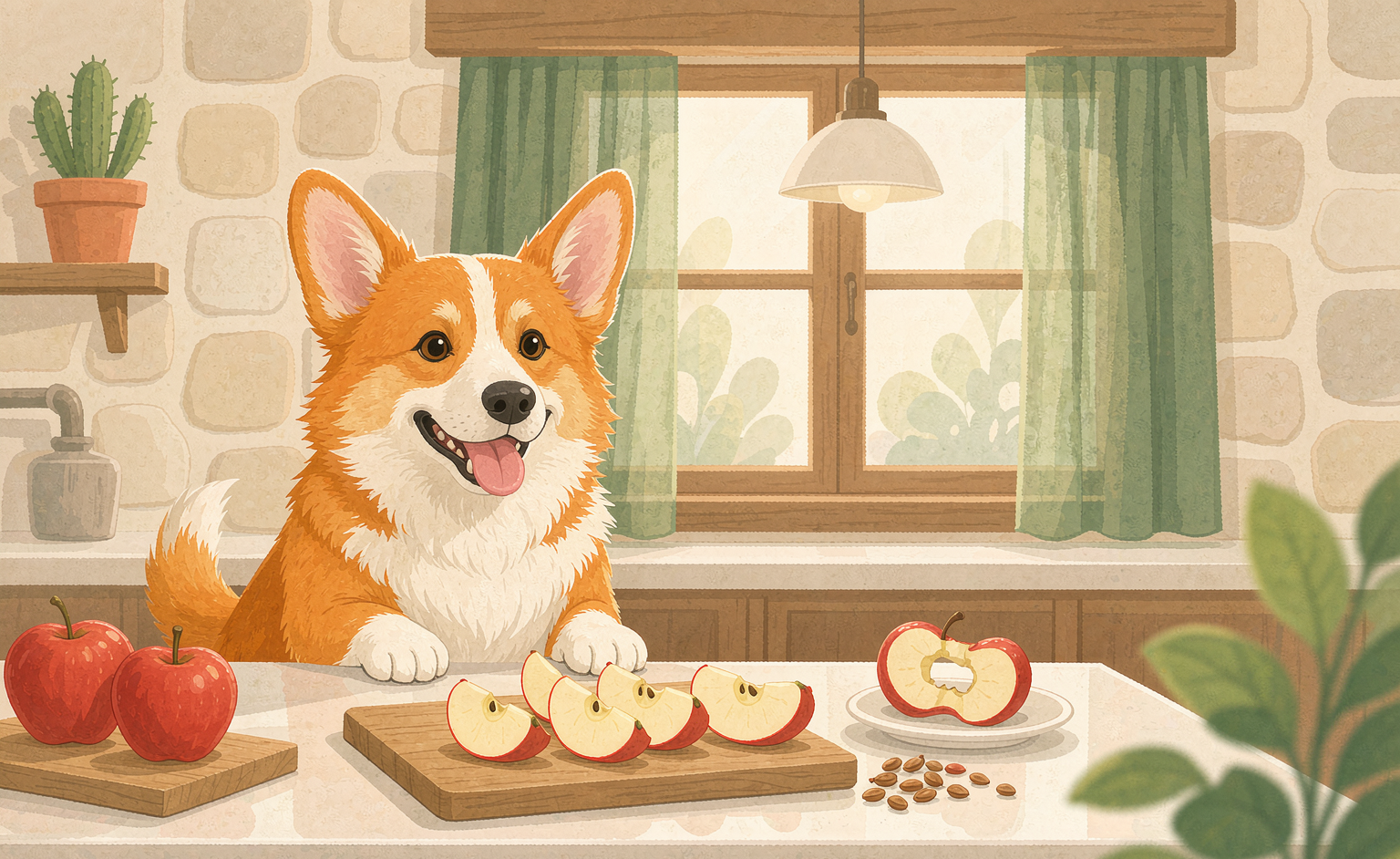
So the short answer to “can dogs eat apples” is yes with a paring knife: slice the apple, keep the seeds, stem, and core out of the bowl, and mind the sugar. The long answer, which is the useful one, goes part by part, because that is how the risks actually sort themselves.
—
The Short Answer
Yes, dogs can eat apple flesh and skin in slices with the core, stem, and seeds removed. Apple seeds contain amygdalin, a compound that releases cyanide when crushed, but a dog would have to chew and swallow an absurd number of seeds to get anywhere near a toxic dose, and intact seeds pass through whole. The real reasons to core an apple are the seeds over a lifetime and the choking risk of a wedged core in a small dog. Portion matters too: a medium apple carries about 19 grams of sugar, so apple is a treat, not a food group.
—
The Flesh: What an Apple Actually Offers a Dog
Start with what the flesh is, by weight. A medium apple is roughly 85 percent water, about 95 calories, 19 grams of sugar, and a little over 2 grams of fiber, most of it pectin. That fiber is the interesting part for dogs.
Pectin is a soluble fiber, the same category that earned pumpkin its reputation for settling stools in both directions, and the mechanism is the same: it absorbs water in the gut, which firms loose stool, while also softening and adding bulk to dry stool. A few slices of apple contribute a small, gentle amount. It is not a therapeutic dose the way a measured pumpkin serving can be, and the pumpkin guide covers that fiber science in depth, but it leans helpful rather than neutral.
The water content is quietly valuable too. Dogs who are picky about the water bowl often accept moisture in food form, and a crisp apple slice on a hot day is hydration plus enrichment in one bite.
What the flesh is not, nutritionally, is a vitamin pill. Apples contain a modest amount of vitamin C, and here is where dog and human nutrition split: dogs synthesize their own vitamin C in the liver and do not rely on dietary sources the way we do. The vitamin C in an apple does not correct a deficiency your dog does not have.
The Skin: The Part People Peel for Nothing
If you peel apples for your dog, you are removing the most chemically interesting layer. Apple polyphenols, including quercetin, concentrate in and just under the skin, which is where the fruit builds its UV and pest defenses. The flesh is mostly water and sugar by comparison.
Those polyphenols are the same family of plant compounds that made blueberries a research subject in canine aging, and the honest summary is similar: they do genuinely antioxidant things in a test tube and in carefully fed study diets, while a few apple slices are a pleasant dose rather than an intervention. Feed the skin.
Two practical notes on the peel. First, wash it. Apples rank high on pesticide residue lists, and a 30-second rinse under running water removes most of what sits on the surface. Second, for dogs new to fruit, introduce the skin gradually, since a sudden fiber bump can loosen stool in a gut that is not used to it.
The Seeds: The Chemistry Worth Understanding
Apple seeds contain amygdalin, a cyanogenic glycoside. The name sounds alarming, and it is the reason “apple seeds are poisonous” exists as a piece of internet lore. The mechanism deserves a straight explanation, because it explains both the risk and its absence.
Amygdalin itself is inert. When seeds are crushed or thoroughly chewed, plant enzymes and gut enzymes release hydrogen cyanide from it. That is the poison. Chewed seeds deliver cyanide; intact seeds pass through the digestive tract largely untouched, which is why a dog that swallows a seed or two whole while bolting a stolen slice is fine.
Now the dose side. A single apple seed contains a very small amount of amygdalin. To reach a toxic dose, a dog would need to finely chew and swallow seeds by the dozens, roughly a small bowl of nothing but crushed seeds for a medium dog, all in one sitting. Bitterness is the fruit’s own defense: the seeds taste sharply bitter, and dogs spit them out for a reason. A human would have to work at it too; seed toxicity in people is rare and almost always involves large quantities of chewed seeds.
The practical takeaway is not fear but a habit: core the apple, every time, and the whole question is retired. The habit costs five seconds and removes both the theoretical cumulative exposure and the much more realistic problem with cores, which is mechanical rather than chemical.
The Core and the Stem: The Hazards Wearing Costumes
The core is the actual danger of apple feeding, and it has nothing to do with cyanide. A cylindrical chunk of firm apple can wedge in a small dog’s throat or at the esophagus entry, and cores are exactly the shape that lodges. Dogs who gulp rather than chew, and most small breeds who eat excitedly, are the risk group. An obstruction is a surgical emergency, and “the dog got a whole core off the counter” is a classic presentation.
The stem belongs with the core in the compost. It concentrates the same seed chemistry in tougher packaging, and its fibrous stiffness adds a mild choking profile all its own. There is no scenario where the stem is food.
So the safe prep sequence is: wash the apple, quarter it, cut the core out of each quarter, slice, serve. For a teething puppy, frozen rings, cored, no seeds, are a soothing cold chew, and the puppy teething guide covers why cold helps sore gums and what else belongs in a teething toolkit.
The Sugar Math, and the 10 Percent Rule
A medium apple has around 19 grams of sugar, roughly as much as a small candy bar, wrapped in fiber that slows the absorption considerably. For a 60 pound Labrador, two or three slices are rounding error in the daily diet. For an 8 pound Chihuahua, the same slices are a meaningful chunk of a very small calorie budget.
The standard guideline treats all snacks, fruit included, as no more than 10 percent of daily calories. Roughly translated to apple: a small dog gets a thin slice or two, a medium dog gets a few, and a large dog can handle half an apple across the day without anyone doing math. Slices off your own apple, the way most dogs get theirs, almost never overshoot this.
The dogs who need the sugar conversation to be a real conversation are diabetics and the significantly overweight. For a diabetic dog, fruit is not a casual treat, and any addition belongs in the plan your vet sets, usually timed with meals. For a dog on a diet, apple slices can actually be useful, replacing calorie-dense training treats with something that feels generous, but the daily total still counts.
What Apples Are Not
Two myths are worth retiring while we are here.
The first is that fruit is a vitamin source for dogs. It is a pleasant idea, and it is mostly wasted on them: dogs make their own vitamin C, and the minerals and B vitamins in fruit exist in small, incidental amounts. If your motivation for fruit is nutritional insurance, that job belongs to a complete daily multivitamin formulated for dogs, the sugar-free way to cover micronutrient bases, not to produce. The 26-in-1 formulation our team makes covers vitamins, minerals, omega-3s, and prebiotic fiber in one chew. It is a nutritional layer, not a treatment for anything, and a dog on a complete balanced diet may not need one at all, which is a question your vet can settle in one appointment.
The second is that apples settle upset stomachs the way pumpkin can. The fiber amounts are different by an order of magnitude per serving, and apple’s sugar content works against you in a gut that is already unhappy. For digestive support, use the measured approach, not the casual one.
Serving Ideas That Work
Beyond the plain slice, a few formats earn their keep. Frozen cored rings for teething puppies have already earned a mention. Thin matchstick slices suit small mouths and slow down gulpers. A smear of xylitol-free peanut butter on an apple slice is a high-value training treat, and the peanut butter guide covers the label-checking habit that makes “xylitol-free” a verification step rather than an assumption.
Formats to skip: applesauce, which is usually sweetened and delivers the sugar without the fiber that moderates it, unsweetened versions are tolerable in tiny amounts but pointless; dried apple, which concentrates sugar about fourfold per bite and turns a reasonable snack into candy; and anything baked, where the apple rides along with sugar, butter, and in some recipes sweeteners that matter far more than the fruit, including xylitol in sugar-free baked goods.

Frequently Asked Questions
How many apple seeds are actually dangerous for a dog?
A toxic dose would require a dog to crush and swallow a large quantity of seeds at once, on the order of a small bowl of nothing but chewed seeds for a medium-sized dog. Individual seeds swallowed whole pass through largely undigested and are not a poisoning event. Veterinary guidance treats a few seeds as a non-event and core removal as a good habit, because the habit also removes the core and stem, which are the realistic hazards.
Can dogs eat green apples, like Granny Smith?
Yes. Green apples are safe with the same prep, and their firmer texture makes them a popular choice for slices and frozen rings. The difference is acidity: green apples are noticeably more tart, and some dogs with sensitive stomachs do better with sweeter varieties. A dog that gets loose stool from a tart apple may handle Gala or Fuji fine, so variety and small portions solve most of it.
Should I peel apples for my dog, or is the skin safe?
The skin is safe and is the most nutrient-dense part of the fruit, carrying most of the polyphenols and a good share of the fiber. Wash it under running water before feeding to remove surface pesticide residue, the same as you would for yourself. Peeling is only worth doing for dogs that are new to produce or known to have trouble with fibrous skins, and even then, start with unpeeled small amounts rather than removing the best part permanently.
How much apple can my dog eat per day?
Use the 10 percent treat rule as the ceiling. In practice that looks like one thin slice for very small dogs, two or three slices for medium dogs, and up to half an apple across the day for large breeds. Dogs with diabetes should not get fruit outside their vet-approved plan, and overweight dogs can use apple as a lower-calorie treat swap, counted into the daily budget.
Can puppies eat apples?
Yes, puppies can eat cored, seeded apple slices in small amounts once they are eating solid food confidently. Frozen apple rings are a genuinely useful teething tool, since the cold numbs sore gums and the texture gives them something appropriate to chew. Two cautions: puppy calorie needs are tight, so treats stay small, and new foods go in gradually, one at a time, so you can trace any loose stool back to its source.
Bottom Line
An apple is a good treat with a bad core. Feed the flesh and skin, wash the fruit, cut out the center, and keep the portions within treat logic rather than food logic. The seeds get more internet attention than they deserve and less practical worry than the core, which is the part that actually sends dogs to the surgery table. Dogs have been sharing apples with us for as long as there have been orchards, and with a paring knife involved, they can keep doing it.
Disclaimer
This article is for general education only and is not veterinary advice. Dogs with diabetes, kidney disease, or chronic digestive conditions should have dietary additions cleared by their veterinarian. If your dog eats a large quantity of apple seeds, swallows a core, or shows choking, gagging, or distress after eating, contact a veterinarian or pet poison hotline promptly. Supplements referenced here are nutritional products and are not intended to diagnose, treat, cure, or prevent any disease.
References
- American Kennel Club. “Can Dogs Eat Apples?”
- ASPCA Animal Poison Control. “People Foods to Avoid Feeding Your Pets.”
- Cummings School of Veterinary Medicine at Tufts University. “Feeding Fruits and Vegetables to Dogs.”
- Merck Veterinary Manual. “Cyanogenic Glycoside Poisoning (Cyanide).”
- Veterinary Clinics of North America: Small Animal Practice. “Treats and the 10 Percent Rule in Canine Nutrition.”