
# Cat Ear Mites: Why the Black Crumbs Keep Coming Back
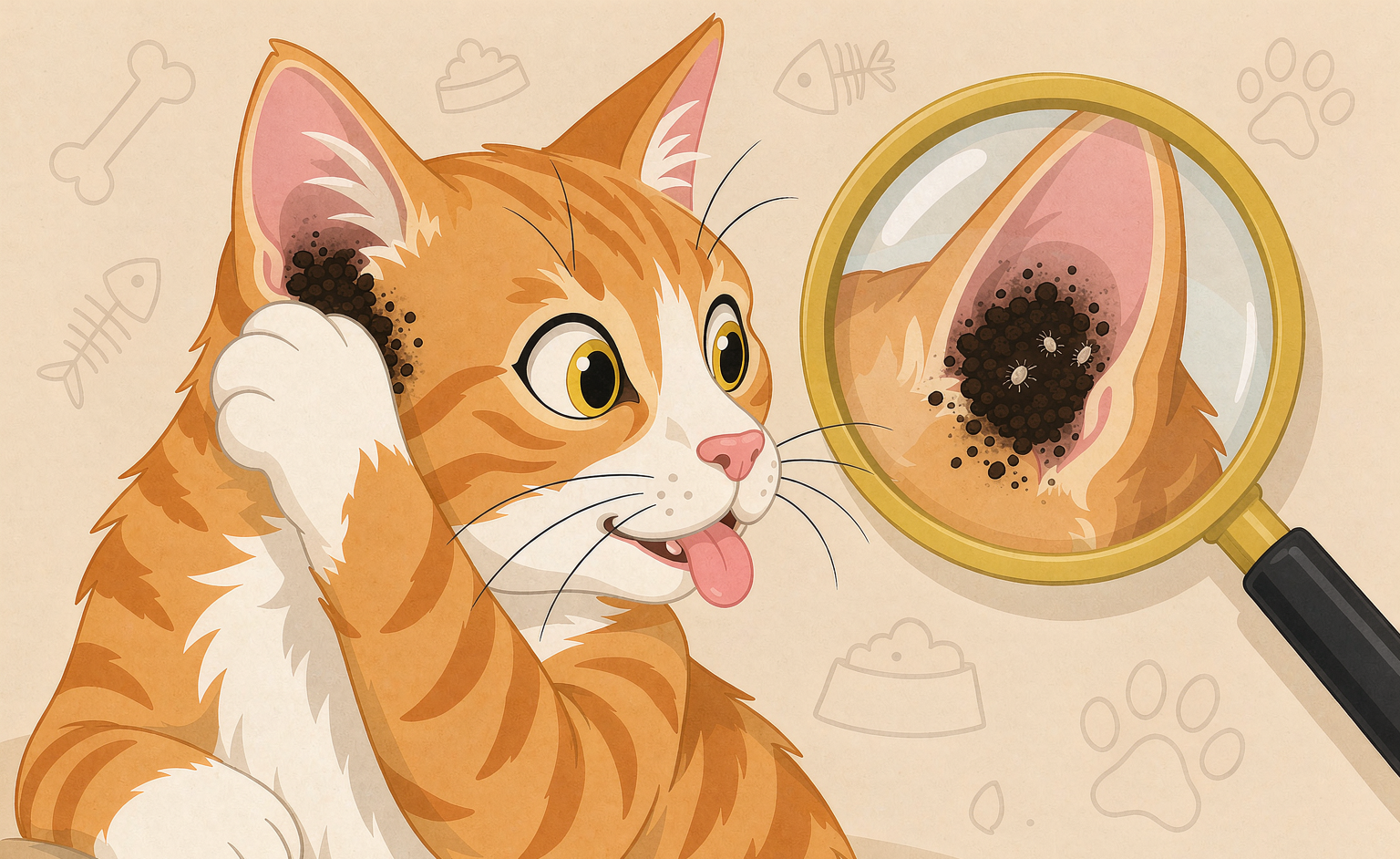
The evidence usually shows up on the pillowcase first. Tiny black crumbs, like someone spilled dried coffee grounds near where the new kitten sleeps. Then you connect the dots: the frantic digging at one ear, the head shaking that rattles her whole body, the way she scratches in her sleep. If this started two or three weeks after you brought her home from a shelter or a litter, the story is close to complete.
Here is the part that catches most owners off guard. The shelter probably did treat her for mites, and the mites came back anyway. That is not a treatment failure. It is arithmetic: ear mites run a three-week life cycle, no medication kills the eggs, and in a multi-cat home every untreated cat is a quiet reservoir. Understanding that arithmetic is the difference between ending an infestation once and chasing it for months.
And cats are not accidental victims here. Of all the species ear mites infest, the cat is the one this parasite is built around.
—
The Short Answer
Cat ear mites, Otodectes cynotis, are highly contagious surface mites and the classic diagnosis behind dry, black, coffee-ground debris in a scratching kitten’s ears. A vet confirms them in minutes with an otoscope or a swab under the microscope. Treatment works, but it has to outlast a three-week life cycle because no product kills the eggs, so follow-up doses on schedule matter more than the first dose. Every cat, dog, and ferret in the household needs treating at the same time, and secondary yeast infections are common while the ears recover.
—
A Parasite Built Around Cats
Otodectes cynotis is a surface mite, meaning it does not burrow. It lives on the skin that lines the ear canal, crawling, feeding, and irritating as it goes. Cats are its natural home base. Dogs and ferrets get infested too, but the textbook patient is a kitten or young cat from a shelter, a cattery, or an outdoor colony, and vets rank ear mites among the most common external parasites of pets overall, second only to fleas.
The reason cats carry this parasite so well comes down to geography, and Cornell dermatologist William Miller describes it perfectly. A mite strolling along a cat’s back or belly gets groomed off by the tongue and swallowed. The ear canal is the one place on a cat’s body that the paw and the tongue cannot reach. A parasite that reaches the canal has found a fortress: warm, protected from grooming, and continuously restocked with the wax and debris it hides in.
An adult mite is barely bigger than a pinhead, but you can sometimes see the evidence with the naked eye: white specks moving against the dark debris in the canal. Anyone who has watched that usually does not forget it.
Three Weeks, Five Stages, One Design Problem
The life cycle runs from egg to adult in about three weeks, through five stages: egg, larva, two nymph stages, then adult. Adults live around two months and reproduce continuously, so a few founding mites become a dense population inside a month.
The design problem sits in the eggs. No licensed medication penetrates them. Every product on the market, old or modern, kills only the stages that are out crawling: larvae, nymphs, and adults. Which means any treatment short enough to finish before the last eggs hatch simply restarts the clock. Two weeks of relief followed by black crumbs again is not the treatment failing. It is the eggs hatching on schedule.
That is also the most common explanation for the shelter mystery. A kitten treated once clears her crawling mites, the eggs survive the visit, and the hatch starts a fresh round, sometimes with a resident cat who never showed a symptom quietly re-seeding the whole household.
Off the cat, the mite’s prospects collapse. The entire life cycle runs on the host, and mites that fall into bedding or carpet survive only a limited time. Environmental cleanup helps, but the animals in the house are always the bigger variable.
Reading the Debris: Mites, Yeast, or Something Else
Before you buy anything, get the diagnosis right, because three different problems produce itchy ears with dark debris, and they need entirely different medications.
The mite picture. Dry, crumbly, black debris that looks like finely ground coffee, with violent scratching and head shaking, in a kitten or young cat with a multi-cat or recent-adoption history. This is the classic presentation, and it fits Otodectes more often than anything else in exactly that patient.
The yeast picture. Moist, waxy, brown discharge with a musty, sweetish odor, in an adult cat, often one with allergies. Yeast, usually Malassezia, also moves into ears that mites have already damaged, which is why the two frequently overlap. The debris texture is the tell: yeast leaves wax, mites leave crumbs.
The bacterial picture. Pus-like discharge and real pain, a cat that flinches when the ear base is touched. This needs prescription medication promptly and tends to hurt more than it itches.
Mixed infections are common enough that the safe rule is simple: the vet’s swab and microscope settle in ten minutes what three days of guessing gets wrong. The dog ear infection guide walks through the same decoder from the canine side, including how a cytology slide is read, and the logic carries over to cats directly.
Two more signs belong on the list. A cat that scratches violently enough can rupture blood vessels inside the ear flap and swell it into a squishy pillow, an aural hematoma that usually needs draining. And in some cats the mites spread past the ears onto the head and neck skin, leaving itchy scabs well outside the canal. Neither changes the diagnosis, but both change the urgency.
How Mites Move Through a Household
Ear mites travel by direct contact. Cats that sleep in piles, groom each other, or wrestle are exchanging whatever crawls, and outdoor cats carry the highest exposure by far. Shelters and litters function as distribution networks, which is why the kitten-with-crumbs scenario repeats so reliably.
The detail that sustains infestations is variation. Signs differ enormously from cat to cat. Some kittens are frantic with a modest mite load, while some adult cats carry mites with barely a scratch and never get brought in. Those quiet carriers are the reason one-cat-at-a-time treatment fails: you clear the patient, the asymptomatic housemate re-seeds him, and the cycle runs another lap.
Diagnosis is quick and cheap. The vet examines the canal with an otoscope, looking for the white specks in motion, or rolls a swab of debris in mineral oil on a slide and reads it under the microscope. A cat with ears too painful to examine may need sedation for a proper look, and that exam tells the vet more than any amount of owner-reported symptoms.
What Treatment Looks Like Now
Modern treatment divides into three moves, and the order matters.
Clean first. The black debris is not just gross, it physically shields mites from topical medication. Vets typically clean the canal before or alongside treatment, though a very painful ear may get a short delay or a sedated cleaning instead of an awake one.
Kill what is crawling. The old regimen meant daily ear drops for weeks, long enough to outlast every egg. Cornell’s veterinarians note that even the folk remedy, a few drops of baby oil several times a day for a month, smothers the motile mites well enough. It works. It is also messy, unpleasant for the cat, and demands a month of perfect compliance, which is exactly where most households tap out. The modern approach is a single-dose or few-dose systemic product, prescription options like selamectin or moxidectin spot-ons or isoxazoline treatments such as sarolaner and fluralaner, that treat the whole skin surface rather than just the ear canal. Because the eggs still survive, the vet schedules either a second dose or a long-acting product to cover the hatch, which is the step that actually ends the infestation.
Treat everyone at the same time. Every cat, dog, and ferret in the home, including the ones with clean ears, goes on the same schedule. Staggered treatment is how households keep trading mites back and forth. Wash bedding and grooming tools in between, but keep expectations proportional: the environment is a minor player next to the animals themselves.
Then book the recheck. The ears can look dramatically better while a slow hatch is still running, and the vet’s slide confirms whether the population is truly finished.
After the Mites: The Infection They Left Behind
Clearing the mites does not always clear the problem, and this is where many treatment plans quietly fall apart.
Weeks of mites and scratching leave the canal lining inflamed and damaged, and secondary yeast and bacterial infections are common in the aftermath. The cat keeps scratching and digging even though the mites are gone, the owner concludes the treatment failed, and the real diagnosis, a secondary infection needing its own medication, goes missed. A recheck swab separates the two outcomes in minutes: mites cleared with yeast still present calls for a completely different prescription.
While the canal recovers, gentle support matters more than aggressive cleaning. Follow your vet’s cleaning instructions exactly, skip the cotton swabs, and keep the ears dry. The step-by-step ear cleaning guide demonstrates the filler-and-massage technique on dogs, and the same method applies to cats with a smaller volume of cleaner and a firmer grip on expectations.
Recovery, New Arrivals, and Prevention
Once the household clears the infestation, staying clear is mostly about managing introductions. A new cat should get a veterinary exam, ears included, before mingling with the residents, and a few weeks of separation for any animal with suspicious debris costs far less than treating the whole house again. New arrivals tend to come with a starter set of issues, and sneezing belongs on the same checklist of things to rule out early.
Indoor cats who never meet new animals carry the lowest exposure risk of any group. For cats with a history of ear trouble, routine ear checks at home, a weekly look and sniff, catch recurrences while they are still small.
For the recovery stretch, some owners add a nutritional layer aimed at the skin. The skin lining the ear canal depends on the same nutrients as the rest of the coat, and supporting its normal yeast balance is a reasonable goal once the prescription treatment is running. Our yeast balance chews pair a botanical blend of Pau d’Arco, dandelion, neem, and marshmallow root with B vitamins, apple cider vinegar, and digestive enzymes in a chicken-flavored chew. The formula was built with dogs in mind, and the feeding guide includes cats, most of whom land at 2 chews daily, with 200 chews per bottle, sourced from USA ingredients. It is a daily layer of support for normal skin and yeast balance during recovery, not a treatment for mites or for the secondary infections they leave behind, which need prescription medication and your vet’s plan.

Frequently Asked Questions
Can ear mites spread to my other pets?
Yes, and quickly. Mites move by direct contact between cats, dogs, and ferrets that sleep together, groom each other, or share tight space, so a positive ear swab in one pet usually means treating every animal in the home on the same schedule. Humans are a different story: cases are rare and brief, with occasional short-lived itchy rashes reported after close contact, but the mites cannot establish an ongoing infestation on people.
How did my indoor cat get ear mites?
Almost always through a new animal. A newly adopted cat, a houseguest pet, or even a brief introduction can pass mites along, and shared bedding or grooming tools from an infested home are occasional culprits. Since mites survive only a limited time off a host, a truly closed indoor household with no new animals rarely develops a spontaneous case. If there is no contact history at all, ask the vet to reconfirm the diagnosis, because yeast infections produce suspiciously similar debris.
Can I treat ear mites at home with oil?
The smother method has real history behind it, and Cornell veterinarians acknowledge that a month of baby oil drops, applied several times daily, kills the crawling mites. But oil does nothing to the eggs, so the regimen has to run long past the last hatch, most cats despise it, and any diagnosis that turns out to be yeast or bacteria instead wastes a month on the wrong problem. A vet-confirmed diagnosis plus a modern single-dose product is faster, cleaner, and usually cheaper in the long run.
How do I know the ear mites are really gone?
The honest answer is the recheck, not the symptom list. Scratching and debris often ease within days of treatment while a slow hatch is still running, and lingering itch after the mites clear can come from the inflamed canal lining or a secondary yeast infection instead. A follow-up swab under the microscope confirms the mites are finished and flags any secondary infection that needs its own medication. Schedule it for the window your vet sets, usually a few weeks in.
Can ear mites cause permanent damage to my cat’s ears?
Untreated, yes, and the progression is well documented. Chronic infestation leads to otitis externa that can push deeper into the middle and inner ear, damage the eardrum, and permanently affect hearing and balance. Severe scratching can also rupture vessels in the ear flap and produce an aural hematoma that needs surgical drainage. Caught early and treated through the full life cycle, ear mites almost never leave any lasting damage, which is the argument for the swab and the recheck rather than the wait-and-see.
Bottom Line
A young cat with black crumbs in her ears and a paw permanently attached to her head has ear mites until a slide proves otherwise. The diagnosis is one of the fastest in feline medicine, and the treatment genuinely works when you respect the opponent’s schedule: three weeks of life cycle, eggs that survive every medication, and a household of potential carriers. Treat every animal at once, finish the doses, do the recheck, and expect the itch to fade on its own timeline. The mites that came back after the shelter visit were not invincible. They were just patient, and now you know their schedule.
Disclaimer
This article is for general education only and is not veterinary advice. A cat with extremely painful ears, a head tilt, loss of balance, or a rapidly swelling ear flap needs prompt veterinary attention. Dietary supplements are not intended to diagnose, treat, cure, or prevent any disease, and you should consult your veterinarian before starting any supplement, especially for cats with medical conditions or those on medication.
References
- VCA Animal Hospitals. “Ear Mites (Otodectes) in Cats and Dogs.”
- Cornell Feline Health Center, Cornell University College of Veterinary Medicine. “Ear Mites: Tiny Critters That Can Pose a Major Threat.”
- Scott DW, Miller WH, Griffin CE. Muller & Kirk’s Small Animal Dermatology. 7th ed. Elsevier.
- Merck Veterinary Manual. “Otitis Externa in Animals.”