
# Why Do Dogs Eat Grass? What 1,571 Owners Told UC Davis
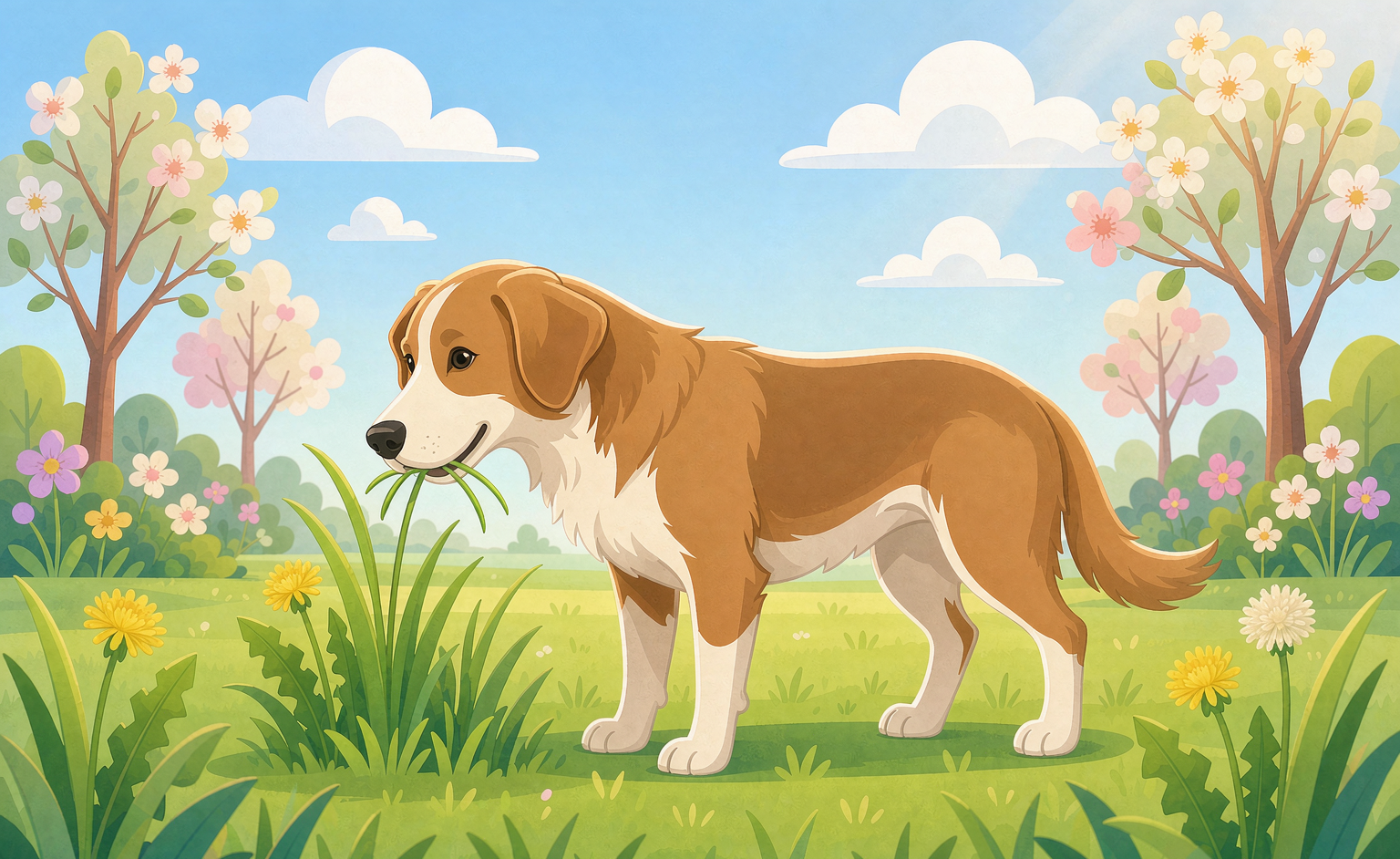
The scene repeats in every park in the country. A dog trots to the freshest patch of grass, lowers his head, and starts pulling up blades like a small lawnmower. The owner watches with a mix of horror and confusion. Twenty minutes later the dog is completely fine, and by dinner the whole episode is forgotten, until the next walk.
Around this ordinary behavior sits a remarkable amount of folklore: dogs eat grass to settle an upset stomach, or to force themselves to vomit, or because their food lacks a vitamin. Ask three dog owners and you will get three confident answers. A research team at the University of California, Davis, decided to replace confidence with data. Across three surveys, ending in a web study covering 1,571 dogs, they measured how many dogs eat plants, how often, and what actually happens before and after. The results dismantled most of the folklore and pointed toward an explanation few owners expect: wolves.
This article walks through what the research found, tests the five common theories one by one, and covers where the genuine risks of grass eating live, because they are rarely in the grass itself.
—
The Short Answer
Dogs eat grass because it is a normal, inherited behavior, not because they are sick. In the UC Davis study of 1,571 dogs, 68 percent ate plants daily or weekly, only 8 percent showed signs of illness beforehand, and just 22 percent vomited afterward. Wild canids and felids regularly consume plant material too, and the habit appears to be an evolutionary leftover. The real dangers sit outside the grass itself: lawn chemicals, parasite eggs in fecal residue, and grass awns. Watch for a change in your dog’s pattern, not the pattern itself.
—
The Study That Replaced Folklore With Numbers
The UC Davis group, led by veterinary behaviorist Benjamin Hart, ran the project in three stages, and the staging is part of what makes the results credible.
They started small, with 25 dogs owned by veterinary students, a group that watches their animals closely. Every single dog ate grass. None of the students reported seeing signs of sickness before their dogs grazed, and only 8 percent said their dogs regularly vomited afterward.
The second survey covered 47 dogs arriving at the teaching hospital for routine outpatient care. Seventy-nine percent of those owners had observed plant eating, with grass the clear favorite. Signs of illness before grazing appeared in a handful of dogs, and vomiting after was occasional at most.
Then the team went big: a web-based survey that drew more than 3,000 responses. After filtering out unusable entries, owners who spent little time with their dogs, and dogs that only chewed plants without swallowing, 1,571 dogs remained. The numbers from that group tell a clean story:
- 68 percent of dogs ate plants on a daily or weekly basis.
- Grass topped the list, eaten by 79 percent of plant-eating dogs.
- 8 percent of owners noticed signs of illness before plant eating.
- 22 percent reported their dogs regularly vomited afterward.
One finding deserves a closer look, because it slices the folklore in half. Younger dogs ate plants more often than older dogs, and the younger grazers were less likely to seem ill beforehand or to vomit afterward. If grass eating came from sickness, the pattern should tilt toward aging dogs with more health problems. Instead it behaves like a juvenile trait that fades with age, which is exactly what an inherited behavior looks like.
And one theory died quietly in the diet data. The team compared dogs fed commercial diets against dogs fed table scraps or raw food, and checked fiber intake specifically. Neither made any difference. Grass eating had no measurable relationship with diet type or fiber level.
What Wolf Droppings Have to Do With Your Lawn
If dogs did not pick up the habit from their food bowls, where did it come from? Field biologists had already answered part of that question. Scat and stomach content studies of wild canids and felids have found plant material in anywhere from 2 to 74 percent of samples, depending on species, region, and season. Wolves do not eat kibble, and they eat grass anyway.
Hart’s team proposes an explanation they call herbal prophylaxis. In wild ancestors who carried intestinal parasites constantly, swallowing plant material may have worked as a periodic purge: indigestible leaves and stems sweep through the gut, wrap around nematodes, and hurry everything along on the way out. Wild chimpanzees offer the best-studied parallel, swallowing whole leaves from certain plants during parasite season to roughly the same effect. If that reasoning sounds familiar, it should. Juvenile dogs, the age group least equipped to fight off parasites, grazed most often in the UC Davis data.
For a modern dog on monthly parasite prevention, the habit solves a problem that no longer exists. That is what evolutionary leftovers look like. The appendix of behaviors.
The Five Theories, Tested One by One
“He eats grass to make himself throw up.” The most common belief, and the one the data handles most roughly. Only 22 percent of grass eaters regularly vomit afterward, which means roughly four out of five dogs keep the grass down without drama. More telling: dogs that seemed ill before eating grass were more likely to vomit afterward. Vomiting follows grass mainly when the stomach was already unhappy, and the grass may simply help an upset stomach finish what it started. An occasional queasy dog using grass as an emetic is plausible. A species-wide habit of deliberate self-poisoning is not what the numbers show.
“He needs the fiber.” Grass consists mostly of water and insoluble fiber, and dogs cannot digest it. The survey tested this directly and found no connection between dietary fiber levels and plant eating. Where the fiber idea retains a sliver of life is individual variation. Vets occasionally meet a chronic grazer whose habit calms down after a fiber bump, and adding digestible fiber, a spoonful of plain canned pumpkin is the standard example, is a safe and cheap experiment for a serial grazer with soft stools. As a population-level explanation, though, fiber fails.
“It’s a vitamin deficiency.” The survey found no increase in grass eating among dogs on raw food or table scraps, the diets most likely to show gaps. Dogs eating a complete commercial diet have even less reason to seek missing nutrients. One honest exception exists: home-prepared diets. A review of 200 home-cooked dog food recipes found that 95 percent fell short of at least one established nutrient minimum. If your dog eats balanced commercial food, deficiency sits near the bottom of the suspicion list. If you cook for your dog, it sits near the top, and a nutritional review with your vet is worth the appointment.
“He just likes it.” The least studied and most underrated theory. Fresh spring grass is tender, moist, and mildly sweet, and many owners report their dogs graze selectively, favoring new growth and ignoring mature blades. Selective preference is hard to square with compulsion and easy to square with enjoyment. An animal that eats something, feels fine, and seeks it out again is doing what animals do with food they like. Nobody has published a taste study of lawn grass, which says something about how research funding follows prestige, but owners who watch closely usually reach this conclusion on their own.
“He’s bored or wants attention.” For some dogs this one holds up. Behaviorists note that grass eating often increases as owner contact time drops, and anxious dogs can graze as a comfort behavior, the canine version of nail biting. The tell is context. A dog who grazes only when left alone in the yard, or only while you are on work calls, is telling you something about his day, not his stomach. For these dogs, more exercise, puzzle feeders, and short training sessions reduce the grazing, which works as a diagnostic answer in itself.
When Grass Eating Deserves a Closer Look
The pattern to watch is change. A dog who has grazed casually for years is a different case from a dog who suddenly starts frantically eating everything green within reach. Call your vet if you notice:
- A sudden, sharp increase in frequency or urgency
- Signs of nausea beforehand: drooling, lip licking, refusing meals, lethargy
- Regular vomiting after grazing, not the occasional one-off
- Grass eating paired with loose stools, weight loss, or appetite changes
Underneath unexplained grazing and vomiting, medicine sometimes finds gastric reflux, inflammatory bowel disease, or pancreatitis. Those conditions need diagnosis and treatment, not lawn advice. When a grazing habit travels alongside digestive trouble, the diarrhea home care guide covers the mild end of that spectrum, and your vet covers everything past it.
The Real Risks Sit Beside the Grass
For all the worry grass eating generates, the grass itself is close to harmless. The trouble travels with it.
Lawn chemicals. Herbicide- and pesticide-treated lawns are the biggest avoidable risk. A dog grazing on a treated lawn is not just walking on chemicals, he is eating them. Keep grazers off any lawn for its full re-entry interval after treatment, and ask about chemical policies at parks and daycare facilities before assuming the grass is safe.
Parasites. Grass in dog-heavy areas carries fecal residue, and with it roundworm and hookworm eggs. There is an irony here: the ancestral purge theory says the habit once helped expel parasites, while modern grazing risks picking them up. Year-round parasite prevention, plus prompt stool pickup in your own yard, closes the loop.
Grass awns. In late summer, foxtail and other grass awns dry into barbed darts that lodge between toes, up a nose, or deep in an ear canal. A dog who is snorting, pawing at one ear, or obsessively licking one paw after running through dry grass needs an inspection, and the dog ear infection guide explains why an awn in the ear is a same-day problem rather than a wait-and-see.
Swallowed blades. The classic vomit-after-grass event is usually mechanical. Long blades swallowed in bunches tickle the throat and stomach lining on the way down. Uncomfortable for the dog, occasionally messy for the rug, rarely dangerous.
Living Peacefully With a Grazer
If your dog is healthy, keeps meals down, and stays current on parasite prevention, most behaviorists now say the goal is not to stop the grazing but to make it safe.
Letting a dog graze on your own untreated lawn is reasonable. If you use lawn products, switch to pet-safe options or fence off a clean strip. Some owners grow a tray of wheat or oat grass indoors, which gives the grazer a controlled supply and tells you whether he is in it for the texture. Bored or anxious grazers do better with a fuller day: longer walks, puzzle toys, training games that make the brain work. And a reliable “leave it” cue, practiced with treats on walks, keeps the habit off lawns you cannot vouch for.
Where a Multivitamin Fits, and Where It Does Not
Because the deficiency theory refuses to die in forum threads, precision helps here. A multivitamin is not a treatment for grass eating, and grazing in a dog on complete food is not a symptom that needs treating. The legitimate use case sits elsewhere: dogs on home-prepared or fresh-food diets, where recipe gaps are common, and picky eaters whose actual intake swings from week to week.
For those dogs, our 26-in-1 multivitamin chews work as an insurance layer: vitamins A, C, D, E, and the full B family, amino acids including taurine and lysine, glucosamine, CoQ10, zinc, and a prebiotic, in a chicken-flavored chew with 200 chews per bottle, sourced from USA ingredients. It does not stop grazing, and it is not meant to. It covers the nutritional corners that make the deficiency question moot, so the grass conversation can stay where the evidence puts it: behavior, not biology.

Frequently Asked Questions
Should I let my dog eat grass?
If the grass is untreated, your dog is current on parasite prevention, and the eating is casual rather than frantic, yes. The UC Davis data describes grass eating as a normal behavior in healthy dogs, not a symptom. The reasonable cautions are chemically treated lawns, heavy-traffic dog areas, and dry grass seed heads in late summer.
Why does my dog eat grass and then throw up?
Vomiting after grass is usually mechanical. Blades swallowed in bunches irritate the throat and stomach lining, and an irritated stomach sometimes empties itself. Only about 22 percent of dogs vomit regularly after grazing, and dogs who seemed ill beforehand were more likely to vomit, so the grass often finishes a job an upset stomach started rather than creating the problem itself.
Do dogs eat grass because they have worms?
The idea has an evolutionary ring to it and a weak modern case. One UC Davis hypothesis holds that wild ancestors ate plants to purge intestinal parasites, and the behavior simply stuck around. A dog on year-round prevention is unlikely to be responding to worms at all. If your dog grazes heavily and is behind on deworming, a fecal test at your vet settles the question in one visit.
Is grass eating a sign my dog’s food is inadequate?
For dogs on a complete commercial diet, almost never, and the survey found no link between diet type and grass eating. The exception is home-prepared food. A review of 200 home-cooked recipes found that 95 percent fell short on at least one required nutrient, so dogs eating fresh-cooked meals are the one group where a diet review or a multivitamin conversation with a vet makes sense.
Can eating grass hurt my dog?
The grass itself rarely does. The realistic dangers are what surrounds it: herbicides and pesticides on treated lawns, roundworm and hookworm eggs in fecal residue where many dogs eliminate, and grass awns that lodge in skin, noses, and ears during dry late-summer grass. Manage those three, and grazing is a low-risk habit.
Bottom Line
Grass eating is one of the rare dog behaviors where the science is genuinely settled: it is common, it is usually unrelated to illness, and it almost certainly came from ancestors who ate plants regularly for reasons of their own. The five popular theories mostly collapse under the numbers, and the two that survive, taste and boredom, are the least dramatic of the bunch. Keep your grazer off treated lawns, keep parasite prevention current, teach a solid “leave it,” and pay attention to changes in the pattern rather than the pattern itself. The dog grazing at the park is not broken. He is being a dog, with a passing interest in salads.
Disclaimer
This article is for general education only and is not veterinary advice. If your dog shows repeated vomiting, appetite loss, lethargy, or a sudden change in grazing behavior, contact your veterinarian. Dietary supplements are not intended to diagnose, treat, cure, or prevent any disease, and you should consult your veterinarian before starting any supplement, especially for dogs with medical conditions or those on medication.
References
- Sueda KLC, Hart BL, Cliff KD. “Characterisation of plant eating in dogs.” Applied Animal Behaviour Science. 2008;111:120-132.
- Hart BL. “Why do dogs and cats eat grass?” dvm360. December 2009.
- VCA Animal Hospitals. “Why Dogs Eat Grass.”
- Andersone Z, Ozolins J. “Food habits of wolves (Canis lupus) in Latvia.” Acta Theriologica. 2004;49:357-367.
- Stockman JA, Fascetti AJ, Kass PH, et al. “Evaluation of recipes of home-prepared maintenance diets for dogs.” Journal of the American Veterinary Medical Association. 2013;242(11):1500-1505.
- Huffman MA, Canton J. “Self-induced increase of gut motility and the control of parasitic infections in wild chimpanzees.” International Journal of Primatology. 2001;22:329-346.