
# Cat Hairballs: Why Cats Get Them, How to Help, and When to Worry
Author: PurePalsLab Research Team
Reviewed by: Veterinary advisory panel
Reading time: 9 minutes
—
There is no sound quite like the hacking of a cat about to cough up a hairball. It starts with a gagging, retching noise that makes you stop whatever you are doing, and it ends, usually, with a wet lump of fur on the floor. If you have a cat, especially a long-haired one, you have heard it more than once. Hairballs are one of the most common and most misunderstood parts of cat ownership. Some owners assume they are normal and unavoidable. Others worry every time it happens. The truth, as with so many cat topics, sits in the middle.
This guide explains what a hairball actually is, why cats get them and why some cats get far more than others, the everyday ways to reduce them, and the important part, the situations where hairballs stop being a normal part of cat life and become a reason to call your vet.
—
The Short Answer
A hairball, or trichobezoar to use the medical term, is a matted clump of hair and stomach fluids that a cat brings up after swallowing loose fur while grooming. Cats spend a huge amount of time grooming, and their tongues have backward-facing barbs that trap and pull in loose hair, which they then swallow. Most of that hair passes harmlessly through the digestive tract and ends up in the litter box. When a cat swallows more hair than the system can move along, some of it collects in the stomach and forms a hairball that the cat eventually vomits up. Regular hairballs, a few times a month at most, are usually a normal part of owning a cat. But frequent hairballs, especially more than once or twice a week, or hairballs accompanied by poor appetite, lethargy, vomiting without a hairball, constipation, or a swollen belly, need a vet, because they can signal a digestive problem or even a blockage. You can reduce hairballs with regular brushing, good hydration, and a diet that supports hair passing through the system.
—
What a Hairball Actually Is
Let me clear up a common misconception first: a hairball is not usually a ball. What comes up is more often an elongated, tube-shaped wad of matted fur, roughly the size and shape of a finger or a small cigar. It looks the way it does because it has been shaped by the tube it traveled through on the way up, the esophagus.
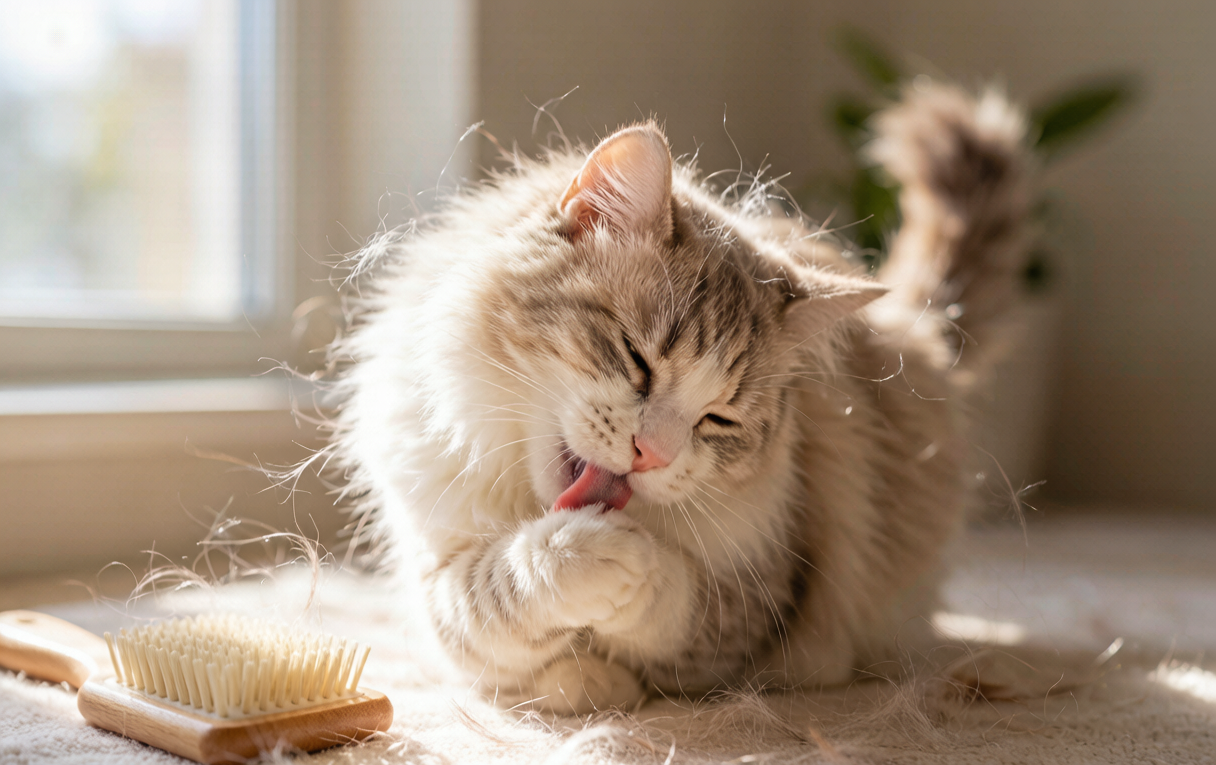
The story of a hairball starts with grooming. Cats are meticulous groomers, spending a significant part of their waking hours cleaning their fur. Their tongues are covered in tiny, backward-facing barbs called papillae, which are great for pulling loose hair and debris out of the coat, but which also mean the hair gets directed down the throat rather than spit out. A cat swallows the loose hair as it grooms. For most cats, this swallowed hair moves down through the digestive system and passes out in the feces, which is why you will sometimes see fur in your cat’s stool. But when a cat swallows more hair than the system can handle, particularly in the stomach where hair does not break down well, it collects and forms a hairball. The cat eventually brings it up, usually with a bout of retching and coughing.
The two things that determine how often a cat gets hairballs are how much hair they swallow and how well their digestive system moves it along. Long-haired cats, cats that shed heavily, and cats that over-groom all swallow more hair. And cats with a sluggish digestive tract, from poor hydration, a low-fiber diet, or an underlying issue, move hair through more slowly, giving it more chance to collect.
—
Why Some Cats Get More Hairballs Than Others
Hairball frequency varies a lot from cat to cat, and it is not random. Several factors raise the odds.
Coat length and shedding. This is the biggest one. Long-haired cats like Persians, Maine Coons, and Ragdolls simply have more fur to swallow, and they tend to shed more too. A cat that sheds heavily, whatever the coat length, takes in more loose hair while grooming.
Grooming habits. Cats that groom obsessively, sometimes because they are stressed, bored, or have a skin irritation, swallow more hair. Over-grooming can be a sign of something else worth addressing, like allergies or anxiety.
Age and health of the coat. Older cats, or cats with skin issues that cause them to shed more, swallow more hair. A cat with a dull or unhealthy coat may also groom differently.
Digestive health. This matters more than most owners realize. A digestive tract that moves food and hair along efficiently passes swallowed hair out with the stool. One that is sluggish, from dehydration, a diet low in fiber, or a gut that is not functioning well, holds onto hair longer and lets it collect. This is one reason hydration and fiber get so much attention in hairball management.
Indoor lifestyle. Indoor cats tend to groom more and shed more consistently than outdoor cats, so they often get more hairballs.
—
Everyday Ways to Reduce Hairballs
You will not stop your cat from grooming, and you should not try, but you can significantly reduce how much hair ends up in their stomach. These habits help.
Brush your cat regularly. This is the single most effective thing you can do. Removing loose hair with a brush means it does not end up swallowed. For long-haired cats, daily brushing makes a real difference. For short-haired cats, a few times a week helps. Use a brush suited to your cat’s coat and make it a calm, positive experience.
Keep your cat hydrated. Hair moves through the system more easily when there is enough water. Encourage drinking with fresh water, a water fountain, or by offering wet food, which contains much more moisture than dry kibble. A well-hydrated cat has a better chance of passing hair out with the stool instead of forming a hairball.
Support healthy digestion. Because a digestive tract that moves things along is less likely to let hair collect, gut health matters. A healthy gut flora and digestive enzymes help keep digestion running smoothly, which supports hair moving through the system rather than gathering in the stomach. Our 12 Billion CFU Multi-Strain Probiotic pairs probiotics, prebiotics, and digestive enzymes, and while it is marketed for dogs, it is also suitable for cats per the feeding guide. It is everyday wellness support, not a treatment for hairballs, and it works best alongside good grooming and your vet’s guidance.
Consider fiber. Fiber can help move hair through the digestive tract. Some cats benefit from a little added fiber, whether from a specialized hairball diet, a fiber supplement, or a small amount of pumpkin, always under your vet’s guidance. High-quality cat foods often include fiber for this reason.
Offer hairball remedies if useful. There are over-the-counter hairball remedies, often a petroleum-based gel or paste, that help lubricate the passage of hair. Used as directed, they can help. Always follow the instructions and check with your vet, because too much of a petroleum-based product can itself cause problems.
—
When a Hairball Is Not Just a Hairball
This is the part that matters most, because the line between normal and concerning is easy to miss.
Frequency is the first clue. Occasional hairballs, a few times a month or less, are normal for many cats, especially long-haired ones. Hairballs more than once or twice a week are too many, and they point to too much hair being swallowed, or a digestive system that is not moving it along well.
Watch for these warning signs. A vet visit is warranted if your cat has hairballs along with a poor appetite, weight loss, lethargy, repeated vomiting without producing a hairball, constipation or straining in the litter box, a painful or swollen belly, or a change in behavior. These can signal a more serious issue, including a blockage, an inflammatory bowel condition, or another digestive problem.
Hairballs are not always the cause. A cat that is retching or vomiting but not producing a hairball may have something else going on, from hair trapped further along the digestive tract to a foreign object or an illness. Repeated dry retching with nothing coming up is not “trying to cough up a hairball,” it is a sign that needs attention.
The vet can help with frequent hairballs. If your cat gets hairballs often, a vet can help identify why, whether it is over-grooming from stress, an underlying skin issue causing excess shedding, or a digestive problem, and can recommend a targeted plan. Never assume frequent hairballs are just “the way cats are.” Sometimes they are, and sometimes they are a clue.
—
Supporting Your Cat's Overall Well-Being
Because hairballs are closely tied to coat health and digestion, everyday care that supports both helps. A healthy coat sheds less and a healthy digestive system moves hair through better, and the two reinforce each other.
A balanced diet, good hydration, and regular grooming are the foundation. Beyond that, a daily supplement can support skin and coat health and comfortable digestion. A multi-strain probiotic with digestive enzymes, like the one mentioned above, supports gut health, while essential fatty acids like omega-3s support a healthy skin and coat, which can reduce shedding. Both are part of everyday wellness rather than a quick fix for hairballs.
If your cat is also dealing with respiratory or eye issues, which are common in cats, our cat sneezing guide and our cat eye discharge guide cover those separately. They are related to the same daily-care picture but have their own causes and signs.
—

Frequently Asked Questions
How often do cats get hairballs?
Many cats bring up a hairball occasionally, a few times a month or less, and that is usually normal, especially for long-haired cats. More than once or twice a week is too often and is worth discussing with your vet, because it can point to excess grooming, heavy shedding, or a digestive issue.
Are hairballs dangerous for cats?
Occasional hairballs are usually not dangerous and are a normal part of cat ownership. The concern comes when hairballs are frequent, or when a hairball causes a blockage, which can be serious. Hairballs with poor appetite, vomiting without producing a hairball, constipation, or a swollen belly need veterinary attention.
What is the best way to prevent hairballs?
The most effective step is regular brushing to remove loose hair before it is swallowed. Keeping your cat well-hydrated, offering a diet with adequate fiber, supporting healthy digestion, and using a hairball remedy as directed can all help. Consistency across these habits reduces hairballs more than any single trick.
Does wet food help with hairballs?
It can. Wet food contains much more moisture than dry kibble, which helps keep your cat hydrated. Good hydration supports a digestive system that moves hair through more efficiently, so it can reduce the chance of hair collecting. Many cats on wet food, or who drink well, have fewer hairballs.
Why is my cat coughing up hairballs suddenly?
A sudden increase in hairballs can mean your cat is shedding more, grooming more, or that something has changed with their digestion. It can also signal an underlying issue, so if hairballs appear suddenly or become frequent, it is worth a vet visit to rule out a digestive or skin problem rather than assuming it is just a phase. —
Bottom Line
A hairball is a matted clump of swallowed fur and stomach fluid that a cat brings up after grooming, and for many cats it is a normal, if unpleasant, part of life. You can reduce hairballs with the habits that actually work: regular brushing, good hydration, adequate fiber, and supporting healthy digestion. The key skill is knowing when hairballs cross the line from normal to concerning, and that comes down to frequency and context. A few times a month is usually fine. More than once or twice a week, or hairballs with a poor appetite, vomiting without producing one, constipation, lethargy, or a swollen belly, means a vet call, because those can point to a real digestive problem or a blockage. Manage the everyday, watch the pattern, and let your vet handle anything that looks more serious than a routine hairball.
—
References
- Cornell Feline Health Center — Hairballs and gastrointestinal health in cats. vet.cornell.edu
- American Association of Feline Practitioners — Digestive health and hairball care. catvets.com
- Merck Veterinary Manual — Trichobezoars and foreign bodies in cats. merckvetmanual.com
—
Disclaimer: This article is for informational purposes only and is not a substitute for professional veterinary advice, diagnosis, or treatment. These statements have not been evaluated by the FDA. This product is not intended to diagnose, treat, cure, or prevent any disease. Always consult a licensed veterinarian for any health concern regarding your pet.