
# Dog Yeast Infection: How to Spot It, Treat It, and Keep It From Coming Back
Author: PurePalsLab Research Team
Reviewed by: Veterinary advisory panel
Reading time: 10 minutes
—
If your dog has been scratching nonstop, chewing their paws, or shaking their head, the word “yeast” has probably crossed your mind. And for good reason. Yeast infections are one of the most common skin problems in dogs, and they are also one of the most frustrating, because they love to come back. The classic signs, a musty or corn-chip smell, greasy skin, dark thickened patches, constant licking of the paws, are easy to recognize once you know what you are looking at. But treating a yeast infection takes more than a quick fix, and understanding why it keeps returning is the real key.
This guide sorts out what a dog yeast infection actually is, the difference between yeast and bacteria, the most common places it shows up and how to spot each one, the treatment options from vet care to home management, and the habits that stop it from becoming a recurring problem.
—
The Short Answer
A dog yeast infection is an overgrowth of Malassezia, a yeast that normally lives on every dog’s skin in small numbers. It becomes a problem when something changes the skin, allergies, a weak immune system, trapped moisture, or a greasy coat, and the yeast multiplies out of control. It usually shows up in the ears, the paws, the belly, or skin folds, and the telltale signs are intense itching, a musty or corn-chip smell, greasy or reddened skin, dark thickened patches, and head shaking. Mild cases can be managed at home with proper cleaning and drying, and with supportive care. But persistent, severe, or recurrent infections need a vet, because the underlying cause, most often an allergy, has to be addressed or the yeast keeps coming back. The goal is not just to kill the yeast, it is to change the conditions that let it grow.
—
What a Dog Yeast Infection Actually Is
Every dog carries yeast on their skin. Malassezia pachydermatis is a normal resident of canine skin, ears, and anal sacs, and in a healthy dog it stays at low, harmless levels. The immune system and the natural skin barrier keep it in check.
A yeast infection is what happens when that balance tips. When the skin becomes inflamed, too oily, too moist, or when the immune response is weakened, the yeast reproduces rapidly and outgrows its normal numbers. The overgrowth itself causes inflammation, and that inflammation makes the skin itchier and more irritated, which feeds the cycle. The dog scratches, the skin breaks, more yeast and bacteria move in, and the problem spirals.
Two things are worth understanding from the start. First, a yeast infection is not a sign of poor hygiene or something the dog “caught.” Every dog already has the yeast. Second, the yeast overgrowth is almost always a symptom of another problem, usually an allergy, a hormonal condition, or an immune issue. Treating the yeast without addressing why it overgrew is why infections keep coming back.
—
Yeast vs. Bacteria: Why It Matters
Not every itchy, smelly skin problem in a dog is yeast. Bacteria cause many of the same signs, and the treatments are different, which is why guessing wrong can make things worse.
Yeast infections tend to produce a distinctive musty, sweet, or corn-chip odor, greasy skin, and a reddish-brown discoloration, often in skin folds and between the toes. Bacterial infections, especially staph, more often cause pustules, crusting, and a different kind of smell, sometimes described as sour or like old cheese. In practice, many dogs have both at once, because scratching opens the skin to bacteria on top of the yeast.
This matters for one practical reason: the treatments overlap but are not identical. Antifungal products target yeast, while antibiotics target bacteria, and using an antibiotic when the problem is yeast, or vice versa, will not help and can let the real problem grow. When an infection is severe or not improving with home care, a vet can look at a skin sample under a microscope and tell you exactly what is going on.
—
Where Dog Yeast Infections Show Up
Yeast is opportunistic, and it gravitates to the warm, moist, low-airflow parts of the body. Knowing the common sites helps you spot an infection early.
The ears. Ear infections are the most common yeast problem in dogs. Yeast loves the dark, warm, humid ear canal. The signs are head shaking, ear scratching, a red or swollen ear flap, and often a brown or dark, waxy discharge with a musty smell. Dogs with floppy ears or frequent ear issues are especially prone. Keeping the ears dry and clean is the main line of defense, and you can read more in our dog ear cleaning guide.
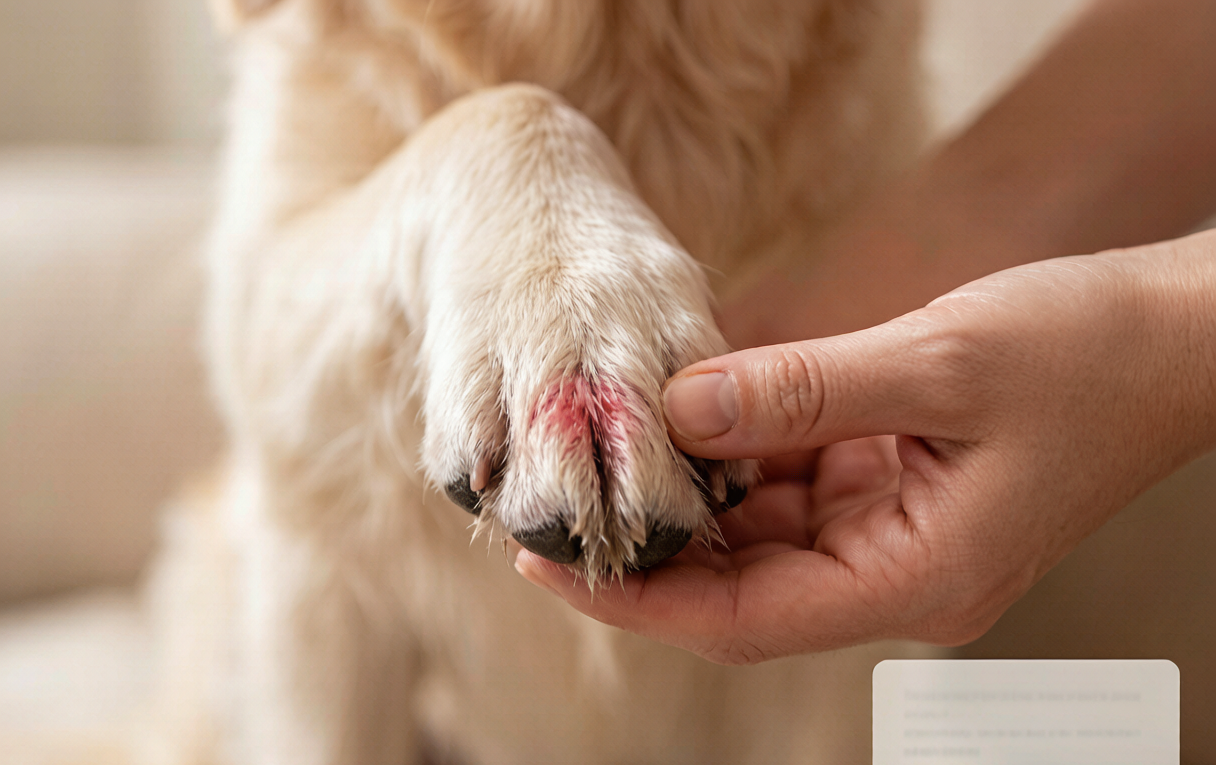
The paws. Yeast between the toes and around the nail beds is extremely common. Dogs with it lick and chew their feet constantly, often to the point of staining the fur red-brown from saliva. The paws may smell like corn chips, a sign people often joke about but which is actually yeast. Moisture, like walking on wet grass or not drying wet paws, is a big trigger.
Skin folds. Brachycephalic and wrinkly breeds, like Bulldogs, Pugs, and Shar-Peis, have deep skin folds that trap moisture and heat. Yeast loves these. The folds can become red, inflamed, greasy, and smelly. Keeping the folds clean and dry is essential for these breeds.
The belly and armpits. Warm, less hairy areas can develop yeast, often as a patchy, reddened, greasy-looking rash.
The general coat and skin. In more widespread cases, the skin becomes greasy and red, the coat may thin, and there is a diffuse itchiness across the body.
—
The Underlying Causes
Yeast overgrowth is a reaction, not a root cause. When you see it, the useful question is why the skin changed enough to let yeast multiply.
Allergies are the number one trigger. Food allergies, environmental allergies like pollen and dust mites, and flea allergies all cause skin inflammation that encourages yeast. This is the most common story: an allergic dog gets itchy, the skin changes, and yeast moves in on top of the allergy. Treating the yeast without managing the allergy means it comes back.
Trapped moisture. Yeast needs moisture. Dogs that swim, get bathed and not dried thoroughly, walk on wet grass, or have deep skin folds hold moisture against the skin, and that environment suits yeast perfectly.
A greasy coat. Some dogs produce excess oil, which feeds yeast. Underlying conditions like seborrhea or hormonal issues can make the skin oilier.
A weakened immune system. Dogs with compromised immunity, from illness, age, or certain medications like long-term steroids, are less able to keep yeast in check.
Ear anatomy. Dogs with floppy, poorly ventilated ears, or dogs that have had frequent ear problems, are structurally more prone to yeast ear infections.
—
How to Treat a Dog Yeast Infection
Treatment has two layers: dealing with the current overgrowth and fixing the conditions that caused it. For mild cases, home management helps. For anything persistent or severe, the vet should be involved.
Vet care for active infections. For a moderate or severe infection, a vet is the right call. They can confirm it is yeast, rule out bacteria, and prescribe appropriate antifungal treatment, whether that is a medicated wash, an ear cleaner, a topical, or in stubborn cases an oral antifungal. They can also address the underlying cause, most often an allergy, with a plan. If the ear canal is very inflamed or the infection is deep, leaving it to guesswork at home is risky, because ear problems can worsen.
Medicated bathing for skin and paws. For skin and paw yeast, regular bathing with an antifungal, anti-seborrheic shampoo helps reduce the yeast load. The key is to work the shampoo in and leave it on the skin for the contact time the label recommends, often five to ten minutes, so it actually reaches the yeast rather than being rinsed off immediately. Afterward, dry the dog thoroughly, especially the feet, the belly, and any folds, because moisture is the enemy.
Keep the ears dry. For ear yeast, cleaning and drying are central. A vet-approved ear cleaner can remove wax and debris, and keeping the ears dry after baths or swimming matters. Never stick anything deep into the ear, and if the canal is red, painful, or very swollen, let the vet handle it.
Address the underlying allergy. If allergies are driving the yeast, the long-term fix is managing them, through allergen avoidance, dietary changes under veterinary guidance, or allergy treatment. This is the step that stops recurrences.
Support skin health from within. Because a healthy skin barrier is more resilient, everyday nutrition plays a supporting role. Essential fatty acids like omega-3s support skin and coat health and a normal inflammatory response, and you can read more in our skin problems guide. Some owners also use supplements that support a normal yeast balance. Our Yeast Balance — Multi-Target Formula is a chewable option with a herbal blend, apple cider vinegar for pH balance, and digestive enzymes, designed to support a normal balance as part of everyday care. It is daily wellness support, not a treatment for an active yeast infection, and it works best alongside proper cleaning, drying, and your vet’s guidance.
—
What You Can Do to Prevent Recurrence
Prevention is where you actually win against yeast, because the yeast itself is not going anywhere, it lives on your dog’s skin permanently. The goal is to keep the conditions unfavorable.
Dry your dog thoroughly. After baths, swimming, or rainy walks, dry the coat, paws, and any skin folds completely. Moisture is the single biggest environmental trigger.
Clean and dry skin folds. For wrinkly breeds, make cleaning the folds part of the routine, and dry them well afterward.
Manage allergies with your vet. If your dog has allergies, work with your vet on a plan. Managing the underlying itch dramatically reduces yeast problems.
Keep ears clean and dry. For floppy-eared dogs, routine ear cleaning and keeping the ears dry after water exposure helps prevent the most common yeast infection site.
Keep paws clean and dry. Wipe and dry paws after walks, especially in wet weather.
Support a healthy skin barrier. Good nutrition and essential fatty acids support the skin’s natural defenses.
—
When to See a Vet
Home care handles mild cases. These situations call for a vet.
The infection is severe, spreading, or very painful. A dog that is in obvious discomfort, has a very swollen ear, or has widespread red, greasy skin needs professional treatment.
It is not improving with home care. If a mild yeast issue does not improve after a few days of proper cleaning, drying, and bathing, it is time to involve a vet rather than keep guessing.
It keeps coming back. Recurrent yeast infections almost always point to an underlying cause, most often an allergy, that needs diagnosis and management.
There is a strong odor or discharge that is not typical. A very foul smell or discharge from an ear or skin area can mean bacteria are involved or the infection is deeper.
There are other symptoms. Fever, lethargy, poor appetite, or weight loss alongside a skin problem suggest something more systemic.
—
Frequently Asked Questions
What does a dog yeast infection look like?
The classic signs are intense itching, a musty or corn-chip smell, greasy or reddened skin, dark thickened patches, and, in the ears, brown waxy discharge with head shaking. It commonly appears on the paws, in the ears, on the belly, and in skin folds.
How do I know if my dog has a yeast or bacterial infection?
Yeast usually produces a musty, sweet, or corn-chip odor with greasy skin and a reddish-brown tint, while bacterial infections more often cause pustules, crusting, and a different, sometimes sour smell. Many dogs have both at once. When in doubt, a vet can look at a skin sample under a microscope to tell them apart, which matters because the treatments differ.
Can I treat my dog’s yeast infection at home?
Mild cases can be managed at home with regular antifungal bathing, thorough drying, keeping the ears and folds clean, and addressing any underlying allergy. But yeast overgrowth is usually a symptom of a deeper issue, so persistent, severe, or recurrent infections need a vet. Home treatment without fixing the cause tends to lead to recurrence.
Why does my dog keep getting yeast infections?
Because the yeast never truly goes away, it lives on the skin. Recurrence means the underlying conditions are still there, most often an allergy, trapped moisture, a greasy coat, or a weakened immune system. Finding and managing the root cause is what stops the cycle.
What can I do to prevent yeast infections in dogs?
Keep your dog dry after baths, swimming, and wet walks, clean and dry skin folds on wrinkly breeds, keep the ears dry, manage allergies with your vet, and support a healthy skin barrier with good nutrition. These habits make the skin an unfriendly place for yeast. —
Bottom Line
A dog yeast infection is an overgrowth of Malassezia, a yeast that already lives on every dog’s skin. It happens when something, usually an allergy, trapped moisture, a greasy coat, or a weakened immune system, tips the balance and lets the yeast multiply. It shows up most often in the ears, paws, belly, and skin folds, with the telltale musty or corn-chip smell, greasy skin, and relentless itching. Mild cases respond to proper cleaning, drying, and antifungal bathing, but the real victory is prevention, drying your dog thoroughly, managing allergies, keeping the ears and folds clean, and supporting a healthy skin barrier. And because yeast overgrowth is almost always a symptom of something deeper, persistent or recurrent infections warrant a vet, not endless home guessing.
—
References
- Cornell University College of Veterinary Medicine — Malassezia dermatitis and skin conditions in dogs. vet.cornell.edu
- Merck Veterinary Manual — Malassezia dermatitis in dogs. merckvetmanual.com
- VCA Animal Hospitals — Yeast infections in dogs. vcahospitals.com
—
Disclaimer: This article is for informational purposes only and is not a substitute for professional veterinary advice, diagnosis, or treatment. These statements have not been evaluated by the FDA. This product is not intended to diagnose, treat, cure, or prevent any disease. Always consult a licensed veterinarian for any health concern regarding your pet.