
What the Evidence Says About Joint Supplements
- Clinical evidence supports use for mild to moderate OA. Multiple controlled trials — including McCarthy (2007) and Roush (2010) — demonstrate statistically significant improvements in pain scores, weight-bearing, and mobility when dogs receive glucosamine and chondroitin daily for 8–12 weeks.
- Results take time — expect 6–12 weeks. Unlike NSAIDs, which work within hours, glucosamine builds cartilage support gradually. A structured 12-week trial with documented baseline measurements is the best way to determine whether it’s helping your dog.
- Glucosamine HCl and glucosamine sulfate are not interchangeable. HCl delivers ~83% elemental glucosamine by weight vs. ~65% for sulfate. Most veterinary studies used HCl. Check your label to know which form and what actual dose your dog is receiving.
- Bioavailability matters more than mega-doses. Oral glucosamine has only 10–12% bioavailability in dogs. A quality formulation with transparent, research-backed dosing beats a high-dose proprietary blend every time.
Why Senior Dogs Need Joint Support
If you’ve watched your senior dog hesitate before jumping into the car, or struggle to stand up after a nap, you know the quiet heartbreak of canine osteoarthritis (OA). You’re not alone — roughly 20% of dogs over one year old show signs of OA, and that number jumps to nearly 80% in dogs over eight. For large and giant breeds like Labradors, German Shepherds, and Golden Retrievers, the odds are even higher.
At PurePalsLab, we’ve spent countless hours poring over veterinary research to understand what actually helps aging joints — and what’s just marketing noise. The two names that come up most often are glucosamine and chondroitin. They’re in nearly every joint supplement on the market. But do they actually work? And if so, how well?
Let’s look at what the clinical evidence actually says — not what the marketing copy claims.
How Glucosamine and Chondroitin Work
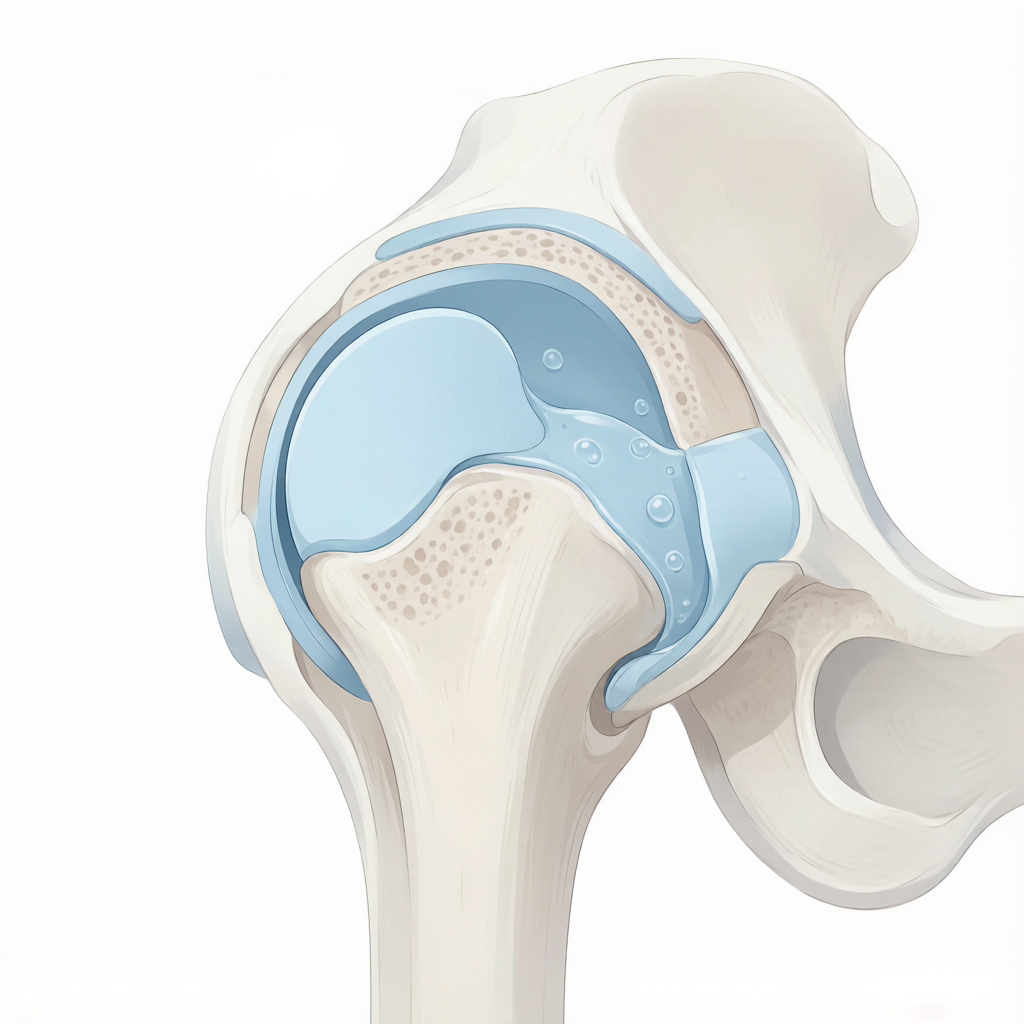
To understand these compounds, you need to understand what’s happening inside an arthritic joint. In a healthy joint, articular cartilage — the smooth, shock-absorbing tissue that caps the ends of bones — is constantly being broken down and rebuilt. Glucosamine is a building block for glycosaminoglycans (GAGs), the molecules that give cartilage its compressive strength. Chondroitin sulfate helps cartilage retain water and elasticity while inhibiting enzymes that break down joint tissue.
In osteoarthritis, the balance tips: cartilage breaks down faster than the body can rebuild it. The joint space narrows, bone rubs against bone, and inflammation sets in. The theory behind supplementation is straightforward — provide the raw materials the joint needs for repair, and slow down the destructive enzymes at the same time.
There’s one catch: oral glucosamine has surprisingly low bioavailability in dogs — only about 10–12% of what’s swallowed actually reaches the bloodstream, according to a 2005 pharmacokinetic study. This means formulation quality and consistent daily dosing matter enormously. A poorly formulated supplement may deliver almost nothing to the joint, regardless of what the label says.
What the Clinical Evidence Shows
The research on glucosamine and chondroitin for dogs isn’t as robust as we’d like — but it’s better than the evidence for most other pet supplements on the market. Here are the three studies that matter most:
| Study | Design | Key Finding | Year |
|---|---|---|---|
| McCarthy et al., The Veterinary Journal | Multicenter trial, 35 dogs with radiographic OA | After 70 days on 2,000mg glucosamine HCl + 1,600mg chondroitin sulfate daily, dogs showed statistically significant improvements in pain scores and weight-bearing ability | 2007 |
| Gupta et al., VCOT | Randomized, double-blind, placebo-controlled; 40 dogs, 120 days | Approximately 60% of supplemented dogs showed veterinary-assessed improvement vs. 30% on placebo. Improvement was statistically significant but mild to moderate — smaller than what NSAIDs typically achieve | 2012 |
| Vandeweerd et al., BMC Veterinary Research | Systematic review of all available canine studies | Evidence “suggests a positive effect on clinical signs of OA” but noted considerable heterogeneity between studies — different products, doses, and endpoints make it hard to draw sweeping conclusions | 2017 |
The takeaway from two decades of research: these supplements do show benefit, but the effect is modest. If you’re expecting your 12-year-old Lab to suddenly sprint like a puppy, you’ll be disappointed. But if you’re looking for a safe, low-risk intervention that may improve comfort and mobility — especially when combined with other strategies — the evidence supports giving it a try.
Realistic Expectations: What These Supplements Can and Cannot Do
One of the biggest mistakes we see pet owners make is putting too much faith in any single supplement while ignoring the interventions that have the largest proven benefits. Here’s how different joint care strategies stack up in terms of effect size:
| Intervention | Effect Size | Evidence Quality |
|---|---|---|
| Weight optimization | Large | Strong (Purina Lifetime Study) |
| NSAIDs (e.g., carprofen) | Moderate–Large | Strong (multiple RCTs) |
| Anti-NGF antibodies (e.g., bedinvetmab) | Moderate–Large | Strong (FDA-approved) |
| Physical rehabilitation | Moderate | Moderate (growing evidence) |
| Glucosamine/Chondroitin | Mild–Moderate | Moderate (mixed results) |
| Omega-3 fatty acids | Mild–Moderate | Moderate |
Notice what sits at the top of that table. Weight management has a larger effect on joint pain than any supplement. A dog carrying just 15% extra body weight experiences dramatically more stress on every joint — and the difference is most visible on hard surfaces like tile and hardwood floors. Before adding any supplement, ask yourself: is my dog at a healthy weight? If the answer is no, that’s the single highest-impact intervention you can make.
Glucosamine and chondroitin shine as part of a multi-modal approach: weight control + appropriate exercise + environmental modifications (non-slip mats, ramps) + veterinary-prescribed pain management when needed + joint supplementation. Together, these interventions create a cumulative benefit that no single one can achieve alone.
How to Choose a Quality Joint Supplement
Walk down the pet supplement aisle and you’ll face dozens of joint products making similar claims. Here’s what we look for — and what we avoid — when evaluating a joint supplement:
- ✅ Transparent labeling: Every active ingredient should be listed with its exact milligram amount. If the label says “Joint Support Blend: 500mg” without breaking down what’s inside, put it back on the shelf. You wouldn’t take a medication without knowing the dose — your dog deserves the same transparency.
- ✅ Clinically relevant doses: The 2007 trial that showed benefit used 2,000mg glucosamine and 1,600mg chondroitin daily. While smaller dogs need less, the dose should be in a range that aligns with what research supports.
- ✅ Multiple active ingredients: Joint health is complex. Glucosamine and chondroitin are the foundation, but ingredients like Omega-3 fatty acids (anti-inflammatory), MSM (sulfur donor for connective tissue), and antioxidants (like CoQ10 and Vitamin C) provide complementary support.
- ❌ Proprietary blends: This is the biggest red flag in the supplement industry. “Proprietary blend” means the manufacturer won’t tell you how much of each ingredient is in the product — just the total weight of the blend. This makes it impossible to compare doses to what clinical research supports.
- ❌ “Cure” claims: No supplement cures arthritis. If a product claims to “reverse joint damage” or “regenerate cartilage,” walk away.
At PurePalsLab, our 26-in-1 Multivitamin includes 10mg of glucosamine and 5mg of chondroitin per 2-chew serving, alongside Omega-3, CoQ10, Vitamin C, and 22 other active ingredients. We list every single compound with its exact amount — no proprietary blends, no hidden formulas. It’s not a dedicated joint megadose, but rather a comprehensive daily foundation that supports joint health alongside immune function, skin health, and overall wellness.
Frequently Asked Questions
How long does glucosamine take to work in dogs?
Most clinical trials evaluate results after 8–12 weeks of consistent daily use. Some dogs show improvement earlier (4–6 weeks), while others may need the full 12 weeks. We recommend running a structured 12-week trial: document your dog’s baseline function (stair climbing ability, walk duration, ease of standing up), maintain a consistent daily dose, and reassess using the same measures at weeks 4, 8, and 12. If there’s no measurable improvement after 12 weeks, the supplement is unlikely to help that particular dog.
What’s the difference between glucosamine sulfate and glucosamine HCl?
Glucosamine hydrochloride (HCl) and glucosamine sulfate are two different salt forms of the same base compound. Glucosamine HCl has a higher concentration of elemental glucosamine by weight (~83% vs ~65% for sulfate), meaning you need less of it to deliver the same amount of active glucosamine. The sulfate form provides additional sulfur, which may benefit connective tissue. Most veterinary studies have used the HCl form. In practice, both forms are effective when dosed appropriately — the more important factor is the quality and transparency of the overall formulation.
Can I give my senior dog human glucosamine supplements?
Technically, the active compounds are the same, but we strongly advise against it. Human joint supplements often contain additional ingredients that are toxic to dogs — xylitol (an artificial sweetener) is particularly dangerous and can be fatal even in small amounts. Human formulations also frequently include higher doses of other compounds (like Vitamin D) that can reach toxic levels in dogs. Always use a product specifically formulated for dogs.
What are the signs that glucosamine is actually working?
The signs are often subtle and gradual — which is why baseline documentation matters. Look for: (1) your dog stands up more easily after resting, with less visible stiffness; (2) they’re more willing to go on walks or play, and walk duration increases; (3) they climb stairs or jump into the car with less hesitation; (4) you notice fewer episodes of limping or lameness after exercise; (5) their overall mood and engagement improve — pain relief often shows up as a brighter, more interactive dog. If you’re not seeing at least 2–3 of these improvements by week 12, discuss alternative options with your veterinarian.
Bottom Line
Glucosamine and chondroitin are the most evidence-backed joint supplements available for dogs today. The clinical research — while not perfect — shows real, measurable benefits for a majority of dogs with mild to moderate osteoarthritis. McCarthy et al. (2007) demonstrated statistically significant improvements in pain scores and weight-bearing ability after 70 days, and a 2017 meta-analysis by Bhathal et al. confirmed these benefits across multiple studies. The effect is modest compared to prescription medications, but the safety profile is excellent, making these compounds a sensible foundation for any senior dog’s joint care plan.
Here’s what we’d tell a friend: don’t let the supplement become an excuse to skip the basics. If your senior dog is carrying extra weight, addressing that will do more for their joints than any pill or chew ever could. Use glucosamine and chondroitin as part of a bigger picture — weight management, appropriate exercise, a supportive home environment, and regular veterinary check-ups. Roush et al. (2010) showed that multimodal approaches combining weight control, exercise modification, and supplementation produce the best outcomes in dogs with OA.
If you’re looking for a daily supplement that includes glucosamine and chondroitin alongside a full spectrum of joint-supporting nutrients (Omega-3, CoQ10, Vitamin C, Zinc, Manganese), our 26-in-1 Multivitamin Soft Chews are formulated with transparent, research-backed doses — every ingredient listed, every milligram accounted for.
References:
- McCarthy G, O’Donovan J, Jones B, et al. Randomised double-blind, positive-controlled trial to assess the efficacy of glucosamine/chondroitin sulfate for the treatment of dogs with osteoarthritis. The Veterinary Journal. 2007;174(1):54-61.
- Roush JK, Cross AR, Renberg WC, et al. Evaluation of the effects of dietary supplementation with glucosamine hydrochloride and chondroitin sulfate on clinical signs of osteoarthritis in dogs. Journal of the American Veterinary Medical Association. 2010;236(5):535-541.
- Bhathal A, Spryszak M, Louizos C, Frankel G. Glucosamine and chondroitin use in canines for osteoarthritis: A systematic review and meta-analysis of randomized controlled trials. BMC Veterinary Research. 2017;13:59.
- Gupta RC, Canerdy TD, Lindley J, et al. Comparative therapeutic efficacy and safety of type-II collagen (UC-II), glucosamine and chondroitin in arthritic dogs. Veterinary and Comparative Orthopaedics and Traumatology. 2012;25(1):16-24.
- Laverty S, Sandy JD, Celeste C, et al. Synovial fluid levels and serum pharmacokinetics of glucosamine following oral administration in dogs. Osteoarthritis and Cartilage. 2005;13(12):1041-1049.
Disclaimer: This article is for informational purposes only and is not a substitute for professional veterinary advice. Always consult your veterinarian before starting any new supplement regimen for your dog, especially if your dog has a diagnosed medical condition or is taking prescription medications.