
# Why Does My Dog Smell Like Fritos? The Truth About That Corn Chip Smell
Author: PurePalsLab Research Team
Reviewed by: Veterinary advisory panel
Reading time: 9 minutes
—
There is a smell that almost every dog owner knows, even if they have never put words to it. Your dog curls up next to you, and you catch a whiff of something oddly familiar. Corn chips. Fritos, specifically. You are not imagining it, and you are not alone in noticing it. It is such a common thing that dog people joke about “Frito feet” like it is a known phenomenon.
Here is what most people do not realize. That corn chip smell is real, it has a scientific explanation, and it is not always the harmless quirk it is made out to be. Usually it comes from the feet, where a normal mix of bacteria and yeast lives on the skin and produces a smell as a byproduct. But the same smell can occasionally show up somewhere it should not, or it can be a sign that something is off in the skin. The skill is learning to tell the difference between a dog who just has normal, healthy “Frito feet” and one where the smell is a clue about a problem. This guide helps you sort that out.
—
The Short Answer
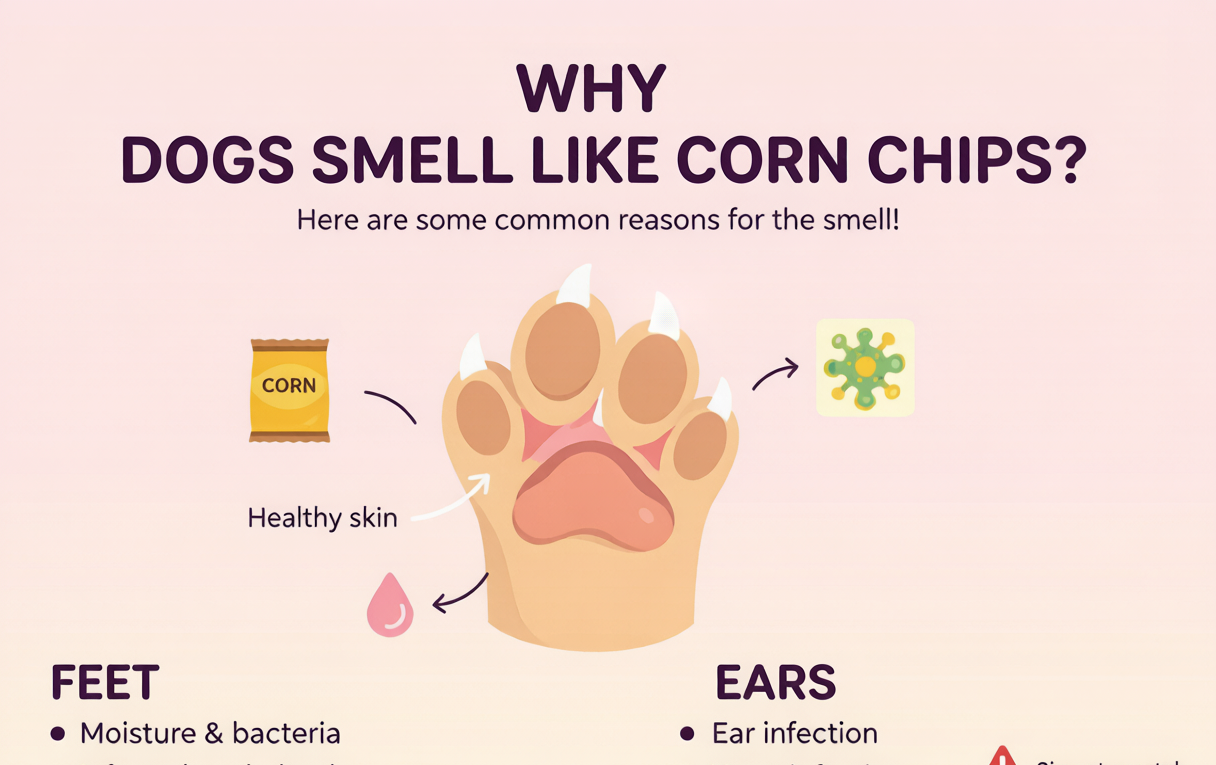
The corn chip smell on a dog most often comes from the feet, and it is usually normal. Bacteria and yeast that naturally live on the skin, especially between the toes, break down sweat and oils and release compounds that smell like corn chips. This is not a sign of illness in most dogs, and it is more noticeable in some dogs than others. But if the smell is suddenly much stronger, comes with redness, itching, licking, discharge, or any sign of irritation, it is no longer just “Frito feet.” It can point to a bacterial or yeast overgrowth that needs attention, and that is worth a vet look. The same corn chip note in the ears usually means something different, and it is worth checking.
—
Why Feet Smell Like Corn Chips (It Is Science, Not Quirk)
The corn chip smell has a real cause, and understanding it removes the mystery. Dogs sweat mainly through their paw pads, and between the toes there is a normal community of bacteria and yeast living on the skin. Some of these organisms, particularly certain types of bacteria, break down the proteins and oils in that sweat and on the skin. The byproducts they release include compounds that have a warm, salty, yeasty smell, almost exactly like corn chips.
This is why the smell is strongest on the feet and why it can be more noticeable after your dog has been active or when they are warm. It is also why some dogs smell more “Frito-like” than others: individual dogs have different skin chemistry, different amounts of the relevant bacteria, and different activity levels. A dog who runs around a lot or has more moisture between the toes will often have a stronger corn chip note. For the vast majority of dogs, this is completely normal and not a health problem. It is just the smell of a healthy, living community of skin organisms doing their thing.
So if your dog has a mild corn chip smell on the feet and nothing else seems off, you can relax. It is not a sign that your dog is dirty or sick. It is a normal body smell with a neat explanation, and many owners only notice it because they spend time close to their dog.
—
When It Stops Being "Just Fritos"
Here is the important part. The corn chip smell becomes a clue when it changes character or comes with other signs. A mild, familiar foot smell is normal. A smell that is suddenly much stronger, or that is accompanied by irritation, is a different matter.
Watch for these, because they point to a possible bacterial or yeast overgrowth rather than normal skin flora:
- Red, irritated, or inflamed skin between the toes or on the paw pads.
- Excessive licking or chewing at the feet, which is often a sign your dog is uncomfortable.
- Moist, red, or raw-looking areas between the toes, sometimes with discharge.
- A noticeably stronger or more offensive smell than your dog’s usual baseline.
- Swollen or tender paws, or your dog limping or favoring a foot.
If you see any of these, the corn chip smell is no longer just a harmless quirk. It can point to a bacterial or yeast infection, which is more common in dogs with allergies, dogs with lots of skin folds, or dogs whose feet stay moist. This is a case for a vet, who can look at the skin and tell you whether it needs treatment. Allergies, in particular, are a common driver of the licking and moisture that set up the overgrowth, so if your dog is a chronic foot licker, that is worth addressing at the source.
—
The Same Smell in the Ears: A Different Story
Here is a trick that trips up a lot of owners. The corn chip smell can also show up in the ears, and that is not the same as normal “Frito feet.” A corn chip or yeasty smell coming from your dog’s ear usually points to a yeast overgrowth in the ear canal, which is a common form of ear infection.
The signs to watch for are different from the feet: your dog scratching at an ear, shaking its head, tilting its head, or rubbing its ear along the floor. A yeasty smell in the ear, especially with any of these signs, is worth a vet look. Ear infections do not usually resolve on their own, and they can be painful. A vet can examine the ear and prescribe the right treatment, which is far better than letting it linger. If you notice the corn chip smell in the ears rather than on the feet, treat it as an ear concern, not a foot quirk.
—
The Skin and Diet Connection
Here is where the whole body links together. The health of a dog’s skin, including the feet, depends partly on what is going on inside, and the balance of the skin and the gut are connected. Supporting healthy skin can help keep the skin’s natural barrier strong, which supports a healthy balance of skin organisms.
Omega-3 fatty acids, like the EPA and DHA in our Omega 3-6-9 Complete Fatty Acid Complex, support skin barrier health and have an anti-inflammatory role, which can help support normal, healthy skin. And our 12 Billion CFU Multi-Strain Probiotic is designed to support gut flora and normal digestion, which is one angle on overall health from the inside. These are support steps for a healthy baseline, not a treatment for a skin infection, and they work best alongside good hygiene and a vet’s guidance.
One honest note: if your dog has an actual foot or ear infection, no supplement replaces the fix, which is treating the underlying cause. Diet and skin support are about maintaining a healthy baseline so problems are less likely to set up, not about covering up a smell that signals an active issue. Chase the cause first, and let a healthy routine support prevention.
—
When to See the Vet
A mild corn chip smell on the feet is normal, but these situations call for a professional:
- The smell suddenly becomes much stronger or more offensive than usual.
- The feet are red, irritated, raw, or swollen, or your dog is licking and chewing them constantly.
- There is discharge, moisture, or a wound between the toes.
- The smell is coming from the ears, especially with scratching or head shaking.
- Your dog is limping or favoring a paw.
In those cases, a vet can tell you whether you are looking at normal skin flora or an overgrowth that needs treatment. The good news is that most causes are very manageable once identified, whether it is allergies driving the licking or a yeast overgrowth that needs a treatment plan.
—

Frequently Asked Questions
Is it normal for my dog’s feet to smell like Fritos?
Yes, in most dogs. The corn chip smell comes from bacteria and yeast that naturally live between the toes and break down sweat and oils. It is a normal body smell, not a sign of illness. If your dog has a mild corn chip smell on the feet and shows no signs of irritation, it is nothing to worry about.
Can I prevent or reduce the corn chip smell?
Keeping your dog’s feet dry and clean helps, because moisture between the toes lets the relevant bacteria thrive. Wiping the paws after walks, especially in wet weather, and keeping the fur between the toes trimmed can reduce the smell. But for most dogs, a mild version is just normal and not worth trying to eliminate entirely.
When should the corn chip smell worry me?
Worry if the smell gets suddenly much stronger, or if it comes with redness, constant licking, moisture, discharge, or swelling between the toes. Those point to a possible bacterial or yeast overgrowth that needs a vet’s attention. Also check the ears: a corn chip smell in the ears usually means a yeast ear infection, which is a different issue.
Is the corn chip smell from my dog’s feet a sign of a yeast infection?
Not automatically. A mild smell is usually just normal skin flora. But a much stronger smell, or one that comes with redness, itching, and moisture, can point to a yeast or bacterial overgrowth. If you are not sure, especially if your dog seems uncomfortable, let a vet look at the skin and tell you what is going on. —
Bottom Line
The corn chip smell on a dog is real, it has a simple explanation, and most of the time it is completely normal. It comes from bacteria and yeast that naturally live on the feet and break down sweat, producing that familiar Frito note. For the majority of dogs, it is nothing to worry about, and keeping the feet dry and clean can help. But the smell becomes a clue when it gets stronger, or when it comes with redness, licking, moisture, or any sign of irritation, because then it can point to a bacterial or yeast overgrowth that needs a vet. And if the same smell is coming from the ears, treat it as an ear concern, not a foot quirk.
So enjoy the weird, familiar smell for what it usually is, a healthy dog being a dog, but know the difference between a harmless quirk and a signal worth reading. When in doubt, a quick vet check gives you the answer.
—
References
- American Veterinary Medical Association (AVMA) — Canine skin and coat health resources. avma.org
- Cummings School of Veterinary Medicine, Tufts University — Canine skin and nutrition resources. vetmed.tufts.edu
- American Kennel Club (AKC) — Canine skin, paw, and ear care guidance. akc.org
—
Disclaimer: This article is for informational purposes only and is not a substitute for professional veterinary advice, diagnosis, or treatment. These statements have not been evaluated by the FDA. This product is not intended to diagnose, treat, cure, or prevent any disease. Always consult a licensed veterinarian for any health concern regarding your pet.