
# Cat Eye Discharge: What’s Normal, What’s Not, and How to Care for It
Author: PurePalsLab Research Team
Reviewed by: Veterinary advisory panel
Reading time: 10 minutes
—
Cats get gunk in their eyes sometimes, and owners are never quite sure whether to wipe it away or worry about it. A little sleep in the corner of the eye after a nap is normal. A thick green ooze that is making the eye squint shut is a completely different story. The hard part is that eye discharge in cats sits somewhere on a wide spectrum, and telling the everyday version from the sign of an infection is a skill every cat owner eventually needs.
This guide helps you read what is coming out of your cat’s eyes. What normal discharge looks like, the most common causes of abnormal discharge, how feline herpesvirus fits into the picture, how to clean a cat’s eyes safely, and the exact signs that mean a vet visit rather than a warm cloth.
—
The Short Answer
A small amount of clear or slightly brownish discharge in the corner of a cat’s eye, especially after sleep, is normal. Abnormal discharge means something changes: the discharge becomes green or yellow, the eye is red, swollen, or squinting, there is a lot of it, or it keeps coming back. The most common cause of abnormal eye discharge in cats is an upper respiratory infection, and a large share of those trace back to the extremely common feline herpesvirus (FHV-1), which most cats carry for life and which flares up during stress. Other causes include conjunctivitis, allergies, irritants, a foreign object, eyelid or eyelash problems, or a blocked tear duct. For everyday care, gently wipe the eye with a warm, damp cloth and keep the area clean. For cats prone to viral flare-ups, supporting the immune system is a common part of the routine. But any eye that looks red, painful, or has thick colored discharge needs a vet, not a wipe, because eye problems can worsen quickly.
—
Normal vs. Abnormal Discharge
The first skill is simply telling the two apart, because not all eye discharge is a problem.
Normal discharge is usually a small amount of clear, watery, or slightly crusty brownish material in the inner corner of the eye. Cats accumulate a little “sleep” when they nap, and a trace of it is not a concern. It wipes away easily and does not bother the cat.
Abnormal discharge changes one of three things: color, volume, or effect on the cat. Green or yellow discharge signals infection. A lot of discharge, enough to mat the fur or run down the face, is not normal. And discharge that comes with a red, swollen, squinting, or painful eye, or that makes the cat paw at its face, is a problem regardless of what it looks like.
If you are unsure, err on the side of caution. Eye problems in cats can progress fast, and the cost of a vet check is small compared with the cost of a worsened infection.
—
The Most Common Causes of Abnormal Discharge
When eye discharge stops being normal, one of these is usually behind it.
Upper respiratory infections. This is the big one. Cats get respiratory infections that are roughly the feline version of a cold, and they often affect the eyes. The discharge can be clear at first and turn thick and colored as the infection progresses. Cats may also sneeze, have a runny nose, feel feverish, or lose their appetite. Among the viruses involved, feline herpesvirus (FHV-1) is the most common and deserves special attention, more on that in a moment.
Conjunctivitis. The pink tissue lining the eyelid becomes inflamed. Conjunctivitis in cats is often linked to herpesvirus or other infections, and it shows up as a red, swollen eyelid with discharge. It can be contagious between cats, so if you have multiple cats, keep an eye on them.
Allergies and irritants. Like dogs, cats can react to pollen, dust, smoke, and strong scents with watery, itchy eyes. The discharge is usually clear and watery rather than thick.
A foreign object. A stray piece of litter, a grass seed, or a bit of dust can lodge in the eye and cause tearing, squinting, and discharge. Cats with a foreign object typically keep one eye partly closed and paw at it.
Blocked tear duct. A blocked nasolacrimal duct can cause tears to overflow onto the face. The discharge tends to be clear and watery rather than colored.
Eyelid or eyelash problems. An ingrown eyelash, a rolled-in eyelid, or hair rubbing the eye can cause chronic irritation and tearing.
Corneal problems. A scratch or ulcer on the clear surface of the eye is serious. A squinting, painful eye with discharge, especially in a cat that keeps it shut, can point to the cornea and needs urgent vet attention.
—
The Feline Herpesvirus Connection
A large share of feline eye problems traces back to one virus: feline herpesvirus (FHV-1). If you have a cat, you have probably already heard of it, and if not, this is worth learning because it explains a lot of recurring eye and respiratory issues in cats.
FHV-1 is extremely common. Most cats are exposed to it at some point, and a large number carry it in a dormant state for life. The virus lives quietly in the body, and for most of the time it causes no symptoms at all. But during stress, illness, or other triggers, it can reactivate and cause a flare-up. When it does, the classic signs include eye and nasal discharge, sneezing, and conjunctivitis. In some cats, the eyes are the main or only symptom, with recurrent episodes of watery or colored discharge.
This is why immune support gets so much attention in everyday feline care. The goal is not to “cure” a virus, because most cats already carry it. It is to help keep the cat’s system resilient so flare-ups happen less often and are milder. That is where something like L-Lysine 800mg Immune Support for Cats enters the picture. L-lysine is an amino acid that has been studied for its role in supporting cats with FHV-1, and it is a common daily addition for cats prone to flare-ups. You can read more about what an FHV-1 diagnosis actually means in our feline herpesvirus guide. A supplement like this is supportive, not a treatment, and it works best alongside a calm, low-stress routine and your vet’s guidance.
Because FHV-1 is so common, recurrent eye discharge in a cat, especially one that also sneezes, is very often a herpes flare-up rather than a brand-new infection. Knowing that changes how you respond: you focus on reducing stress, supporting the immune system, and keeping the cat comfortable, while letting the vet handle anything that looks serious.
—
How to Clean a Cat's Eye Safely
When the discharge is normal or mildly abnormal, gentle cleaning helps. When the eye is clearly painful or infected, cleaning is not the priority, the vet is. Here is the safe routine for the everyday version.
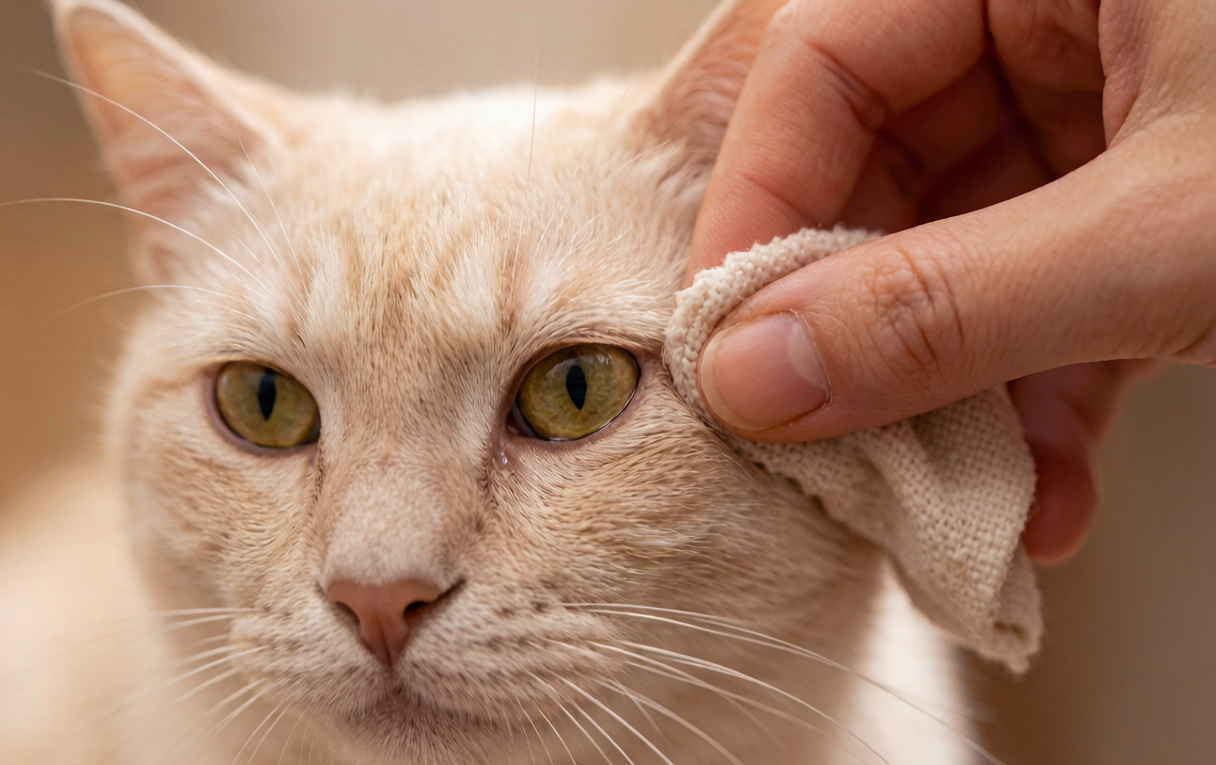
Warm, damp cloth, nothing else. A soft, clean cloth or a piece of gauze with warm water is the safest option. Avoid soaps, wipes with strong ingredients, and anything not meant for eyes.
Wipe from the inner corner outward. This moves debris away from the eye rather than toward it, and it reduces the chance of introducing anything into the eye.
Use a fresh spot for each eye. This matters for a simple reason: if one eye has an infection, you do not want to carry it to the other eye. Use a clean part of the cloth for each eye, and wash your hands between them.
Keep the area dry. After wiping, pat the fur dry. Moisture under the eye can irritate the skin and invite secondary problems.
Do not pry the eye open. If the eye is closed or the cat resists, do not force it. A cat that is holding its eye shut is in pain and needs a vet, not more handling.
—
When to See a Vet
Some eye discharge absolutely requires a vet. Here are the situations where cleaning is not the answer.
Green or yellow discharge. Thick, colored discharge points to an infection that needs treatment.
A red or swollen eye. Redness in the white of the eye or a swollen eyelid, especially with discharge, is a vet situation.
Squinting, pawing, or a shut eye. Pain makes a cat squint, paw at the eye, or hold it closed. A shut eye with discharge is a red flag, especially for a corneal problem, and needs urgent attention.
Discharge that will not clear. If discharge keeps coming back, or does not improve after a couple of days of gentle cleaning, it is worth having checked.
Other symptoms. Eye discharge alongside sneezing, a runny nose, fever, poor appetite, or lethargy suggests a respiratory infection that needs attention.
A sudden change in an adult cat. A cat that never had eye issues suddenly developing heavy discharge is different from a kitten that always has a watery eye.
Recurrent flare-ups. If your cat has repeated episodes of eye discharge, work with your vet to identify the cause, often herpesvirus, and build a management plan. Recurrent problems deserve a plan, not just repeated wiping.
—
Supporting a Cat Prone to Eye Problems
For cats that get recurrent eye discharge, especially the many that trace back to herpesvirus flare-ups, everyday care goes beyond wiping. The foundation is a low-stress, well-fed, well-hydrated cat with a steady routine, because stress is one of the biggest triggers for flare-ups. Keeping the environment calm and clean, using low-dust litter, and making sure the cat eats and drinks well all help.
Beyond that foundation, immune support is a common addition. L-lysine, as in our immune support chew for cats, is a popular daily option for cats prone to FHV-1 flare-ups. It pairs naturally with the broader picture of respiratory health we cover in our cat sneezing guide. It is everyday wellness support, not a treatment for an active infection, and it works best alongside good care and your vet’s guidance.
—

Frequently Asked Questions
Why does my cat have discharge in its eyes?
The most common causes are upper respiratory infections, conjunctivitis, allergies, irritants, a foreign object, or a blocked tear duct. In cats, a very common culprit behind recurrent eye and nasal issues is feline herpesvirus (FHV-1), which most cats carry for life and which flares up during stress. Normal, small amounts of clear or brownish discharge after sleep are not a concern.
What does abnormal cat eye discharge look like?
Normal discharge is clear, watery, or slightly crusty and brownish in the corner of the eye. Abnormal discharge is green or yellow, thick, very heavy, or accompanied by a red, swollen, squinting, or painful eye. Color and the condition of the eye matter more than the mere presence of discharge.
Can I treat my cat’s eye discharge at home?
You can clean normal or mildly abnormal discharge at home with a warm, damp cloth, wiping from the inner corner outward and using a fresh spot for each eye. But you should not treat an infection at home. Green or yellow discharge, a red or painful eye, or a shut eye requires a vet.
Is cat eye discharge always a sign of infection?
No. A small amount of normal discharge is not an infection. Abnormal discharge, meaning green or yellow, thick, heavy, or with a red or painful eye, more often signals infection, frequently viral. But allergies, irritants, a foreign object, and blocked tear ducts can also cause discharge without an infection.
Why does my cat keep getting eye discharge?
Recurrent eye discharge often points to a chronic cause, and in cats that is frequently feline herpesvirus (FHV-1), which causes repeated flare-ups during stress. Managing the cause, lowering stress, and supporting the immune system can reduce how often flare-ups happen. Work with your vet to confirm the cause and build a plan. —
Bottom Line
Cat eye discharge is one of those topics where the range is everything. A trace of clear or brownish sleep in the corner of the eye is normal and needs no more than a gentle wipe. Green or yellow discharge, a red or painful eye, or a lot of discharge means infection or another problem and needs a vet. For many cats, recurrent eye discharge traces back to the extremely common feline herpesvirus, which most cats carry for life and which flares up during stress. That is why everyday care focuses on lowering stress, keeping the environment clean, and supporting the immune system, with L-lysine as a common addition for prone cats. Clean gently, watch the pattern, act on the red flags, and let your vet handle anything that looks more serious than a passing discharge.
—
References
- Cornell Feline Health Center — Feline herpesvirus and upper respiratory infection resources. vet.cornell.edu
- American Association of Feline Practitioners — Feline eye and respiratory care guidelines. catvets.com
- Merck Veterinary Manual — Conjunctivitis and eye conditions in cats. merckvetmanual.com
—
Disclaimer: This article is for informational purposes only and is not a substitute for professional veterinary advice, diagnosis, or treatment. These statements have not been evaluated by the FDA. This product is not intended to diagnose, treat, cure, or prevent any disease. Always consult a licensed veterinarian for any health concern regarding your pet.