
# Dog Constipation: Why It Happens and What Actually Helps
Author: PurePalsLab Research Team
Reviewed by: Veterinary advisory panel
Reading time: 10 minutes
—
Most dog owners spend more time worrying about the other end of the problem. Diarrhea gets the attention, the late-night cleanups, the urgent calls. But constipation is quietly common, and it can be just as distressing for the dog. A dog that strains in the yard, produces nothing, and walks back inside restless and uncomfortable is a familiar scene to many households, and it is easy to misread.
The hard part is that “not pooping” can mean something trivial, like a missed walk, or something serious, like a blockage. Knowing which is which, and what you can safely do at home versus what needs a clinic, is the difference between a resolved evening and an emergency room visit.
This guide covers how to recognize constipation, the usual causes, the gentle things that genuinely help, and the warning signs that mean you should stop home care and call a vet.
—
The Short Answer
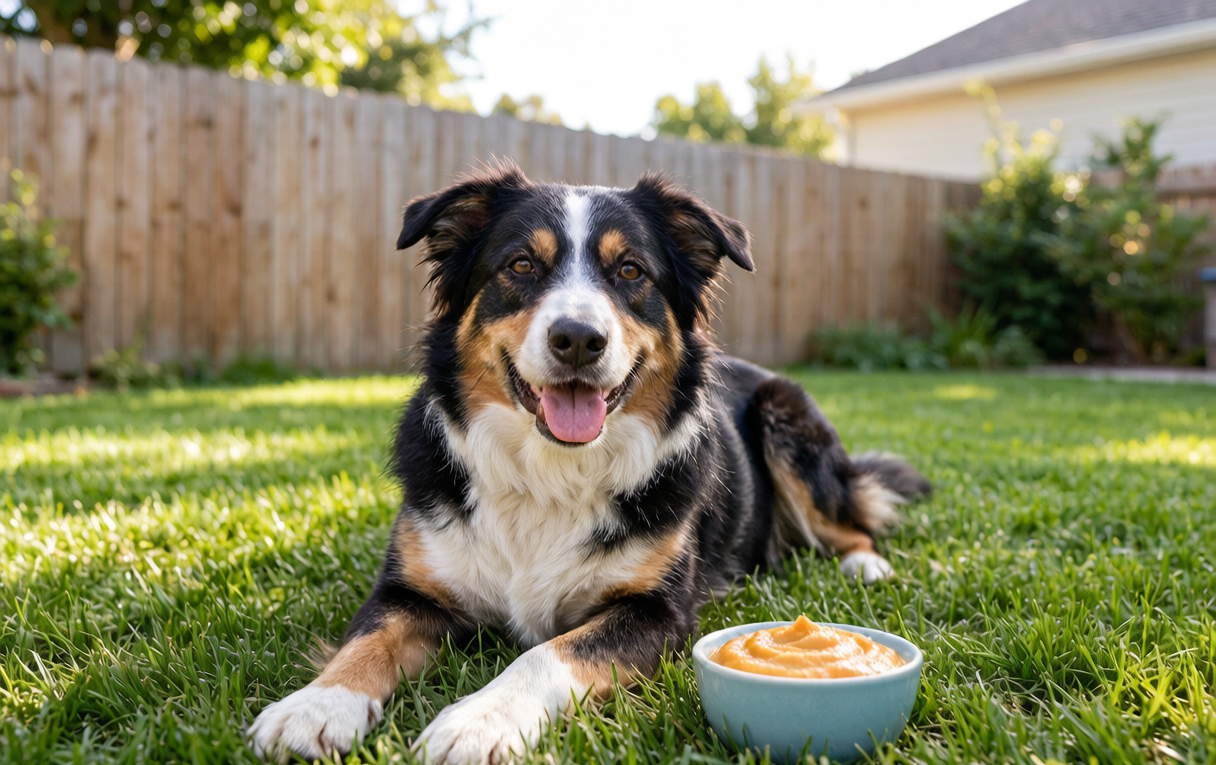
Constipation in dogs means infrequent, difficult, or incomplete bowel movements with dry, hard stool, and it is usually driven by dehydration, low fiber, too little exercise, swallowed non-food items, or an underlying condition. A missed day is often fine, but no stool for 48 to 72 hours, especially with straining, vomiting, a bloated or painful belly, lethargy, or known ingestion of a foreign object, means call a vet promptly, because it can signal a blockage. At home, for a bright, eating, drinking dog with mild signs, fresh water, a little plain canned pumpkin, and a gentle walk are reasonable first steps. Avoid human laxatives and enemas. Keeping the gut supported with consistent hydration and fiber helps prevent repeat episodes.
—
What Counts as Constipation
Constipation in dogs means infrequent, difficult, or incomplete bowel movements, usually with stools that are dry, hard, and small. A constipated dog often postures to defecate, strains, and produces little or nothing. Some cry or whine while trying. The abdomen may feel firm, and the dog may seem restless, uncomfortable, or unusually reluctant to eat.
The tricky part is that normal varies. A healthy dog might go once, twice, or three times a day, and some go every other day without issue. What matters more than the exact number is a change from your dog’s own baseline, plus the character of the stool. Hard, pebble-like droppings and visible straining are the signal, not a missed day alone.
There is also a more serious version called obstipation, where the colon becomes so packed with dry stool that the dog cannot pass it at all. And there is impaction from a physical blockage, which is a different and urgent problem. The line between “mild and wait-and-see” and “get help now” is the section worth memorizing below.
Common Causes
Most cases trace back to one of a handful of everyday factors, and often two at once.
Not enough water. Dehydration is the most common driver. Stool needs moisture to move. A dog that does not drink enough, or that loses fluid through heat, illness, or vomiting, produces dry, hard waste that stalls in the colon.
Low fiber or a sudden diet change. Too little fiber slows transit. A abrupt switch to a new food can also throw off the gut, sometimes toward constipation rather than diarrhea.
Too little exercise. Movement stimulates the intestines. Dogs that are crate-bound, recovering from surgery, or simply under-exercised often back up.
Swallowing non-food items. This is the dangerous one. Dogs that eat hair, grass in large amounts, bones, cloth, or toys can develop a blockage that stops things mechanically. This is not constipation in the strict sense, but the early signs look similar, and it is the scenario you most want to rule out.
Anal gland trouble. Impacted or painful anal glands make defecation uncomfortable, and a dog may hold stool in to avoid the pain, which then dries and hardens.
Medications and supplements. Certain drugs, including some sedatives, antihistamines, and certain pain medications, slow the gut as a side effect.
Age and underlying disease. Older dogs are more prone, partly from reduced mobility and partly from conditions like enlarged prostate in unneutered males, kidney disease, or spinal arthritis that makes posturing painful.
Orthopedic or neurological issues. A dog that cannot squat comfortably because of hip or spine pain will avoid defecating, and the stool backs up.
What You Can Do at Home (Carefully)
A dog that is otherwise bright, eating, drinking, and not in visible pain, and has missed a day or strained once or twice, can often be supported gently at home. The goal is to soften stool and restart movement, not to force a dramatic result.
Increase water intake first. Fresh water always available, more bowls in more rooms, and adding a little low-sodium broth (no onion or garlic) to food can nudge a reluctant drinker. Some dogs prefer moving water from a fountain.
Plain canned pumpkin. A spoonful of plain, unsweetened pumpkin puree (not pie filling) is a classic for a reason. It is a gentle fiber source that both firms loose stool and softens hard stool, because it normalizes rather than pushes in one direction. Start with a small amount and watch the result.
A short, gentle walk. Light movement after meals stimulates the gut. This is not the time for a hard run, just a relaxed potty walk with time to posture.
Recheck the diet. If a recent food swap coincided with the problem, a slower transition over a week usually helps. Sudden changes are a common, fixable cause.
Review medications with your vet. If a new prescription lines up with the onset, ask whether constipation is a known effect before changing anything yourself.
What not to do matters as much as what to do. Do not give human laxatives, stool softeners, or enemas. Many are unsafe or toxic to dogs, and an enema done at home can cause injury or shock. Do not wait and hope if the dog is otherwise unwell. And do not try to manually extract stool yourself.
Is It Constipation, or Something Else?
A dog that squats and strains can be doing several different things, and guessing wrong wastes time. A few look-alikes are worth separating before you act.
Straining to urinate versus straining to defecate. This is the most dangerous confusion. A male dog with a blocked urethra will hunch, strain, and lick at the rear, and to a casual observer it looks much like constipation. But a urinary blockage is a life-threatening emergency that can be fatal within a day. The tell is that a blocked dog produces little or no urine, may cry out in pain, and the lower belly can swell. If you cannot tell whether the problem is pee or poop, treat it as an emergency and go.
Holding it in, behaviorally. Some dogs, especially anxious or newly house-trained ones, simply refuse to go in an unfamiliar spot or on a slick surface. The stool is normal when it finally comes. This is a routine and environment issue, not a physical blockage.
Tenesmus from colitis. Inflammation of the colon causes frequent, urgent posturing with little result, often with mucus or fresh blood on the surface. It looks like straining, but the trouble is the bowel wall, not dry stool. Our colitis in dogs guide covers this in detail.
An early stage of diarrhea. Oddly, the first sign of some diarrheas is a hard, scant stool as the gut slows before it speeds up. The pattern usually shifts within a day.
Megacolon. In chronic or severe cases the colon loses tone and becomes a slack reservoir for stool. This is a medical condition needing veterinary management, not home fiber.
If the dog is straining and you cannot tell which end is involved, that uncertainty alone is a good reason to call.
When to Call the Vet Immediately
This is the part to commit to memory. Seek urgent care if any of the following apply:
- No bowel movement for 48 to 72 hours, especially with straining and discomfort.
- Vomiting, especially with abdominal bloating or a firm, painful belly.
- Lethargy, weakness, or collapse.
- Loss of appetite for more than a day alongside the constipation.
- Visible pain when the abdomen is touched, or a hunched posture.
- Known or suspected ingestion of a non-food item (toy, bone, cloth, large amount of hair), even if the dog still seems okay. Blockages can look mild at first.
- Blood in the stool or from the rectum, or a string-like material protruding.
- Straining with no result and obvious distress that does not settle.
A vet can usually diagnose quickly with a history, exam, and sometimes an X-ray or ultrasound. Treatment ranges from hydration and a prescribed stool softener to manual evacuation under sedation, and in true blockages, surgery. The earlier it is caught, the simpler it tends to be.
Constipation also sits on a spectrum with other digestive problems, and the right response depends on which one you are actually facing. If the issue leans the other way, our dog diarrhea home remedy guide covers the opposite end, and our colitis in dogs guide explains inflammation-driven bowel changes. If your dog has stopped eating entirely rather than just straining, our dog not eating guide walks through the urgent questions to ask.
Preventing the Next Episode
Once resolved, a few habits lower the odds of a repeat.
- Consistent hydration. Keep water fresh and accessible, especially in warm weather or after exercise.
- Steady fiber. A diet with appropriate fiber, or a vet-approved topper, keeps transit regular. Drastic swings in fiber are what cause trouble, so change slowly.
- Daily movement. Even older or sore dogs benefit from short, frequent walks that keep the gut active.
- Hair and object control. Regular grooming reduces the hair a long-coated dog swallows during self-cleaning. Toy and bone choices should match the dog’s chewing style to avoid swallowed chunks.
- Routine potty breaks. Dogs that are walked on a predictable schedule tend to stay regular.
- Attention to underlying conditions. Managing arthritis pain, anal gland health, and chronic disease with your vet removes the silent drivers.
The Role of Gut Support
A stable gut microbiome helps the digestive tract do its routine job, including keeping things moving at a normal pace. While no supplement is a cure for constipation, and it should never replace veterinary care for a dog that is actively blocked or unwell, daily digestive support can be a reasonable part of prevention for dogs prone to sluggish digestion.
Our 12 Billion CFU Multi-Strain Probiotic Soft Chews combine eight probiotic strains with four prebiotics and five digestive enzymes, plus pumpkin, flaxseed, and apple powder as gentle fiber sources. The pumpkin and prebiotic content in particular fit the fiber-support picture described above. It is formulated for dogs and also suitable for cats per the feeding guide, and it comes in a 200 Chews bottle for everyday use.
It is everyday wellness support, not a treatment for constipation or a substitute for veterinary diagnosis. For an active bout, water, gentle movement, and a vet check beat any supplement.
Frequently Asked Questions
How long can a dog go without pooping before it’s serious?
A healthy dog missing one day is usually fine. If there is no bowel movement for 48 to 72 hours, or sooner if the dog is straining, vomiting, bloated, or lethargic, contact a vet. The timeline shortens fast once other symptoms appear.
What can I give my dog for constipation at home?
For a bright, eating, drinking dog with mild signs, fresh water, a small amount of plain canned pumpkin, and a gentle walk are reasonable first steps. Avoid human laxatives and enemas. If there is no improvement within a day, or any red-flag symptom appears, call your vet.
Can dry food cause constipation?
It can contribute in dogs that do not drink enough, because kibble carries little moisture. Soaking the food or adding water, plus ensuring good water intake, often helps. A sudden food change is a more common trigger than the food type itself.
Why is my dog straining but only producing a little?
Straining with small, hard, pebble-like stools points to constipation. Straining with nothing at all, especially with bloating, vomiting, or pain, can mean a blockage or obstipation and needs prompt veterinary attention.
Will exercise help a constipated dog?
Light, regular movement stimulates intestinal activity and helps prevent backups, particularly in older or crate-restricted dogs. A short relaxed walk after meals is more useful than intense exercise, and it should never replace veterinary care if symptoms are severe.
Disclaimer
This article is for general education only and is not a substitute for veterinary advice. Constipation can signal a serious blockage or underlying disease. If your dog shows red-flag symptoms such as vomiting, bloating, lethargy, or no stool for more than 48 to 72 hours, contact your veterinarian promptly. Product references describe nutritional supplements and are not intended to diagnose, treat, cure, or prevent any disease.
References
- American Kennel Club. “Dog Constipation: Causes, Symptoms, and Treatment.”
- VCA Animal Hospitals. “Constipation in Dogs.”
- Merck Veterinary Manual. “Disorders of Defecation and the Rectum and Anus in Dogs.”
- Veterinary Partner (VIN). “Constipation and Obstipation in Dogs.”