
# Colitis in Dogs: Understanding the Bloody, Mucusy Stool and What Actually Helps
Author: PurePalsLab Research Team
Fact-checked by: Veterinary review panel
Published: August 13, 2026
Reading time: 9 minutes
Picture this: your dog wakes you at 2 a.m. pacing, needing to go out. You open the door and watch them strain, producing only a small amount of stool coated in mucus, flecked with bright red blood. They go three more times in the next hour, each time that same urgent, uncomfortable, small-volume bowel movement.
You’re not panicking yet, but you’re worried. You Google “colitis in dogs.” And you land on a wall of vague advice that either scares you half to death or tells you to “just watch it” without explaining anything.
This article is neither of those. Colitis — inflammation of the colon, the large intestine — is one of the most common reasons dogs see the vet for diarrhea, and it’s almost never the scary, mysterious disease the internet makes it out to be. But it does need to be understood properly, because the treatment for colitis is very different from the treatment for small-intestinal diarrhea, and getting it wrong can drag a mild episode into a weeks-long problem.
Here’s what colitis actually is, what the bloody mucus means, how to tell acute from chronic, and — most importantly — what you can do at home and when you genuinely need a vet.
The Short Answer
Colitis is inflammation of the colon (large intestine). Its hallmark is frequent, urgent, small-volume bowel movements that often contain mucus and bright red blood, frequently with straining. Most acute cases — the sudden, short-lived ones — resolve on their own or with simple home care within a few days. Chronic colitis lasts longer and needs a vet to find the underlying cause. The single most important thing you can do is distinguish colitis from small-intestinal diarrhea, because the management is genuinely different, and know which red flags mean you shouldn’t wait.
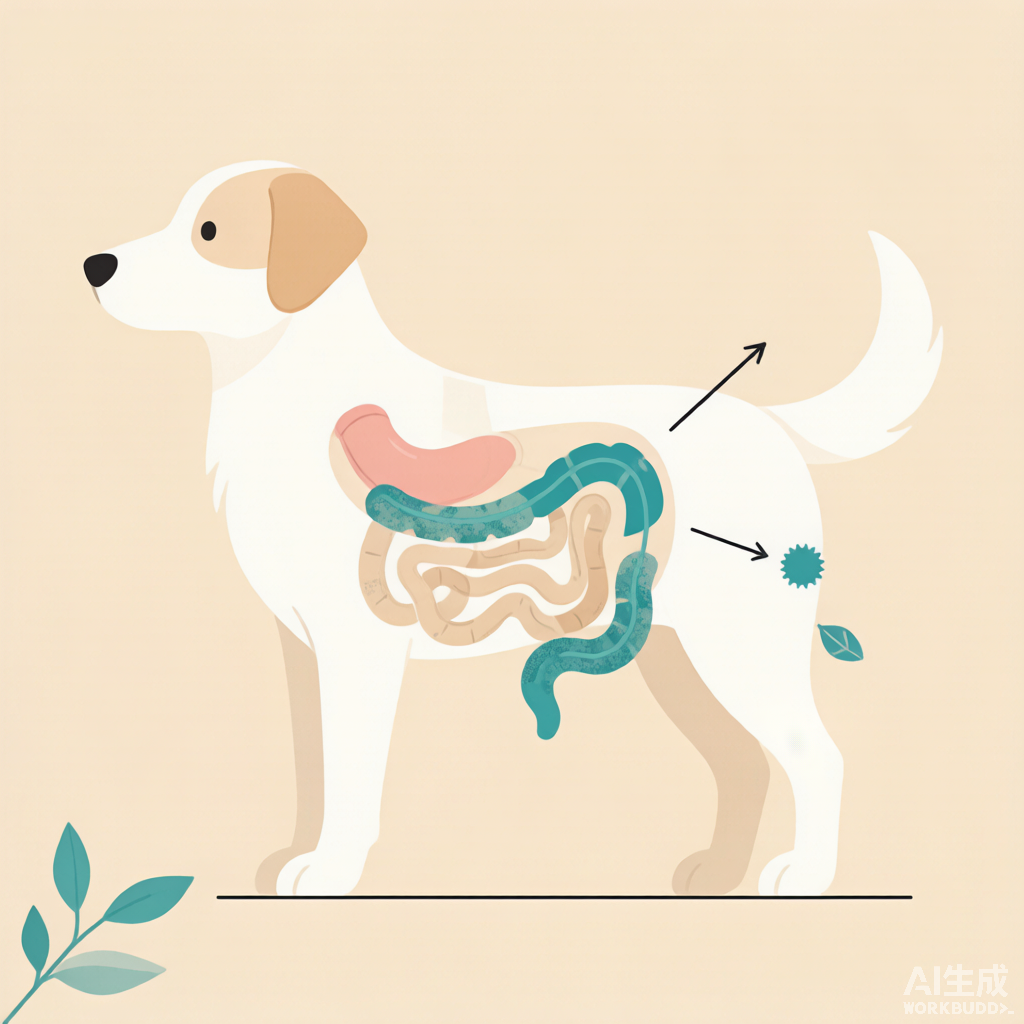
Why the Colon Matters: A Quick Anatomy Lesson
Your dog’s digestive tract is basically a long tube that processes food from mouth to anus. The final major section — the colon — is the large intestine’s main chamber, and its job is very different from the small intestine’s.
The small intestine is where the real digestion and nutrient absorption happen. Food is broken down and nutrients are pulled into the bloodstream there. If something’s wrong in the small intestine, the result is typically large-volume diarrhea — big, messy, loose stools, often without much urgency, because there’s simply a lot of material moving through.
The colon is where water is reabsorbed and stool is formed into its final, solid shape. It’s the “last stop.” When the colon is inflamed, it can’t reabsorb water normally, and its lining gets irritated and swollen. The result is a very specific pattern: frequent, urgent, small-volume stools, often with mucus and fresh (bright red) blood, because the colon can’t hold material properly and the irritation causes straining.
That distinction — big loose stools (small intestine) vs. frequent small stools with mucus and bright red blood (colon), is the single most useful thing to understand, because it tells you (and your vet) what’s going on and where to look.
What the Mucus and Bright Red Blood Actually Mean
Two of the most alarming signs in a dog with colitis are also the most misunderstood.
Mucus is a sign of irritation. The colon’s lining produces mucus as a lubricant and protective barrier. When the lining is inflamed, it produces excess mucus, which shows up in the stool as a jelly-like coating. Mucus alone doesn’t mean something catastrophic: it means the colon lining is irritated.
Bright red blood (frank blood, hematochezia) comes from the lower digestive tract, the colon or rectum. Because it’s fresh blood from near the exit, it appears bright red rather than the dark, tarry black of blood that’s been digested higher up. In colitis, this blood comes from the inflamed, raw colon lining. A little fresh blood with mucus in a dog who otherwise seems fine is common with a mild colitis flare.
Here’s the key reframe: mucus and bright red blood in a dog who is otherwise bright, eating, and hydrated is very different from the same signs in a dog who is lethargic, refusing food, or dehydrated. The stool signs matter, but the whole-dog picture matters more.
Acute vs. Chronic Colitis: Two Very Different Beasts
Colitis isn’t one disease, it’s a symptom of colon inflammation, and it splits into two broad categories that need very different approaches.
Acute Colitis
This is the sudden-onset version: the 2 a.m. scenario. It typically lasts a few days and often follows a specific trigger:
- **Dietary indiscretion**: your dog ate something it shouldn’t (garbage, table scraps, something off the ground, a sudden diet change).
- **A sudden change in food** without a proper transition.
- **Stress**, boarding, travel, a new environment, thunderstorms, fireworks. The colon is exquisitely sensitive to stress, and nervous dogs are prone to stress colitis.
- **A mild infection or parasite load.**
Acute colitis is frequently self-limiting. Many cases resolve within 24-72 hours with rest, a bland diet, and plenty of water. Most dogs don’t need veterinary intervention unless the signs are severe or persist.
Chronic Colitis
When inflammation and symptoms persist for weeks or keep recurring, it’s chronic colitis. This needs a proper workup because it usually has an underlying cause:
- **Inflammatory bowel disease (IBD)**: an abnormal immune response causing chronic inflammation of the intestinal wall.
- **Food allergies or intolerances**: a dietary trigger causing ongoing inflammation.
- **Intestinal parasites** that haven’t been cleared.
- **Bacterial dysbiosis**, an imbalance in the gut microbiome.
- **Less commonly**, conditions like fungal infections or certain cancers.
| Feature | Acute colitis | Chronic colitis |
|---|---|---|
| Onset | Sudden | Gradual or recurring |
| Duration | Days | Weeks to months |
| Common cause | Dietary indiscretion, stress, sudden diet change | IBD, food allergy, parasites, dysbiosis |
| Typical treatment | Short bland diet, hydration | Requires diagnosis + long-term management |
| Needs a vet? | Usually self-resolves; vet if severe | Yes |
The Diagnostic Journey: What Your Vet Will Actually Do
If your dog’s colitis is severe, persistent, or recurring, your vet won’t just guess: they’ll work through the colon systematically. Here’s what that typically looks like:
- **A thorough history and physical exam.** Your vet will ask about the stool pattern (frequency, volume, mucus, blood), diet, recent stressors, travel, and any medications. They’ll palpate the abdomen, and often the colon specifically, checking for thickening or discomfort.
- **A fecal exam.** Checking for intestinal parasites, and possibly a fecal culture to look for bacterial infections. This is often the first test because it’s inexpensive and catches common, treatable causes.
- **Bloodwork.** A complete blood count and biochemistry panel can reveal signs of inflammation, dehydration, and clues about organ function. Depending on findings, your vet may run specific tests for conditions like pancreatitis.
- **Imaging.** Abdominal ultrasound is often the most useful imaging for evaluating the intestinal wall, looking for thickening that suggests IBD, or masses that need a different approach.
- **Endoscopy and biopsy.** If IBD or another chronic condition is suspected and conservative treatment isn’t working, your vet may recommend endoscopy with biopsies to examine the intestinal lining directly. This is the definitive way to diagnose IBD and rule out other conditions.
The diagnostic journey isn’t always this deep. For a first, mild, acute episode, a vet may start with a physical exam and fecal test and manage conservatively. The deeper workup is reserved for chronic or severe cases.
What You Can Do at Home (for a Mild, Acute Flare)
For a dog with a mild acute colitis flare, frequent small stools with mucus and a little bright blood, but who is otherwise bright, eating, and drinking: here’s the standard home-care approach. Always check with your vet first, especially before fasting a puppy, a senior, or a dog with other health conditions.
- **A short rest for the gut.** Many vets recommend a brief fast (often 12-24 hours for adult dogs) to let the inflamed colon settle. Skip this for puppies and small/senior dogs unless your vet approves, since they can’t go as long without food.
- **Plenty of fresh water.** Dehydration is the biggest risk with any diarrhea. Ensure constant access to clean water, and encourage drinking.
- **A bland diet.** Once the fast ends (or instead of it, if fasting isn’t appropriate), offer small, frequent meals of a bland diet, typically plain boiled chicken (skinless) or a lean protein with plain white rice or pumpkin. The goal is easily digestible, low-residue food that gives the colon minimal work.
- **Add soluble fiber.** Plain canned pumpkin (not pie filling) is a gentle, soluble-fiber source that helps firm up stool and supports colon health. A spoonful mixed into food can help.
- **Support the microbiome.** A high-quality probiotic can help restore the balance of beneficial bacteria in the gut after a bout of diarrhea. It’s a supporting measure, not a fix-all, but it supports recovery. The probiotics for dogs guide covers how to choose one.
- **Reintroduce normal food gradually** over a few days once stools firm up, rather than switching back all at once.
The Red Flags: When to Stop Waiting and Call the Vet
Home care is fine for a mild flare, but these situations mean you should not wait it out:
- **The stool is mostly blood**, or there’s a large amount of blood, or dark/tarry blood (which signals bleeding higher in the tract).
- **Vomiting** accompanies the diarrhea, especially repeatedly.
- **Lethargy or weakness**: your dog isn’t acting like themselves.
- **Refusing food or water** for more than a few hours.
- **Signs of dehydration**: dry gums, sunken eyes, reduced skin elasticity, panting.
- **The symptoms last more than 48 hours** without improvement.
- **A puppy, a very old dog, or a dog with an underlying health condition**, these dogs decompensate faster.
- **The abdomen is painful or distended**: this can signal a much more serious problem.
If any of these apply, don’t wait. Colitis is often mild, but it can also be a sign of something more serious, and the cost of waiting is always higher than the cost of a vet visit.
Managing Chronic Colitis for the Long Haul
If your dog has chronic colitis (diagnosed by a vet, not guessed), the management is about controlling the underlying cause and supporting the colon long-term. Depending on the diagnosis, this can include:
- **Dietary management.** A highly digestible diet, often with added fiber, is the cornerstone. For food-allergy-driven colitis, a hydrolyzed or novel-protein diet may be prescribed.
- **Prebiotics and fiber.** Fiber feeds beneficial gut bacteria and helps firm stool. Soluble fiber (like psyllium or pumpkin) is often recommended.
- **Probiotics.** A targeted probiotic can support a balanced microbiome, which is central to colon health. It’s most effective as part of a broader plan, not a standalone cure.
- **Medication, when indicated.** For IBD, vets may prescribe anti-inflammatory drugs (like steroids) or immunosuppressants to control the immune response. Antibiotics are only used when a bacterial cause is identified.
- **Stress management.** Because the colon is sensitive to stress, minimizing anxiety and keeping a predictable routine can genuinely reduce flares in stress-prone dogs.
Chronic colitis is a management journey, not a quick fix. The good news is that with the right diagnosis and a consistent plan, most dogs with colitis live comfortable, normal lives.
Frequently Asked Questions
What does dog colitis poop look like?
The classic colitis stool is frequent, small-volume, and urgent, often coated in mucus and flecked with bright red blood, frequently with visible straining. It’s distinctly different from the large, loose stools of small-intestinal diarrhea.
Will dog colitis go away on its own?
Many acute cases resolve on their own within 24-72 hours with rest, a bland diet, and hydration. Chronic colitis, or cases with severe signs, need veterinary diagnosis and management.
What triggers colitis in dogs?
The most common triggers are dietary indiscretion, sudden diet changes, and stress. Chronic cases are often driven by IBD, food allergies, parasites, or an imbalanced gut microbiome.
Is it safe to give pumpkin to a dog with colitis?
Plain canned pumpkin (not pie filling) is a gentle source of soluble fiber that can help firm stool and is commonly recommended as a supportive measure during a colitis flare. It’s a supplement to, not a replacement for, proper care.
References
- VCA Animal Hospitals. Colitis in Dogs. Accessed August 2026.
- Cornell University College of Veterinary Medicine. Gastrointestinal Diseases in Dogs. Accessed August 2026.
- American Kennel Club (AKC). Colitis in Dogs: Causes, Symptoms, and Treatment. Accessed August 2026.
- Preventive Vet. Dog Diarrhea: Causes and What to Do. Accessed August 2026.
Disclaimer
This article is for educational purposes and does not constitute veterinary advice. Colitis can range from a mild, self-limiting episode to a sign of a serious underlying condition. Always consult a licensed veterinarian for diagnosis and treatment, and seek prompt veterinary care for severe signs, puppies, or dogs with underlying health conditions.