
# Dog Scooting: Why Dogs Drag Their Bottom, and What to Do About It
There is a sight that makes almost every dog owner cringe, and then giggle a little, and then quietly worry. The dog drops its rear end to the floor, sticks both back legs out in front, and drags itself across the carpet as if polishing the rug with its hindquarters. On a walk, it looks odd. At someone else’s house, it is embarrassing. But scooting is rarely a joke to the dog. It is a message, usually from the rear end, and it is one of those behaviors people tend to wait out instead of understand.
Here is what most owners do not realize: scooting is almost never a “weird habit.” Dogs do not scoot because they think it is funny. There is a reason behind nearly every case, and the most common reason, full or irritated anal glands, is both treatable and, in many dogs, preventable.
This guide explains what scooting actually signals, the difference between a one-off and a pattern, how to tell the common causes apart, and what you can do at home versus what needs a professional.
—
The Short Answer
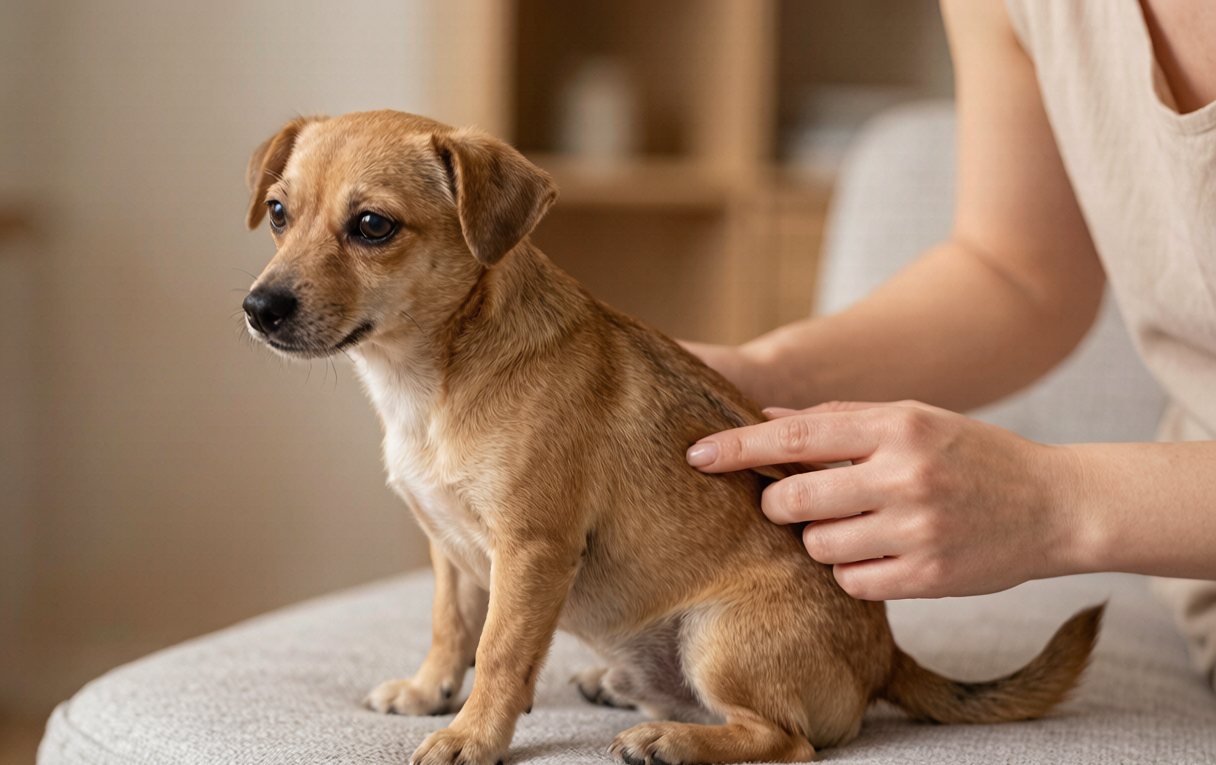
Dog scooting, dragging the rear end across the floor, is usually a sign of discomfort in the anal area, and the most common cause is full or irritated anal glands that need attention. Other causes include anal gland infection or impaction, allergies and itchy skin, worms or other parasites, matted fur, or pain after grooming. An occasional scoot after a normal bowel movement can be harmless, but frequent scooting, scooting with licking or biting at the rear, or scooting along with a bad odor, swelling, or changes in stool, should not be ignored, because it often points to anal glands that need expression or a vet visit. Regular firm stools, appropriate fiber, and, for dogs prone to recurring gland trouble, targeted digestive and fiber support help many dogs scoot less over time. If the scooting is constant, painful, or comes with swelling or discharge, see a vet rather than guessing at home.
—
Why Dogs Scoot: The Usual Reasons
Scooting is a general response to an itchy, painful, or oddly full-feeling rear end. Because a dog cannot reach back there easily to scratch, it does the next best thing and drags the area along the ground. The cause list is not endless, but it is longer than most people expect.
Full or irritated anal glands. This is the number one reason and the one to start with. Dogs have two small sacs, one on each side of the anus, that fill with a pungent fluid. In a healthy dog, the pressure of a firm bowel movement naturally squeezes a little of this fluid out, which is one reason dogs so carefully sniff each other’s rear ends. When the sacs get overfull, the pressure feels uncomfortable, and the dog scoots to try to relieve it. If the fluid thickens, the glands can become impacted, and if bacteria move in, they can become infected or, worst of all, form an abscess that needs draining.
Impacted or infected anal glands. This is full glands taken further. Impacted glands feel hard and cannot empty on their own. Infected glands are painful, often hot, and may leak pus or blood. An abscess is the advanced stage, a painful swelling that can rupture. These need veterinary care, not home squeezing.
Allergies and itchy skin. The same allergic skin that makes a dog scratch its ears and lick its paws can make the skin around the anus itch, and some dogs scoot for that reason. Seasonal allergies, food sensitivities, and flea allergies can all be behind it.
Intestinal parasites. Worms, particularly tapeworms, can cause itching around the rear. Tapeworm segments sometimes appear as small rice-like grains near the anus or in the stool. Hookworms and whipworms can also contribute.
Matted fur or post-grooming irritation. A knot of fur or dried stool stuck near the anus can bother a dog enough to scoot. After a close groom, some dogs are briefly irritated by clipper burns or a sensitive area and scoot for a day or two.
A minor reason: normal post-poop cleanup. Some dogs scoot briefly right after a bowel movement to clean themselves, especially if a bit of stool or soft stool stuck to the fur. If it happens once after pooping and stops, it is usually nothing. The trouble is when it becomes a pattern or a full-body drag.
When Scooting Is a Real Problem
A single scoot after a walk or a bowel movement can be a shrug. Repeated scooting is not. Here is how to tell when it has moved from quirk to problem.
- Frequency. Scooting several times a day, every day, or after every bowel movement is a pattern worth acting on.
- Intensity. A quick drag is different from a dog that sits and scoots across the whole room, or does it repeatedly in one sitting.
- Companion signs. Scooting plus licking, chewing, or biting at the rear, chasing the tail, or rubbing the bottom against furniture points more strongly to glands or skin irritation.
- Odor. A distinctly fishy or foul smell around the rear often means the anal glands are full or leaking.
- Visible changes. Swelling near the anus, red skin, matted fur, discharge, or blood are reasons to stop home care and see a vet.
The practical rule: if you find yourself saying “my dog keeps scooting” more than a couple of times in a week, treat it as a signal rather than waiting for it to pass.
The Anal Gland Connection, Explained
Because full anal glands are the most common cause, it helps to understand them a little. Those two sacs sit just inside the anus, roughly at four and eight o’clock. They produce a thick, oily, strong-smelling fluid that every dog carries. The fluid is normally expressed a little at a time when the dog has a firm, bulky stool that presses on the glands as it passes.
Here is where the trouble starts. Dogs that pass soft, loose, or small stools do not put enough pressure on the glands to empty them normally. The fluid builds up, thickens, and the glands feel full. The dog scoots to try to push the fluid out manually. Over time, recurring fullness can lead to impacted or infected glands, which are far more uncomfortable and need a vet.
This is why the shape and consistency of a dog’s stool matter for anal gland health. A stool that is firm enough to gently press the glands as it passes is a small piece of daily prevention. Fiber is the lever here: enough fiber gives the stool bulk and firmness without making it hard and difficult.
A few breeds and body types are more prone to gland trouble, including small breeds, dogs prone to soft stool, overweight dogs, and dogs with allergies that cause chronic low-grade inflammation. Knowing your dog sits in one of these groups is a reason to be a little more attentive.
What You Can Do at Home
For a dog that scoots occasionally and is otherwise healthy, bright, and eating well, a few at-home steps often help before you consider a professional.
Check the rear end. Look for matted fur, dried stool stuck to the hair, redness, swelling, discharge, or rice-like worm segments. If you see anything obvious, deal with that first. Gently trim away any matted fur or soaked stool from around the anus, being careful not to nick the skin.
Start a deworming conversation. If your dog is overdue on parasite prevention, or if you see signs of worms, talk to your vet about the right dewormer. Do not guess at worm medication on your own.
Support firm, regular stools. This is the quiet long-term fix. Make sure your dog is well hydrated, gets enough exercise, and eats a diet with appropriate fiber. A steady, firm stool presses the glands naturally so they empty as they should. Sudden fiber swings cause their own trouble, so change slowly.
Keep allergies in mind. If the scooting comes with scratching, licking paws, or ear issues, allergic skin may be the driver, and managing the allergy tends to calm the scooting too.
Know when not to squeeze at home. Full glands that need manual expression are usually best handled by a vet or groomer who is trained to do it, because pressing an inflamed or impacted gland the wrong way can cause pain, infection, or rupture. If you have never been shown how to do it properly by a professional, do not attempt it on a dog that is already sore.
When to See a Vet
Some situations should go straight to a professional instead of home care.
- Scooting that is constant, intense, or getting worse.
- Visible swelling near the anus, or a hot, painful lump, which can be an impacted gland or an abscess that needs draining and antibiotics.
- Blood or pus leaking from the rear.
- A bad, persistent odor that does not settle.
- Scooting along with changes in stool, appetite, or energy, or straining that might point to a different problem lower in the gut.
- A dog that cries, yelps, or refuses to sit because the area hurts.
If the anal glands are simply full and otherwise healthy, a vet or groomer can express them, and you will likely see the scooting stop almost immediately. If there is an infection or impaction, they can treat it properly. And if the cause is something else, like parasites or allergies, they can help you find it instead of guessing.
Because scooting can sit on the edge of other rear-end and digestive issues, it helps to know the nearby territory. Our dog anal gland expression guide walks through the full manual-expression process in detail for anyone who wants to understand it. And if the underlying theme is recurring soft stool, our probiotics for dogs guide explains how gut health and stool firmness connect, which is directly relevant to anal gland emptying.
Preventing Scooting in Gland-Prone Dogs
Not every dog will scoot again, but for the ones that tend to, prevention beats reaction.
- Keep stools firm and regular. Adequate water, exercise, and fiber are the foundation. This is the single most useful habit.
- Watch the treats and extras. Too many high-fat or high-sugar extras can loosen stool and defeat your fiber effort.
- Manage allergies if present. Controlling allergic itch removes one recurring trigger for gland inflammation.
- Stay on parasite prevention. Routine, vet-recommended prevention lowers the worm-related causes.
- Notice the early signal. Many gland-prone dogs give a small clue, a single scoot or an extra rear-end sniff, before a full episode. Catching it early can mean a gentle fix instead of a sore gland.
The Role of Fiber and Digestive Support
Because stool firmness drives anal gland emptying, fiber and gentle digestive support sit at the heart of gland health for many dogs. The goal is not to stop scooting overnight but to give the dog stools that naturally do the gland’s work for it.
Our Anal Gland Support Soft Chews are built around exactly this idea. The fiber-rich formula combines pumpkin seed, oat fiber, psyllium husk, and linseed oil, along with prebiotics and digestive enzymes, to support regular, well-formed stools. The fiber gives bulk so the stool presses the glands as it passes, and the oat and psyllium fiber in particular are the kind of gentle bulk fiber recommended for this purpose. It is formulated for dogs and suitable for cats per the feeding guide, and it comes in a 200 Chews bottle for daily use.
It is everyday wellness support, not a treatment for an impacted or infected gland, and it is not a substitute for a vet visit when a gland is painful, swollen, or infected. For a truly sore or swollen rear end, get a professional opinion first and use fiber support as part of the ongoing picture.
Frequently Asked Questions
Why does my dog scoot on the carpet?
The most common reason is full or irritated anal glands. The pressure of overfull sacs feels uncomfortable, and dragging the rear along the ground is a dog’s way of trying to relieve it. Allergies, worms, matted fur, or post-groom irritation can also cause it.
Is dog scooting an emergency?
Usually not, but it depends. Occasional scooting after a bowel movement is often harmless. Constant, intense scooting, or scooting with swelling, blood, pus, a bad odor, or visible pain, can point to an impacted or infected gland or an abscess and needs a vet promptly.
Do I need to express my dog’s anal glands?
Only if they are full and a professional determines it is needed. Many dogs empty their glands naturally through firm bowel movements. If your dog needs regular manual expression, have a vet or groomer show you the correct technique before attempting it, and never squeeze a gland that is already painful, swollen, or infected.
Why does my dog scoot after pooping?
A brief scoot right after a bowel movement can be simple cleanup, especially if soft stool or a stray piece of fur stuck near the anus. But if it happens after most bowel movements, it may mean the glands are not emptying fully, often because the stool is too soft to press them properly.
What can I do to stop my dog scooting?
For a healthy dog scooting occasionally, check the rear for matted fur or irritation, stay current on parasite prevention, and support firm, regular stools with adequate water, exercise, and fiber. Fiber-rich daily support can help gland-prone dogs. If scooting is frequent, intense, or comes with swelling or discharge, see a vet.
Disclaimer
This article is for general education only and is not a substitute for veterinary advice. Scooting can signal impacted or infected anal glands, parasites, allergies, or other conditions that need professional diagnosis. If your dog is scooting constantly, in visible discomfort, or showing swelling, discharge, or bleeding, contact your veterinarian. Product references describe nutritional supplements and are not intended to diagnose, treat, cure, or prevent any disease.
References
- American Kennel Club. “Why Is My Dog Scooting?”
- VCA Animal Hospitals. “Anal Sac Disease in Dogs.”
- Merck Veterinary Manual. “Anal Sac (Anal Gland) Disorders in Dogs.”
- Veterinary Partner (VIN). “Anal Sac Disease in Dogs.”