
# Why Is My Cat Not Eating? What It Means and What Actually Helps
A cat that turns its nose up at food triggers something primal in its owner. Cats hide illness well, so the food bowl is often the first window you get into whether something is wrong. When that window closes, when the familiar crunch or the smell of wet food no longer brings your cat running, worry sets in for good reason. A healthy cat rarely skips meals on a whim. In feline medicine there is an old saying that carries real weight: a cat that stops eating for even a day is worth a phone call, not a wait-and-see.
This is not scare talk. Cats are built differently from dogs and people when it comes to food. Their bodies are not designed to fast. Understanding why cats go off their food, how quickly it becomes serious, and what you can safely do at home versus what needs a vet, is exactly the knowledge that turns a bad outcome into a manageable one.
This guide explains the common reasons a cat stops eating, how to tell a passing mood from a real problem, the red flags that mean an urgent vet visit, and the gentle ways to tempt a picky or unwell cat back to the bowl.
—
The Short Answer
A cat that stops eating is a concern sooner than you might think. Cats are not designed to fast: after about 24 hours without food, their bodies start mobilizing fat, and in some cats this can rapidly stress the liver, so a cat refusing food for more than a day, or for even half a day if it is also unwell, deserves prompt attention. Common causes include illness, dental pain, nausea, stress or a change in routine, a dislike of new food, and nasal congestion that blocks the smell of food. If your cat skips one meal but is bright, drinking, and acting normal, you can try warming the food, offering a favorite, and checking for obvious stressors. But if your cat has not eaten in more than a day, is losing weight, hiding, vomiting, has diarrhea, or shows any other sign of illness, call a vet. The goal is to catch the cause early, because appetite is a reliable early warning system in cats.
—
Why a Cat Not Eating Worries Vets the Most
The concern is not the missed meal itself. It is what a cat’s body does when food stops coming. Here is the part that surprises most dog owners who are new to cats.
When a cat fasts, its body begins breaking down stored fat for energy. In most mammals this is a routine response. In cats, it can go wrong quickly, because a cat’s liver is not especially efficient at processing a sudden flood of fat. In susceptible cats, fat accumulates in the liver cells, and the liver starts to fail. This condition, hepatic lipidosis, is serious and can be life-threatening. It is also strongly linked to anorexia, the medical word for not eating.
The practical takeaway is simple and worth internalizing. A cat should not go more than about 24 hours without eating, and a cat that is also unwell, hiding, or showing other symptoms should not go anywhere near that long. When in doubt, an early call beats a late one. This is one of the few pet-health situations where being accused of over-worrying is the better mistake to make.
The Most Common Reasons Cats Stop Eating
The list of causes is long, but most cases fall into a handful of categories, and knowing them helps you give your vet useful information.
Underlying illness. This is the big one and the reason not to assume “fussy.” Cats hide pain and disease, and a drop in appetite is often the first outward sign of conditions like kidney disease, diabetes, hyperthyroidism, dental disease, gastrointestinal problems, or an infection. Feline upper respiratory infections, often tied to the feline herpesvirus, can make a cat feel miserable and lose interest in food.
Dental pain. A sore tooth, inflamed gums, or a broken tooth can make eating genuinely painful. A cat may walk to the bowl, sniff, and walk away, or chew on one side, drop food, or drool. Cats are stoic about mouth pain and will go hungry rather than eat something that hurts.
Nausea. Like people, cats lose their appetite when nauseated. They may also drool, lick their lips, or eat grass. Nausea can come from dietary indiscretion, hairballs, or an underlying digestive problem.
Nasal congestion and loss of smell. Cats rely heavily on smell to decide if food is worth eating. A stuffed-up nose from a respiratory infection can make food seem unappealing even when the cat is hungry. If your cat cannot smell it, your cat may not eat it.
Stress and routine changes. Cats are creatures of habit. Moving house, a new pet or baby, a change in food bowl or location, construction noise, or even a change in your schedule can put a cat off its food for a while. Some cats are especially sensitive to changes near their feeding area.
A dislike of the food itself. Cats can be finicky, and a sudden switch to a new flavor or brand, stale food, or food served too cold can prompt a protest. This is usually the easiest cause to spot and fix.
Hairballs. A cat trying to pass a hairball may go off food for a day or two while it feels unsettled. Our cat hairballs guide covers this common cause in depth.
How to Tell a Passing Mood From a Real Problem
Not every skipped meal is an emergency, and learning to read the difference is a useful skill. The food bowl is one signal, but it is not the only one.
Start by asking what else is going on. A cat that skips a meal but is otherwise bright, curious, drinking normally, using the litter box, and greeting you as usual is a much lower concern than a cat that is off its food and hiding, lethargic, or off in other ways.
Lower concern signs: The cat skipped one meal or is eating less but still eats a little. It is drinking, active, using the litter box normally, and otherwise behaving like itself. There is an obvious, fixable trigger, like a new food it dislikes or a recent move. These cases often respond to a warm meal, a favorite food, and a check for stressors.
Higher concern signs: The cat has not eaten at all for more than a day. It is losing weight, hiding more than usual, or seems lethargic. There is vomiting, diarrhea, or constipation. The cat is drooling, pawing at the mouth, or showing nasal discharge, sneezing, or discharge from the eyes. The cat seems to want food but cannot eat it. Any of these means call a vet rather than wait.
A useful habit is to track time. If you are not sure how long it has been, write down the last real meal and check the clock. The 24-hour mark is a helpful mental deadline for a cat that is otherwise okay, and a much shorter one for a cat that is not.
Gentle Ways to Tempt a Cat Back to the Bowl
For a cat that is not yet in the urgent category, a few low-risk strategies often work. None of these replaces a vet visit for a cat that is genuinely unwell, but they are worth trying for a finicky or slightly off cat.
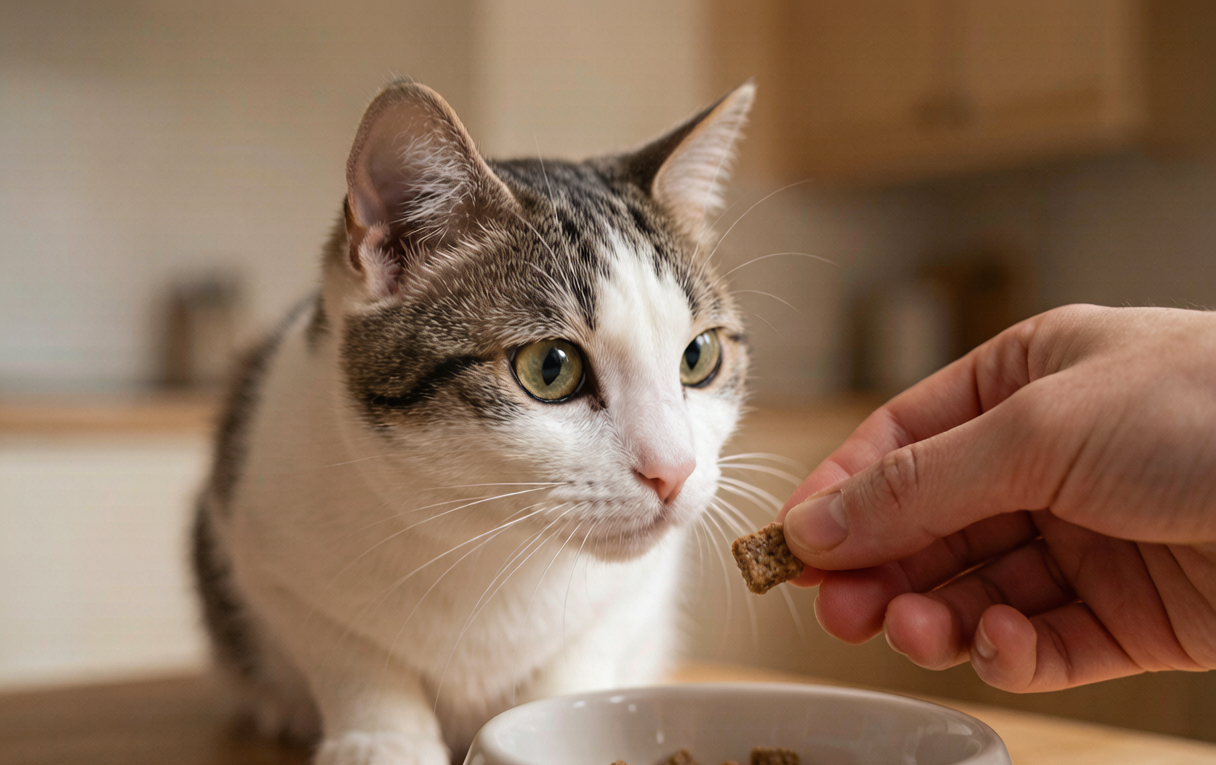
Warm the food. Cats prefer food at close to body temperature, because that is what freshly killed prey felt like. Ten seconds in the microwave or a splash of warm water intensifies the aroma and makes wet food far more appealing. Stir well to avoid hot spots.
Offer something strong-smelling and favorite. Smell drives appetite in cats. A favorite treat, a little plain shredded chicken, warmed tuna water, or a high-quality food with a strong aroma can break a stubborn streak. Avoid anything with onion, garlic, or unsafe seasonings.
Check the bowl and its surroundings. Some cats refuse to eat from a dirty bowl, a bowl near a noisy appliance, or in a spot that suddenly feels exposed. Try a clean, wide, shallow bowl, and put it somewhere quiet. In multi-cat homes, a cat that is being intimidated at the bowl will simply stop eating, so separate feeding stations matter.
Address obvious congestion. If your cat is sneezing or has a runny nose and you have already spoken to a vet, gentle steps to clear the nose, such as using a humidifier or briefly steaming the bathroom, can help it smell food again. Upper respiratory infections in cats are often linked to feline herpesvirus, which our cat sneezing guide explains.
Keep routine steady. If stress is the likely driver, minimizing change and keeping feeding times predictable helps. Avoid switching foods abruptly while a cat is already off its food, since a sudden change can add another reason to refuse.
The Nasal Congestion and Immune Connection
Because a stuffed nose is such a common, sneaky reason a cat stops eating, it deserves a closer look. Many upper respiratory flare-ups in cats trace back to feline herpesvirus (FHV-1), a virus most cats carry for life. When it flares, a cat can get congested, sneezy, and miserable, and the loss of smell makes food unappealing. The eye discharge that often comes with these flare-ups is a familiar sign, which we cover in our cat eye discharge guide. And the full picture of what an FHV-1 diagnosis means over a cat’s lifetime, including how it relates to appetite, is in our feline herpesvirus guide.
Because immune support is central to managing recurrent feline herpes flare-ups, many owners of FHV-positive cats look for daily support that keeps the immune system steady so flare-ups, and the appetite loss that comes with them, happen less often. L-lysine is the amino acid most associated with this approach in cats.
When Nutrition Support Fits the Picture
If a cat’s appetite loss stems from a recurring issue like feline herpes flare-ups, an illness that your vet is managing, or simply a cat that needs steady immune and overall support, daily nutrition can play a supporting role alongside veterinary care. It is not a cure and never a substitute for finding out why a cat stopped eating, but as part of an ongoing plan it can help some cats.
Our L-Lysine 800mg Immune Support Soft Chews for Cats combine L-lysine with taurine, omega-3, vitamin C and E, and colostrum for immune barrier support. The lysine is the ingredient most linked to feline herpesvirus support, and the formula is built around daily immune and eye, heart, and overall wellness for cats. It comes in a 200 Chews bottle and is made for cats, with a feeding guide that starts at the smallest weights.
It is everyday wellness support, not a treatment for anorexia or an active infection, and it should never delay a vet visit for a cat that is genuinely not eating. The first step for a cat that has stopped eating is always to find out why.

Frequently Asked Questions
How long can a cat go without eating?
A cat should not go more than about 24 hours without food. Cats fast poorly, and in susceptible cats a fast can stress the liver. If your cat has not eaten in more than a day, or is also unwell and not eating even half a day, call a vet rather than waiting.
Why is my cat not eating but acting normal?
A cat that skips a meal but is bright, drinking, and behaving normally may just be picky, stressed, or off its food because of a recent change. Try warming the food, offering a favorite, and checking for stressors. But cats hide illness well, so if it still will not eat within about a day, or shows any other symptom, get it checked.
Is it normal for a cat to stop eating for a day?
No. Occasional smaller meals can happen, but a full day without eating is not something to shrug off in cats, because their bodies do not tolerate fasting well. A single day is the outside limit, and less if the cat is also unwell.
What should I do if my cat is not eating?
Start by checking for obvious stressors, dental pain, or congestion, and try warming a favorite food. If your cat has not eaten in more than a day, is losing weight, hiding, vomiting, or showing other signs of illness, contact a vet promptly. Do not wait it out beyond a day.
Does feline herpesvirus cause a cat to stop eating?
It can, indirectly. FHV-1 flare-ups often cause nasal congestion, and because cats rely on smell to want food, a stuffed-up nose can make them lose interest in eating. Managing the flare-up and supporting the immune system can help. If your cat stops eating and has respiratory signs, see a vet.
Disclaimer
This article is for general education only and is not a substitute for veterinary advice. A cat that stops eating can be signaling a serious condition, including hepatic lipidosis, kidney disease, dental disease, or an infection. If your cat has not eaten in more than a day, or is showing other signs of illness, contact your veterinarian promptly. Product references describe nutritional supplements and are not intended to diagnose, treat, cure, or prevent any disease.
References
- Cornell University College of Veterinary Medicine. “Feline Hepatic Lipidosis.”
- International Cat Care. “Why Is My Cat Not Eating?”
- VCA Animal Hospitals. “Anorexia in Cats.”
- American Association of Feline Practitioners. “Feline Upper Respiratory Disease.”