
# Dog Anal Gland Expression: A Straightforward Guide to Doing It Right (and Knowing When Not To)
Author: PurePalsLab Research Team
Fact-checked by: Veterinary review panel
Published: August 13, 2026
Reading time: 9 minutes
There’s a phrase every dog groomer and veterinary technician has heard a hundred times: “I tried to express my dog’s anal glands at home, and I think I made it worse.” Sometimes that’s an understatement — a swollen, painful rear end, a trip to the emergency clinic, and a dog who now panics at the sight of anyone reaching toward its tail.
Here’s the uncomfortable truth: anal gland expression looks easy on a YouTube video, and it’s genuinely simple when you know what you’re doing. But it’s also one of the few home pet-care tasks where the line between “helpful” and “harmful” is razor-thin. Get the angle wrong, press too hard, or express a gland that didn’t need it, and you can rupture the sac, create an anal fistula, or turn a mild issue into a chronic one.
This article isn’t a vague “talk to your vet” brush-off, and it isn’t a reckless “just squeeze it” tutorial either. It’s a practical, honest walkthrough of how anal gland expression actually works — the anatomy, the two methods, the situations where you absolutely should not attempt it at home, and how to tell the difference between a normal expression and a red flag that needs a professional.
The Short Answer
Yes, you can express your dog’s anal glands at home — but only if you use the correct external method, only on a dog who tolerates it, and only when you’ve been shown how by a professional. The moment there’s swelling, discharge that looks like pus, blood, a firm lump, or a dog who’s clearly in pain, you stop and call the vet. For many dogs, regular manual expression at home isn’t necessary at all — and in some cases, expressing glands that are functioning normally does more harm than good.
The rest of this article breaks down exactly how to tell which situation you’re in.
What You're Actually Expressing: A 30-Second Anatomy Refresher
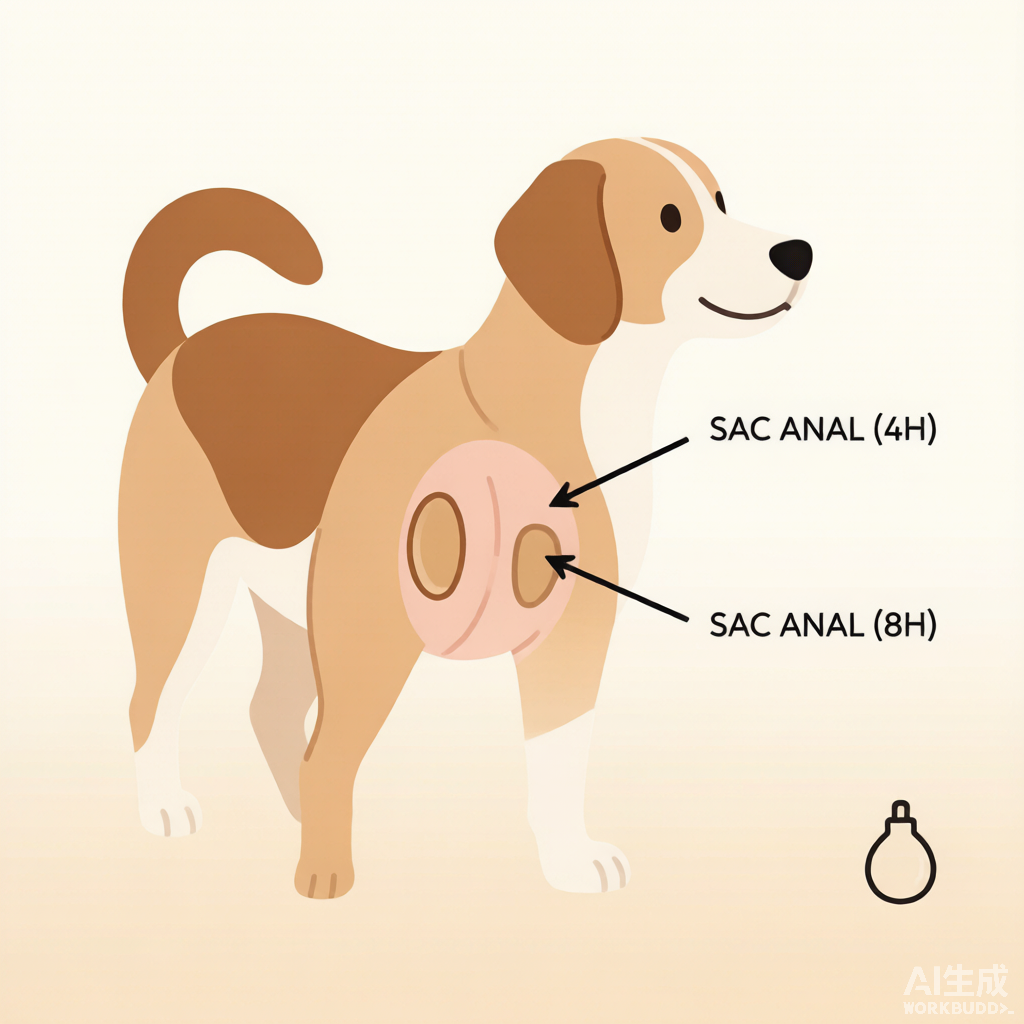
Before you put a finger anywhere, understand what’s under there. Your dog’s anal glands — properly called anal sacs — are two small, pea-to-grape-sized pouches located just inside the anus, at roughly the four and eight o’clock positions when you’re looking at your dog from behind. Each sac is lined with glands that produce a pungent, oily secretion. When your dog poops, the pressure of a firm, formed stool naturally squeezes these sacs, releasing a small amount of fluid that acts as a scent marker.
That last sentence matters more than most owners realize. The most natural way to “express” anal glands is a healthy, firm bowel movement. When stool is consistently soft or loose, it doesn’t provide enough pressure to empty the sacs, so fluid accumulates. That’s why chronic loose stools and anal gland problems so often travel together — and why the first line of management for many dogs isn’t squeezing at all, it’s firming up the stool.
The sacs have small ducts that empty just inside the anus. Those ducts can become blocked, the fluid can thicken, and the sacs can become impacted, infected, or abscessed. Which leads to the crucial question: what are you actually trying to fix?
The Two Methods, and Why the Difference Matters
There are two ways to empty a dog’s anal sacs, and confusing them is where home care goes wrong.
External Expression
This is the method groomers use and the one most suitable for home care — when it’s appropriate at all. The thumb and forefinger press on the sacs from outside the anus, applying steady, upward pressure toward the opening. Done correctly, the fluid expresses out through the duct. Done incorrectly — pressing too hard, at the wrong angle, or on an already-inflamed sac — you can rupture the gland wall.
Internal Expression
This method involves inserting a gloved, lubricated finger into the rectum and squeezing the sac against the finger from the inside. It’s more thorough and is the method most vets use when a gland is impacted and won’t empty externally. You should not attempt internal expression at home. Inserting a finger into a dog’s rectum is painful if done wrong, carries a real infection risk if the sac ruptures, and can cause the dog to bite out of reflex. Leave this one to the professionals.
| Method | Who should do it | When it's appropriate | Home-use? |
|---|---|---|---|
| External expression | Trained owners, groomers | Mild fullness, dog is calm, no signs of infection | ✅ Only if shown by a vet |
| Internal expression | Veterinarian only | Impacted sacs, chronic recurring issues | ❌ Never at home |
| Natural (via firm stool) | Nobody — it's automatic | Dogs with healthy, firm poops | ✅ The goal to aim for |
Before You Touch Anything: The 5-Minute Pre-Check
A calm, healthy dog makes expression easy. A dog with a problem makes expression dangerous. Run through this checklist first, and if any of these apply, do not express — call your vet:
- **Swelling or a visible lump** around the anus, could be an abscess that’s about to burst. Squeezing an abscess forces infection into surrounding tissue.
- **Discharge that looks like pus or blood**: a sign of infection, not simple fullness. Normal anal gland fluid is thin, brownish-yellow, and has a strong fishy smell; it is *not* creamy, greenish, or bloody.
- **Obvious pain**: your dog yelps, flinches, or guards its rear when you approach. Pain + pressure = rupture risk.
- **Fever, lethargy, or reduced appetite**, systemic signs that this isn’t a simple full-gland situation.
- **Bleeding or a hole/fistula near the anus**: a ruptured gland or an anal fistula needs veterinary care.
If your dog has scooting, licking, or odor but none of the above red flags, the sacs may simply be full, and expression (or better, a stool-firming diet change) may be appropriate. When in doubt, have a vet check them first. A professional palpation costs a little and costs nothing in pain.
How to Express Your Dog's Anal Glands (External Method, Step by Step)
These steps assume your vet has already shown you the technique and confirmed your dog tolerates it. If this is your first time, don’t learn from an article alone: have a professional demonstrate it on your dog first. Here’s the process for reference:
What you'll need:
- Disposable gloves (latex or nitrile)
- Petroleum jelly or lubricant
- Paper towels or gauze
- A place to stand outside the “splash zone” (that fluid travels further than you think)
- An extra pair of hands to hold your dog steady if needed
The steps:
- **Position your dog.** Have your dog stand on a non-slip surface, ideally with you behind them. A second person can stand in front and offer treats to keep your dog distracted and calm.
- **Locate the sacs.** With your thumb and index finger, gently feel around the anus at roughly the four and eight o’clock positions. You’re looking for two small, round, firm structures just under the skin, each about the size of a grape. Don’t squeeze yet, just locate them.
- **Place a paper towel or gauze** over the anus to catch the fluid. This also keeps the odor off your fingers.
- **Apply firm, steady, upward pressure** on each sac with your thumb and forefinger, squeezing *toward* the anal opening. The motion is more like pressing and rolling than pinching hard. You’re aiming to express the fluid out through the duct, not to crush the sac.
- **Expect a small amount of thin, brownish, fishy-smelling fluid.** That’s normal. Stop when the sac feels emptier and softer. You should not have to force it: if nothing comes out with reasonable pressure, stop. You might have the angle wrong, or the gland may not need emptying.
- **Wipe clean** with a fresh paper towel, wash your hands thoroughly, and praise your dog with a treat.
If it hurts, if it bleeds, if pus comes out, if you have to press hard, stop immediately. These are all signs to let a professional take over.
How Often Should You Actually Do It?
This is where a lot of owners get stuck, because they assume “full glands” means “express them regularly.” Here’s the more honest answer:
Most dogs never need manual expression. Their anal glands empty naturally with firm stools. If your dog is otherwise healthy, has normal poops, and shows no scooting or odor, you don’t need a routine expression schedule, and over-expressing healthy glands can actually irritate them and cause them to fill faster.
Some dogs do need it. Dogs with chronically loose stools, certain anatomical quirks, obesity, or a history of anal gland issues may need periodic expression: anywhere from every few weeks to every few months. But the goal should be to reduce the need, not just to treat the symptom. If your dog needs expression constantly, the underlying cause (usually diet/stool consistency) is what needs addressing.
A useful mental model: manual expression is a band-aid, not a cure. The real fix for a dog who chronically needs expression is almost always firmer stools, which is why fiber, appropriate diet changes, and adequate hydration matter more than how skilled you are at squeezing.
Reading the Fluid: What Normal Looks Like vs. What Should Stop You
If you’re going to express at home, you need to be able to read what comes out. Anal gland fluid isn’t one thing, its appearance and consistency tell you a lot about what’s happening inside the sac.
Normal anal gland fluid is thin, watery to slightly oily, and ranges from pale tan to brownish. It has a strong, distinctive fishy/fermented smell. A normal expression produces a small amount: usually just a few drops to a thin stream. The sac feels emptier and softer afterward.
What should stop you mid-task:
| Appearance | What it likely means | Your move |
|---|---|---|
| Thick, pasty, toothpaste-like | The gland is impacted (material has thickened and may not empty easily) | Try gentle external pressure once; if it won't empty, stop and see a vet |
| Creamy, greenish, or gray with a foul odor | Possible infection | Stop immediately. See a vet |
| Blood or pink-tinged fluid | Irritation, trauma, or rupture risk | Stop immediately. See a vet |
| Pus | Active infection / abscess | Stop. This needs veterinary treatment, not expression |
| Nothing at all | Gland may be empty, or you have the wrong angle | Don't force it. Re-check positioning or skip it |
The golden rule: if the fluid doesn’t look like normal anal gland fluid, stop and let a professional assess it. Never “power through” a resistant gland. A gland that won’t empty externally is often impacted and needs internal expression, which is a veterinary procedure.
Groomer, Vet, or Home? A Decision Guide
You have three options for handling anal glands, and the right one depends on your dog’s situation. Here’s an honest comparison:
| Option | Best for | Drawbacks | Cost |
|---|---|---|---|
| **Home (external)** | Owners with a calm dog, who've been shown the technique, doing routine maintenance | Rupture/infection risk if done wrong; can't handle impacted or infected glands | Almost free |
| **Groomer** | Routine maintenance during grooming visits, dogs who tolerate handling | Groomers may not be able to handle impacted/infected glands; variable training | Low-moderate |
| **Veterinarian** | First-time check, any red flags, impacted or infected glands, chronic cases | Costlier; may require sedation for painful cases | Moderate-higher |
A practical rule: if you’re doing routine maintenance and your dog is calm, home external expression or the groomer is fine. If there’s any pain, swelling, abnormal discharge, or it’s the first time, use your vet. The small cost of a veterinary check is trivial compared with the cost of treating a ruptured gland or a fistulated sac.
When Chronic Expression Points to a Bigger Problem
If your dog seems to need expression every few weeks, every month, without fail, that’s not a normal “maintenance” pattern: it’s a signal that something downstream needs attention. Chronic anal gland problems are frequently connected to:
- **Chronic soft or loose stools** (the most common culprit, because soft stool doesn’t provide the pressure needed to empty the sacs naturally).
- **Food allergies or intolerances**, dietary triggers that cause inflammation and loose stools.
- **Obesity**: excess weight can interfere with normal emptying mechanics.
- **Anatomical variations** (some dogs have glands that are positioned or shaped in a way that makes natural emptying harder).
- **Underlying GI conditions**, chronic gastrointestinal inflammation can affect the entire digestive tract, including the anal sacs.
This is where managing the root cause matters more than perfecting your expression technique. A dog who chronically needs expression because of loose stools will keep needing it until the stools firm up. Addressing diet, fiber, hydration, and gut health is the actual treatment; expression is just symptom management. It’s one more reason that long-term anal gland health so often starts with what’s going on in the digestive tract.
The Risks of Getting It Wrong (This Is Why Professionals Worry)
It’s worth being blunt about the downside. Improper expression can:
- **Rupture the anal sac wall**, leaking inflammatory fluid into surrounding tissue and causing swelling, pain, and infection.
- **Trigger or worsen an anal fistula**: a painful tunnel-like opening that’s notoriously hard to treat.
- **Spread an infection** if you squeeze an already-abscessed gland.
- **Cause the dog to associate the area with pain**, making future vet visits and grooming far more stressful.
- **Push impacted material deeper** instead of out, making the problem worse.
The single most common home-care mistake isn’t squeezing too softly, it’s squeezing too hard or too often on a gland that didn’t need it, or squeezing one that’s already infected. If you’re ever unsure whether your dog’s glands are simply full or actually problematic, the conservative choice is almost always to let a vet handle it.
When a "Scooting Dog" Isn't About the Glands at All
Here’s a misconception worth clearing up: scooting, the classic bottom-drag, is not always an anal gland problem. Owners see scooting and assume “glands need expressing,” but scooting is a symptom that can come from:
- Anal gland fullness or impaction
- **Allergies or skin irritation** around the rear
- **Intestinal parasites** (especially tapeworms, which cause perianal itching)
- A foreign body or irritation
- Pain from a different cause entirely
If you express the glands and the scooting continues, the glands weren’t the (whole) problem. It’s worth having your vet check for parasites, skin conditions, and food allergies rather than just re-expressing. The probiotics for dogs guide covers one angle of digestive health that frequently ties into perianal and gut issues.
A Note on Diet: The Fiber Connection You Can't Skip
Because firm stools are the natural way anal glands empty, dietary fiber is often the single most effective long-term solution for a dog who chronically needs expression. Increasing soluble and insoluble fiber firms up the stool, which in turn provides the natural pressure that empties the sacs with every bowel movement.
This is why many vets reach for a fiber supplement or a high-fiber diet before they ever recommend a regular manual-expression routine. Combined with adequate water intake, fiber addresses the root cause. It’s also worth noting that the same gut-health principles (a balanced microbiome and consistent digestion) underpin both anal gland health and overall digestive comfort, which is where a targeted probiotic can play a supporting role.
Frequently Asked Questions
Can I express my dog’s anal glands at home?
Yes, but only the external method, only on a calm dog with no red flags, and ideally only after a professional has shown you the technique. Never attempt internal expression at home.
How do I know if my dog’s anal glands need expressing?
Common signs include scooting, excessive licking or biting at the rear, a strong fishy odor, or visible fullness around the anus. But these signs can also come from allergies, parasites, or skin irritation: so expression isn’t always the answer.
How often should a dog’s anal glands be expressed?
Most healthy dogs never need manual expression. Dogs who chronically need it may need it every few weeks to months, but the underlying cause (usually stool consistency) should be addressed to reduce the need.
What happens if anal glands are not expressed?
If they’re full but otherwise healthy, they may cause discomfort and scooting. Left untreated, they can become impacted, infected, or abscessed, which requires veterinary treatment. Not every full gland needs manual expression, since firm stools often resolve it naturally.
References
- VCA Animal Hospitals. Anal Sac Disease in Dogs. Accessed August 2026.
- Preventive Vet. Dog Scooting and Anal Glands Explained. Accessed August 2026.
- American Animal Hospital Association (AAHA). Gastrointestinal Disease Resources. Accessed August 2026.
- BSAVA Manual of Canine and Feline Abdominal Surgery. Anal sac anatomy and management.
Disclaimer
This article is for educational purposes and does not constitute veterinary advice. Anal gland care involves procedures that can cause harm if performed incorrectly. Always consult a licensed veterinarian for diagnosis and treatment of your dog’s specific condition, and have a professional demonstrate any home-care technique before you attempt it.