
# Arthritis Medication for Dogs: What Vets Prescribe, What It Costs, and How Monitoring Works
If your dog has started hesitating at the stairs, or the morning stiffness has stretched from a few steps to a slow walk to the food bowl, you have probably arrived at the question that brings most owners to this topic: is there a medication for this, and is it safe to give one for years?
The answer has changed materially in the last decade, and mostly for the better. The older picture, nonsteroidal anti-inflammatory drugs that work well but carry real stomach, kidney, and liver risk with long-term use, is still the backbone of treatment. Layered on top of it now are drugs that target pain through different pathways, including a newer class that blocks a specific inflammatory target rather than the whole prostaglandin pathway, and a monthly injectable monoclonal antibody that works on nerve growth factor, which has changed the outlook for dogs who cannot tolerate the older drugs.
What has not changed is the structure of the decision. Arthritis in dogs is managed, not cured, the medications control pain and inflammation rather than reversing joint damage, and every option involves trade-offs that are worth understanding before you commit to a multi-year plan. This article walks through the drug classes your vet will actually consider, what each one is good at, the monitoring each requires, and where supplements fit relative to medication rather than instead of it.
—
The Short Answer
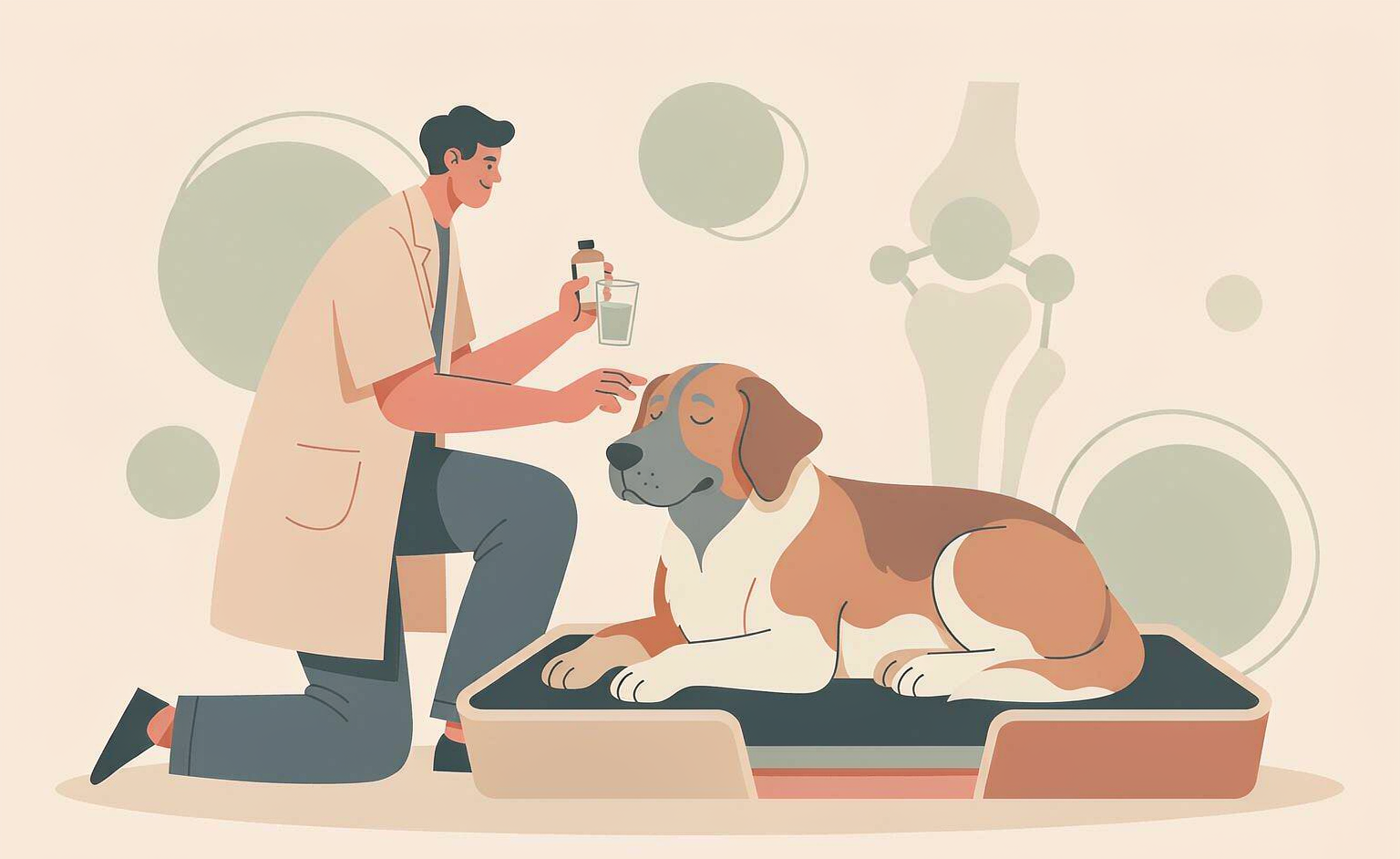
The mainstays of canine arthritis medication are NSAIDs such as carprofen, meloxicam, firocoxib, and deracoxib, with grapiprant offering a more targeted alternative and bedinvetmab, a monthly injectable antibody against nerve growth factor, available for dogs who do not do well on NSAIDs. These drugs control pain and inflammation; they do not reverse joint damage. All of them require veterinary diagnosis and monitoring, and NSAIDs specifically require periodic bloodwork to catch kidney, liver, or gastrointestinal problems early. Never give a dog a human painkiller: ibuprofen, naproxen, and acetaminophen are genuinely dangerous in dogs. Medication works best combined with weight control, controlled exercise, and often a joint supplement.
—
What Arthritis Medication Can and Cannot Do
Setting the expectation correctly prevents most of the disappointment in this topic.
Canine osteoarthritis is a degenerative joint disease: cartilage degrades, the joint capsule thickens, bone remodels at the margins, and the joint becomes painful and stiff. None of the drugs used to treat it rebuild cartilage or reverse the remodeling. What they do is interrupt the pain and inflammation cycle, which is why a treated dog is more mobile and more willing to move, and here is the part that matters most clinically: a dog that moves more maintains muscle mass and joint range of motion, and muscle is what actually stabilizes a deteriorating joint. Pain relief is not just comfort, it is what makes the rest of the management plan possible.
What the drugs cannot do is substitute for weight management. Excess body weight is the single most modifiable driver of arthritic progression, and no medication cancels it. They also do not replace appropriate exercise, which maintains the muscle and joint mobility that keeps the disease from accelerating.
The realistic goal is a dog who is comfortable, mobile, and engaged for years, on a combination of medication, weight control, exercise, and often supplements, with the medication dose titrated over time to the lowest amount that keeps the dog comfortable.
The Drug Classes Your Vet Will Consider
NSAIDs, the backbone. Nonsteroidal anti-inflammatory drugs reduce inflammation and pain by inhibiting cyclooxygenase enzymes, and several are licensed specifically for dogs: carprofen, meloxicam, firocoxib, deracoxib, and others depending on country. They are effective, most dogs show measurable improvement in mobility within one to two weeks, and they have decades of clinical use behind them. Their risks are the well-known NSAID profile: gastrointestinal irritation and ulceration, kidney effects, and less commonly liver effects, all of which are why monitoring exists and why they are prescription drugs.
The single most important safety rule with this class, and the one that sends dogs to emergency clinics, is never combine two NSAIDs and never add a steroid on top. Overlapping anti-inflammatories multiplies the risk of gastrointestinal ulceration and kidney injury without adding benefit. If a dog is already on one and a second is being considered, the first needs a proper washout period set by your vet.
Grapiprant, the targeted alternative. Grapiprant works on a different target, the EP4 prostaglandin receptor, rather than inhibiting cyclooxygenase broadly. The practical consequence is that it spares the prostaglandin pathways involved in protecting the stomach lining and maintaining kidney blood flow, so it tends to be better tolerated in dogs who cannot stay on conventional NSAIDs. It is a once-daily tablet, and it is a genuinely useful option rather than a marketing variant, particularly for dogs with a history of GI sensitivity or early kidney concerns.
Bedinvetmab and frunevetmab, the antibody class. This is the newest and, for some dogs, the most significant development. These are monoclonal antibodies against nerve growth factor, given as a monthly injection by a veterinarian. They work on the pain signaling pathway rather than the inflammatory pathway, and because they are antibodies they are cleared by normal protein degradation rather than through liver or kidney metabolism, which is why they can be used in dogs with kidney or liver disease where NSAIDs would be risky. The monthly injection schedule is either a convenience or a burden depending on the dog and the owner’s logistics, and the most commonly reported effects seen in trials and practice have been mild, sometimes including transient injection site discomfort or changes in urination and drinking.
The honest caveat on this class is that it is newer, so the long-term data in dogs is thinner than the decades behind the NSAIDs, and there have been post-approval reports of some dogs showing neurological or musculoskeletal signs. Most dogs do well, and it has changed the outlook for dogs who previously had no tolerable option, but it is a decision to make with your vet rather than a simple upgrade.
Gabapentin, for the nerve-pain component. Not an anti-inflammatory, and often added rather than used alone. Chronic joint pain develops a neuropathic component over time, and gabapentin addresses that. It causes sedation, especially early on, which is why it is usually started at night and titrated upward. It is one of the more commonly added drugs in older dogs with multiple pain sources.
Amantadine, the adjunct. Another drug for the central sensitization component of chronic pain, sometimes added when an NSAID alone plateaus. Used less often than gabapentin, and with a similar logic.
Adequan, the disease-modifying injectable. Polysulfated glycosaminoglycan is injected on a tapering schedule and is described as disease-modifying rather than purely symptomatic, with proposed effects on cartilage matrix and joint inflammation. The evidence base is mixed and debated, some clinicians see clear benefit, and it is worth asking about for dogs where you want to add something with a different mechanism.
Steroids, the option to avoid long-term. Prednisone and related drugs relieve inflammation powerfully and are sometimes used short term, but they accelerate cartilage damage, cause muscle wasting, and produce the well-known set of steroid side effects over months. They have a place in specific situations, and they are not an arthritis maintenance drug.
The Monitoring That Comes With Long-Term Medication
This is the part owners underestimate, and it is the part that makes long-term medication safe rather than gambling.
Baseline bloodwork before starting. Kidney values, liver enzymes, and usually a urinalysis, so that any later change can be compared against what that dog’s normal looks like. Starting an NSAID without a baseline means a later abnormal value is uninterpretable.
Periodic rechecks. For dogs on chronic NSAIDs, most vets repeat bloodwork at a few months after starting and then at intervals, commonly every six months, with frequency increasing in older dogs or those with any abnormality. A dog on grapiprant or an antibody has a different monitoring profile, which is part of the reason your vet may prefer one over another in a dog with existing kidney disease.
What the vet is watching for. Vomiting, diarrhea, black tarry stool, reduced appetite, increased drinking or urination, jaundice, lethargy, and a change in mobility. Any of these on an NSAID is a reason to stop the drug and call, and this is true even if the dog has been on it for years without incident.
The lowest effective dose principle. Arthritis progresses, so doses go up over time, but the goal is always the smallest amount that keeps the dog comfortable. Periodic trials off the medication, or down in dose, are a reasonable part of long-term management, and a comfortable dog on a drug holiday until cold weather returns is a legitimate outcome.
Never give human painkillers. It bears repeating because it is the most common preventable toxicity in this space. Ibuprofen and naproxen are highly toxic to dogs and cause gastrointestinal ulceration and acute kidney injury at doses an owner might guess at. Acetaminophen is toxic to dogs and especially to cats. Aspirin is used in dogs only under veterinary direction at specific doses. If your dog is in pain and you have no prescribed medication, call your vet rather than opening your medicine cabinet.
Where Supplements Fit Relative to Medication
Owners often frame this as medication versus supplements, and the useful framing is different: they are doing different jobs on different timelines.
Medication controls pain and inflammation now, within days to weeks, and is what makes a painful dog willing to move. Supplements work on the slower substrate of joint support, cartilage matrix components, and the inflammatory baseline over months, and they are generally better tolerated over years than continuous NSAID therapy. Many dogs end up on both, with the supplement providing a baseline that may allow the medication dose to stay lower for longer.
The evidence on supplements is genuinely mixed and worth being honest about. Glucosamine and chondroitin have produced inconsistent results across trials, with some showing benefit and others not, and quality of the product matters enormously because the supplement market is poorly regulated. Omega-3 fatty acids have the more consistent signal, with multiple studies in arthritic dogs showing improved weight-bearing and mobility on diets enriched in marine omega-3, and they carry an anti-inflammatory mechanism that is well understood. Our joint supplements guide covers the ingredients and label-reading in depth, and our salmon oil for dogs guide goes into the omega-3 dosing and sourcing specifics.
Our omega-3 soft chews combine EPA and DHA with glucosamine, turmeric, and MSM, which lines up with the omega-3 evidence and covers several of the commonly used joint ingredients in one daily chew. It is daily nutritional support, not a treatment for arthritis and not a substitute for prescribed medication, and a dog in visible pain needs veterinary assessment and a pain management plan that the vet controls.
The three non-drug measures that do more than most owners expect: weight control, which is the strongest modifiable factor in how fast arthritis progresses; controlled, consistent low-impact exercise, especially swimming and leash walking on soft ground, which maintains the muscle that stabilizes failing joints; and environmental changes, ramps instead of stairs, non-slip flooring on the surfaces the dog uses most, a raised food bowl, and a bed with real support.

Frequently Asked Questions
What is the safest arthritis medication for dogs?
There is no single safest, because safety depends on the individual dog’s kidney, liver, and gastrointestinal history. Carprofen, meloxicam, and firocoxib have the longest track records. Grapiprant tends to be better tolerated in the stomach and kidneys because of its narrower target. Bedinvetmab is cleared without liver or kidney metabolism, which suits dogs with existing organ disease. Your vet chooses based on your dog’s bloodwork and history.
Can I give my dog ibuprofen or aspirin for joint pain?
No. Ibuprofen and naproxen are toxic to dogs and can cause gastrointestinal ulceration and acute kidney injury at doses an owner might guess at. Acetaminophen is also toxic. Aspirin is sometimes used in dogs but only at veterinary-directed doses and never alongside another anti-inflammatory. Call your vet rather than using human painkillers.
How long does it take for arthritis medication to work?
NSAIDs typically show measurable improvement in mobility within one to two weeks, and sometimes within the first few days. If there is no change after two to three weeks at an appropriate dose, the vet may adjust the dose, switch drugs, or look for an additional pain source, since arthritis rarely travels alone in older dogs.
What are the side effects of long-term NSAID use in dogs?
The main concerns are gastrointestinal irritation and ulceration, kidney effects, and less commonly liver effects. Signs to watch for include vomiting, diarrhea, black tarry stool, reduced appetite, increased drinking or urination, lethargy, and jaundice. This is exactly why baseline and periodic bloodwork are part of responsible long-term prescribing, and why any of these signs means stopping the drug and calling your vet.
Is the monthly injection for arthritis pain worth it?
For the right dog, yes. The antibody class works on nerve growth factor rather than inflammation, is cleared without liver or kidney metabolism, and has been genuinely useful for dogs who cannot tolerate NSAIDs. The trade-offs are the monthly injection visit, the higher cost, and the shorter long-term safety record compared with decades of NSAID data. Discuss it with your vet if NSAIDs are not working or not tolerated.
Can supplements replace arthritis medication?
Usually not in a dog with active pain. Supplements work on a slower timeline and generally have a milder effect, while medication controls pain and inflammation quickly and is what allows a painful dog to exercise and maintain muscle. The most common and most effective arrangement is both, with the supplement providing long-term baseline support and possibly keeping the required medication dose lower.
Should my dog stay on arthritis medication for life?
Arthritis is a progressive, managed condition, so most dogs stay on some form of pain management long term, with doses adjusted over time. The goal is the lowest dose that keeps the dog comfortable, and periodic trials off medication, particularly in good weather or after weight loss, are reasonable. Never stop abruptly for surgery or a new medication without telling your vet, since washout periods matter.
Bottom Line
Arthritis medication for dogs is in a better place than it was ten years ago. The NSAIDs that have carried this disease for decades still work, and they now sit alongside a targeted oral option that spares the stomach and kidneys, and a monthly antibody injection that has given real relief to dogs who previously had no tolerable drug. What all of them do is control pain and inflammation, which is not a small thing, because a comfortable dog moves, and movement is what preserves the muscle that holds a failing joint together. What none of them do is replace weight control, appropriate exercise, and a home that does not fight the dog at every step. Get the diagnosis and the bloodwork, pick a drug that fits that specific dog’s organs rather than the newest one, monitor on schedule, and treat medication as the thing that makes the rest of the plan possible rather than the plan itself.
Disclaimer
This article is for general education only and is not veterinary advice. All arthritis medications for dogs are prescription drugs that require veterinary diagnosis, dosing, and monitoring, and some require baseline and periodic bloodwork. Never give a dog human painkillers, including ibuprofen, naproxen, or acetaminophen, as these are toxic to dogs. Contact your veterinarian promptly if your dog on anti-inflammatory medication shows vomiting, diarrhea, black stool, appetite loss, lethargy, or changes in drinking or urination. Dietary supplements are not intended to diagnose, treat, cure, or prevent any disease, and you should consult your veterinarian before starting any supplement.
References
- American College of Veterinary Internal Medicine. “Consensus Guidelines on the Diagnosis and Treatment of Osteoarthritis in Dogs.”
- Merck Veterinary Manual. “Osteoarthritis in Dogs” and “Nonsteroidal Anti-inflammatory Drugs in Animals.”
- VCA Animal Hospitals. “Arthritis in Dogs” and “Carprofen.”
- Veterinary Partner (VIN). “NSAIDs and Your Dog” and “Grapiprant for Dogs.”
- European Medicines Agency. “Summary of Product Characteristics, Librela (bedinvetmab).”
- Fritsch DA, Allen TA, Dodd CE, et al. “A multicenter study of the effect of dietary supplementation with fish oil omega-3 fatty acids on carprofen dosage in dogs with osteoarthritis.” Journal of the American Veterinary Medical Association. 2010.