
# How to Stop Dog Barking: A Trainer-Grounded Guide to Quiet That Actually Lasts
Every dog barks. It is how they say “someone’s here,” “let’s play,” “I’m worried,” and “I have been alone for four hours and counting.” Barking itself is not a behavior problem, it is communication. The problem is barking that is excessive, barking that starts at the mailbox every day and does not stop, barking that the neighbors have mentioned, barking that no amount of yelling seems to touch.
Most owners try the same sequence: shout at the dog, then plead with the dog, then give up and hope it resolves with age. It rarely does, because each of those responses either adds energy to the situation or accidentally rewards it. The truth that makes barking fixable is that different barks have different jobs. A bark guarding the window and a bark demanding your attention and a bark born of panic at being alone are three different behaviors that need three different plans. Treat them all the same and you will get nowhere, which is exactly why the yelling does not work.
This guide sorts barking into its functional types, shows you how to identify which one your dog is doing, and walks through the training approaches with real evidence behind them, the management tricks that buy immediate relief, the mistakes that make barking worse, and the point at which a certified behavior professional is worth the fee.
—
The Short Answer
To stop excessive barking, first identify its function, because the fix depends on the cause. Alert barking responds to blocking the view and teaching an alternative. Attention barking stops when it stops working, meaning you ignore it completely and reward quiet instead. Boredom barking needs more exercise and mental work, and a tired dog genuinely barks less. Anxiety or fear barking needs a structured desensitization plan, and separation-related barking in particular usually needs professional help, which our dog anxiety guide covers in depth. Skip shouting, since your dog reads it as you joining in, and be cautious with anti-bark collars, which can suppress the sound without addressing the cause and make fear-based barking worse. Consistency across everyone in the household for a few weeks changes most barking patterns. If barking is compulsive, escalates, or comes with anxiety signs, bring in a certified trainer or behaviorist.
—
First, Identify Which Bark You Are Dealing With
Trainers sort barking by function, and the categories are practical because each points to its own solution. Here is how to read yours.
Alert and territorial barking. The dog barks at the doorbell, the window, passing dogs, or delivery trucks. The posture is forward, ears up, tail often high, and the barking is confident and rhythmic. The dog believes its barking works, and in a sense it does, because the mail carrier always leaves. From the dog’s view, barking repels intruders every single day.
Attention-seeking barking. Staccato barks aimed at you, often paired with pawing, nudging a toy at your leg, or staring. It happens when you are on the phone, at your desk, or talking to someone else. This bark is learned with textbook precision: bark, human responds, behavior rewarded. Even saying “stop” counts as a response.
Boredom barking. A repetitive, monotone bark, often when the dog is alone in the yard, sometimes accompanied by digging, fence running, or destruction. It is the bark of a dog with energy to burn and nothing to burn it on. It tends to follow a schedule, starting shortly after the family leaves.
Anxiety and fear barking. Higher pitched, often with body language that moves backward, ears pinned, tail low or tucked, pacing, lip licking. Separation anxiety barking usually starts within minutes of your departure and can continue for hours, often with drooling, destroyed door frames, or house soiling at the exit points. This is not a disobedience problem. It is a panic problem, and the approach reflects that.
Excitement and play barking. Happens at the dog park, before walks, when the leash comes out. It is the least problematic type for you and the most self-rewarding for the dog, but it can still be shaped toward calmer door manners.
Demand barking at specific triggers. Some dogs learn to bark at particular moments, when you open the treat cupboard, when it is dinner time. This is attention barking with a schedule, and the fix is the same: the bark must stop producing results.
Compulsive and geriatric barking. A smaller category but an important one. Some dogs develop repetitive barking loops that look almost trance-like. And older dogs, particularly seniors, can develop night barking and restlessness tied to cognitive decline, disorientation, or losing hearing and vision, where the dog barks at things it can no longer clearly perceive. New night barking in a senior dog is a vet conversation, not a training problem.
Step One: Run a Week of Simple Detective Work
Before you change anything, track the barking for several days. Note what happened right before it started, what the barking looked and sounded like, and what happened right after, including what you and others did. Behaviorists call this looking at antecedents, behavior, and consequences, but in practice it is simple note-taking.
Patterns surface fast. Maybe the afternoon barking starts exactly when the school bus passes. Maybe the 6 p.m. barking begins twenty minutes before the usual dinner time, which makes it demand barking with a clock. Maybe barking only happens when you are home but distracted, which points to attention. You cannot fix what you have not defined, and a week of notes usually tells you more than months of frustration.
This also separates a training problem from a medical one. Dogs in pain, dogs with declining senses, and dogs with canine cognitive dysfunction can all bark more. If barking began suddenly in an adult or senior dog, or comes with appetite changes, restlessness at night, or house soiling, start with a vet visit rather than a training plan.
The Training Toolkit, Method by Method
Extinction: Making Attention Barking Stop Working
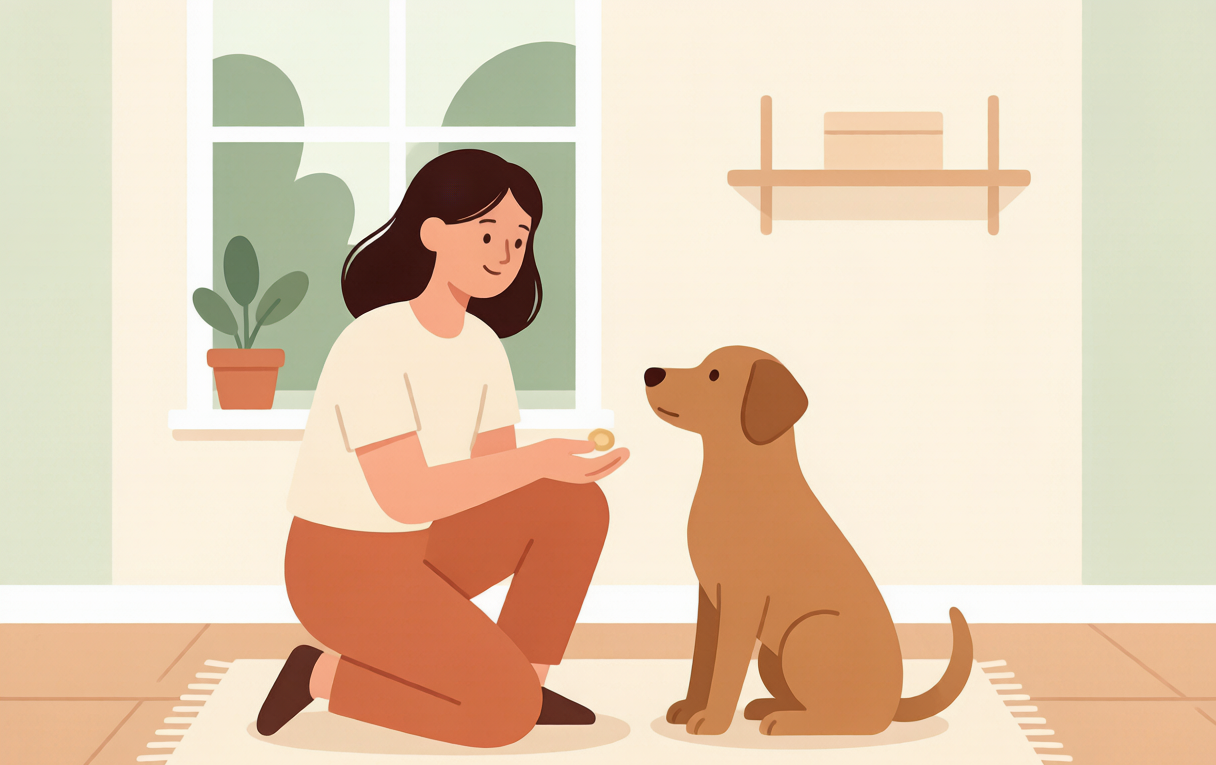
If the bark’s job is to get your attention, the fix is to make the job disappear. When the bark starts, do not look at the dog, do not speak, do not scold. Turn away if needed. The moment the barking stops, even for two seconds, reward the quiet with calm attention or a treat. The bark gets nothing. Quiet gets everything.
Two warnings. First, everyone in the house must comply, because one family member who responds keeps the whole system alive. Second, expect an extinction burst. When a behavior that used to work suddenly stops working, dogs escalate first, barking louder and longer, before giving up. The burst is a sign the plan is working, not failing. Hold the line through it, and the behavior collapses far faster than it was built.
Teaching a "Quiet" Cue on a Foundation of "Speak"
It sounds backwards, but the cleanest path to a quiet cue is teaching the bark on command first. Put the bark on a cue, mark it, reward it. Then, mid-bark, give your new quiet cue, wait for the pause that must come eventually, mark and reward generously. Practiced in calm training sessions, away from real triggers, the dog learns both words as a paired skill, and you gain an off switch you can deploy in real situations.
Desensitization and Counter-Conditioning for Alert Barking
For the window guard who barks at every passerby, you change the emotional math. Start at a distance where the trigger is visible but below the threshold that triggers barking, and feed excellent treats continuously while the trigger is in view. Trigger appears, chicken happens. Trigger disappears, chicken stops. Over sessions you close the distance, and the dog’s response shifts from “alarm” toward “that thing predicts snacks.” Meanwhile, manage the environment so the dog cannot rehearse the old pattern all day: close the blinds on the busy window, use frosted film on the lower panes, or block access to the front-room lookout post. Every unrehearsed day of barking strengthens it, and every prevented repetition weakens it.
Fulfilling the Dog, Not Just Quieting It
Boredom barking does not respond to training protocols so much as to a fuller life. The working estimate most trainers use is that dogs need physical exercise and mental exercise, and mental work is disproportionately effective, a twenty-minute scent game or training session can tire a dog more than an hour of walking. Food puzzles, scatter feeding in grass, sniffing walks where the dog sets the pace, short daily obedience sessions, and rotating chews all burn the energy that otherwise becomes noise. A dog that sleeps through the afternoon is not barking through it.
If your dog is home alone most of the day, build departure routines: a stuffed frozen food toy given only when you leave, a walk before you go, a dog walker midday if the budget allows. Barking complaints from neighbors usually involve dogs left alone for long stretches, and the fix is structural, not disciplinary.
Night Barking: Its Own Conversation
Night barking deserves its own section because the causes and the solutions differ by age.
Puppies newly home bark at night from loneliness and a missing litter. The answers are unglamorous: a crate beside your bed for the first weeks, a warm wrap, a predictable wind-down, and gradually moving the sleeping spot outward as the pup settles. Never respond to demand barking with attention, but do respond to a genuine toilet need, take the pup out calmly, no play, then back to bed.
Adult dogs barking at night usually respond to outdoor sounds and can be helped by white noise, a fan, or moving the sleep space away from the street-facing side of the house. Seniors with new night barking are a different matter, and the checklist is medical first: pain, cognitive dysfunction, sensory decline, and the restlessness these cause. Canine cognitive dysfunction is underdiagnosed because owners assume the dog is “just getting old.” Ask your vet directly, because there are management approaches and medications that help.
The Mistakes That Make Barking Worse
Shouting. From across the room, your yell sounds like you barking along. The dog gets more aroused, not less, and now the trigger event includes your participation.
Inconsistent responses. Barking that sometimes earns attention is on a variable schedule, the same reward structure that makes slot machines addictive. Occasional rewards make barking more persistent than constant rewards do.
Anti-bark collars used on fear. A citronella or shock collar can suppress the sound, but for an anxious dog it adds an aversive on top of an existing fear, which can sharpen the underlying emotion, and the fear can resurface as different problems, from destructiveness to snapping. For alert barking in a confident dog, some trainers use citronella collars as one tool among many with proper oversight. The safe default, if you are considering one, is to work with a professional first rather than starting there.
Rewarding the quiet too late. If you wait until the dog has been silent for two minutes before acknowledging it, the dog no longer connects the reward to the silence. Reward the pause quickly and clearly in the training stages.
When to Bring In a Professional
Call in a certified professional when the barking involves panic, when there is separation distress, when the dog has bitten or snapped, or when you have worked the basics consistently for several weeks without movement. Look for credentials like CPDT-KA or CDBC, and be aware that the dog training industry is unregulated, so titles alone mean little without certification behind them. Fear-based and separation-related barking respond well to structured behavior modification, but the plans are individualized, and getting the details right early saves months.
Barking that comes with other stress signals deserves a wider lens. A dog that barks through departures, pants, paces, and stops eating when stressed is showing a whole-body stress response, and reading those signals together matters, a topic we go deeper on in our dog not eating guide.
Where Daily Nutrition Fits the Picture
Behavior work runs on a dog’s nervous system, and the nervous system runs on nutrition. It is not the headline fix, and no supplement replaces training, but a dog under chronic stress has higher demands for several nutrients, the B vitamins that support normal nerve function, vitamin C, which dogs use more of under sustained stress, and the omega-3 fatty acids involved in brain and nervous system maintenance.
Our daily multivitamin soft chews are built as a nutritional baseline for exactly this kind of steady support: 26 vitamins and minerals in one chew, including the B-complex, vitamin C, zinc for immune function, omega-3s, and prebiotic fiber for digestion, in a 200 Chews bottle. For dogs working through a behavior modification plan, a consistent nutritional foundation is one of the quiet supporting factors that helps everything else go better.
To be direct about the limits: a multivitamin is not a treatment for anxiety, compulsive barking, or any behavioral condition. It supports overall wellness while you and your trainer do the work that actually changes the behavior.

Frequently Asked Questions
How do I stop my dog from barking at everything?
Start by blocking visual access to triggers, since most “at everything” barking is alert barking rehearsed from a window or fence line, and every repetition strengthens it. Then add desensitization with treats at a distance, and reward quiet consistently. Give the dog more mental exercise daily. If barking continues despite several consistent weeks, a certified trainer can assess the specific triggers.
Will my dog grow out of barking?
Rarely on its own. Puppies reduce demand barking somewhat as they mature, but alert and attention barking that works will get stronger with practice, because barking is self-rewarding when it produces results. Waiting tends to make patterns more established, not less. The productive window to intervene is as soon as the pattern becomes annoying.
Do anti-bark collars actually work?
Citronella and shock collars can reduce barking in the short term by making barking unpleasant, but they do not address why the dog barks, and for fear-based or anxiety barking they can make the underlying emotion worse. Collars are best used, if at all, under professional guidance, on confident dogs whose barking is alert-driven. For most owners, the combination of blocking rehearsal, training an alternative, and meeting the dog’s exercise needs works better and lasts longer.
How do I stop my puppy from barking at night?
Keep the crate beside your bed for the first couple of weeks so the puppy is not crying in total isolation, maintain a calm wind-down routine, and take the puppy out for a real toilet break if it has been long enough since bedtime. Do not respond to pure demand barking with attention or you will teach the exact behavior you are trying to end, and be consistent, because responding after ten minutes of crying trains the puppy to cry for ten minutes. Most puppies settle within a week or two of steady routine.
Why does my older dog bark at nothing at night?
New night barking in a senior dog most often reflects something real: declining hearing or vision that distorts what the dog perceives, pain, disrupted sleep cycles, or canine cognitive dysfunction, which is similar to dementia and is underrecognized. It warrants a veterinary check rather than a training response, because several of these causes can be medically managed, and the barking often improves when the underlying issue is treated.
Disclaimer
This article is for general education only and is not veterinary or professional behavioral advice. Sudden behavior changes, including new barking in an adult or senior dog, can have medical causes that need diagnosis. If your dog’s barking involves aggression, panic, or has not improved with consistent training, consult your veterinarian and a certified professional trainer or behaviorist. Product references describe nutritional supplements and are not intended to diagnose, treat, cure, or prevent any disease.
References
- American Kennel Club. “How to Stop Excessive Dog Barking.”
- The Humane Society of the United States. “Barking: How to Get It Under Control.”
- American Society for the Prevention of Cruelty to Animals. “Barking.”
- Veterinary Clinics of North America: Small Animal Practice. “Canine Compulsive Disorders.”
- Cornell Richard P. Riney Canine Health Center. “Canine Cognitive Dysfunction.”