
# Why Is My Dog Drinking So Much Water? What Excessive Thirst Can Mean
A dog that suddenly empties the water bowl three times a day is easy to miss at first. Maybe it is hot out. Maybe the dog has been running more. But when the thirst sticks around, when you are refilling the bowl constantly and your dog is asking to go out all night, that is a signal worth understanding. Excessive thirst is one of those quiet symptoms that owners often normalize for far too long, partly because drinking water seems like such a healthy thing for a dog to do.
It is healthy, up to a point. Past that point, a dog that drinks far more than usual and urinates far more than usual is often telling you something is off inside. In veterinary medicine, increased thirst and increased urination are sometimes lumped together as a classic pair, and the list of conditions behind them includes several that respond much better to early detection than late.
This guide explains how much water is actually normal, how to measure whether your dog is drinking too much, the most common causes, when it is urgent, and how to track it so your vet has useful information.
—
The Short Answer
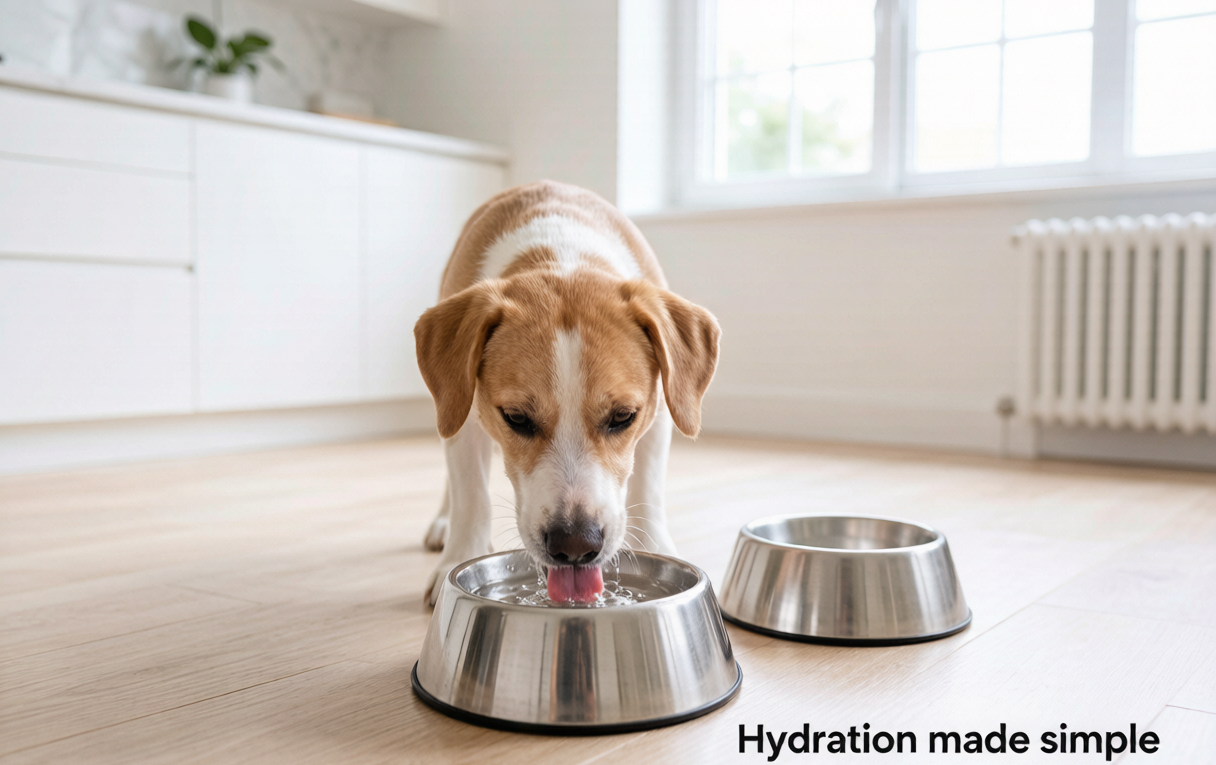
A healthy dog generally drinks roughly one ounce of water per pound of body weight per day, so a 30-pound dog drinks around 30 ounces, though heat, exercise, and diet all shift this. Drinking noticeably more than usual, along with urinating more, is called polydipsia and polyuria, and it is a symptom rather than a diagnosis. The most common causes include diabetes mellitus, kidney disease, Cushing’s disease, a urinary tract infection, liver problems, certain medications including steroids, and sometimes simply heat, exercise, or a switch to dry food. A day or two of extra drinking after a hot day or a long hike can be normal. But persistent excessive thirst, especially with weight loss, appetite changes, accidents in the house, vomiting, or lethargy, should be checked by a vet promptly, because conditions like diabetes and kidney disease are far more manageable when caught early. Do not restrict a thirsty dog’s water unless a vet specifically tells you to.
—
How Much Water Is Normal for a Dog?
Having a number to compare against makes this far easier to judge. The general guideline is about one ounce of water per pound of body weight per day. That works out to roughly:
- A 10-pound dog: about 10 ounces, a little over a cup.
- A 30-pound dog: about 30 ounces, close to a quart.
- A 60-pound dog: about 60 ounces, nearly half a gallon.
- A 90-pound dog: about 90 ounces, about three quarts.
These are rough figures, not rules. A lot moves the number up or down.
Things that normally increase drinking: hot weather, more exercise, a dry kibble diet, a bout of vomiting or diarrhea, nursing puppies, and some medications. Dogs on dry food typically drink more than dogs on wet food, because wet food delivers a lot of water in the meal itself.
Things that normally decrease drinking: cool weather, less activity, and a wet or raw diet.
The key word in all of this is baseline. The number that matters most is not the textbook figure but what your dog usually does. A dog that has always been a big drinker is different from a dog that suddenly changed. Sudden change is the signal.
A useful trick is to measure. Fill the bowl with a known amount, keep it topped up for 24 hours, and see how much the dog actually consumed. Do this for a few days to find the baseline. Then you have real data to bring to your vet instead of a vague sense that “he seems to drink a lot.”
The Pair That Matters: More Drinking and More Peeing
Excessive thirst rarely travels alone. When a dog drinks more, it urinates more, and the two usually move together. Vets look at them as a pair, and the combination narrows the list of causes a lot.
Watch for:
- Larger or more frequent urination, including needing to go out more often, especially at night.
- Accidents in the house in a dog that was previously reliable.
- Drinking from unusual sources, like the toilet, puddles, or the fish tank.
- Standing by the water bowl or seeking water constantly.
- Wetting the bed while sleeping, or leaking while lying down.
If your dog is drinking more but not urinating more, that can point to a different set of causes, and it is worth mentioning that distinction to your vet. The pairing matters for diagnosis.
The Most Common Causes
The list is not short, but it is well defined, and several of the top causes are conditions where early detection changes the outcome.
Diabetes mellitus. One of the most common causes of the thirsty, urinating-more dog. In diabetes, the body cannot properly use glucose, so sugar builds up in the blood and spills into the urine, dragging water with it. Dogs drink more to compensate. Other signs include weight loss despite a good or increased appetite, and sometimes cataracts that appear suddenly.
Kidney disease. When the kidneys lose their ability to concentrate urine, the body loses more water and the dog drinks more to keep up. Kidney disease is common in older dogs and often shows up first as increased thirst and urination, sometimes with weight loss, a dull coat, and reduced appetite.
Cushing’s disease (hyperadrenocorticism). A hormonal condition, most common in middle-aged and older dogs, where the body produces too much cortisol. It classically causes increased drinking and urination, a ravenous appetite, a pot-bellied appearance, panting, and hair or skin changes. Breeds like Poodles, Dachshunds, and Terriers are more prone.
Urinary tract infection. An infection in the bladder or urinary tract can cause more frequent urination, sometimes with straining, blood in the urine, or accidents. The dog may drink more, and the infection is uncomfortable if left untreated.
Liver disease. Liver problems can interfere with how the body handles fluids and hormones, leading to increased thirst and urination, along with other signs like jaundice, vomiting, or a swollen belly.
Medications. Steroids like prednisone are a common culprit, and so are some diuretics and seizure medications. If the change lines up with starting a new medicine, that is a strong clue.
Pyometra. In an unspayed female, a serious uterine infection can cause increased drinking and urination along with lethargy, vomiting, and sometimes a discharge. This is an emergency.
Heat, exercise, and diet. Not every cause is a disease. A hot day, a long hike, or a switch to dry food can raise water intake for a short while. The difference is that these are temporary and tied to an obvious trigger.
Psychogenic drinking (rare). Occasionally a dog drinks excessively for behavioral reasons, but this is a diagnosis of exclusion, made only after medical causes are ruled out. Do not assume this one.
The overlap here is exactly why vets do not guess. Several of these conditions look identical from the owner’s side, and the only way to tell them apart is with bloodwork and urine testing.
What the Vet Will Do
Understanding the diagnostic path helps you see why an early visit is worth it. A typical workup for excessive thirst starts with:
- A thorough history, including how long it has been going on, how much the dog drinks, whether there are other signs, and any new medications.
- Bloodwork, including a complete blood count and a chemistry panel that checks glucose, kidney values, liver values, and electrolytes.
- A urinalysis, which checks for infection, sugar in the urine, how concentrated the urine is, and other clues.
- Possibly further testing, such as a specific test for Cushing’s disease, imaging like X-rays or ultrasound, or a water-deprivation test in carefully managed cases.
Most of the common causes can be identified from blood and urine alone, which is why these tests are the first step. The sooner you go, the sooner you get answers, and several of these conditions are far easier to manage when caught before complications develop.
What You Can Do While You Wait
You cannot diagnose this at home, and you should not try. But you can do a few useful things while you arrange the vet visit.
Measure the water. Use the bowl-measuring method above for a few days. An actual number in ounces per day is far more useful to your vet than “a lot.”
Do not restrict water. Unless a vet has specifically told you to, never limit a thirsty dog’s water. Restricting water in a dog with diabetes or kidney disease can cause dangerous dehydration. This is one of the most important things to understand.
Track the urine too. Note how often the dog asks to go out, any accidents, and whether the urine looks different. If you can, catch a fresh urine sample in a clean container to bring along, though the vet will likely collect one anyway.
Note the other signs. Weight change, appetite change, energy level, coat condition, vomiting, and any new medications. Bring a list.
Keep the water clean and available. Fresh water in a clean bowl, and more than one bowl in a multi-dog home, so you can tell who is drinking what.
Do not self-treat. Do not give human diabetes medication, diuretics, or anything else. These can be dangerous. The diagnosis has to come first.
When It Is Urgent
Some signs mean do not wait for a routine appointment. Seek prompt or emergency care if your dog has:
- Excessive thirst with severe lethargy, weakness, or collapse.
- Vomiting and not drinking, which risks rapid dehydration.
- Sweet-smelling or fruity breath, which can be a sign of a serious diabetic complication.
- A distended, painful belly, especially in an unspayed female, which can point to pyometra.
- Straining to urinate with little or no urine coming out, which can mean a blockage. In male dogs, this is a life-threatening emergency that can become fatal within a day.
- Very pale or blue gums, or a dog that seems disoriented.
- Blood in the urine along with a very unwell dog.
For an older dog with a slow onset of thirst and urination but no crisis signs, a prompt regular appointment is the right move. For a dog in distress, go now.
If your dog’s appetite and drinking habits have both shifted, it helps to understand them together. Our dog not eating guide covers the appetite side, and our dog constipation guide explains the stool side, which can be relevant if changes in hydration are affecting digestion.
Reducing Risk Going Forward
You cannot prevent every cause, but a few habits help the ones that are manageable.
- Keep annual or twice-yearly vet visits, especially for senior dogs. Bloodwork catches diabetes, kidney changes, and liver problems before symptoms get loud.
- Watch weight and body condition. Obesity raises the risk of diabetes and worsens joint and heart stress. Our senior dog supplements guide covers what changes as dogs age and why monitoring matters more in the later years.
- Keep fresh water available and clean, and know your dog’s normal intake so a change stands out.
- Spay or neuter as recommended by your vet, which removes pyometra risk.
- Never ignore a persistent change, even if the dog otherwise seems fine. Thirst is often the earliest and quietest symptom a dog will show.
Nutrition as Part of the Picture
While no supplement prevents or treats diabetes, kidney disease, or the other conditions behind excessive thirst, a dog managing a chronic condition benefits from a solid nutritional baseline. A dog on a prescription diet or a restricted diet may have gaps, and a veterinarian will often discuss whether additional support makes sense.
Our 26-in-1 Multivitamin Soft Chews are designed as a broad daily foundation, with vitamin C, the B-complex vitamins, vitamin A, D3, and E, zinc, CoQ10, and other micronutrients that support everyday immune and overall function. The formula comes in a 200 Chews bottle and a soft chew format that most dogs take easily.
This is everyday wellness support, not a treatment for any medical condition, and it must never replace your vet’s diagnosis or a prescribed diet. For a dog with a suspected illness, the vet visit comes first. Always tell your vet about any supplement your dog is taking, because some ingredients can interact with treatment plans.
Frequently Asked Questions
How much water should a dog drink per day?
A rough guideline is about one ounce of water per pound of body weight per day, so a 30-pound dog drinks about 30 ounces. Heat, exercise, diet, and health all shift this. What matters most is a change from your dog’s own normal, not the textbook number.
Why is my dog suddenly drinking a lot of water?
Common causes include diabetes, kidney disease, Cushing’s disease, urinary tract infections, liver problems, and medications like steroids. Heat, exercise, and a switch to dry food can also raise intake temporarily. Persistent increased drinking with increased urination should be checked by a vet.
Is drinking a lot of water a sign of diabetes in dogs?
It can be. Increased thirst and urination are two of the most common early signs of canine diabetes, often along with weight loss despite a good appetite. Only bloodwork and urine testing can confirm it, so if you notice the pattern, book a vet visit.
Should I limit my dog’s water if it is drinking too much?
No, not unless your vet specifically tells you to. Restricting water in a dog with diabetes or kidney disease can cause dangerous dehydration. Keep fresh water available and bring the measured intake to your vet instead.
When should I take my dog to the vet for drinking too much?
Take your dog in if the increased drinking persists more than a day or two without an obvious cause like heat or heavy exercise, or sooner if there is weight loss, appetite change, accidents in the house, vomiting, lethargy, or any sign of distress. An older dog with a gradual change also warrants a prompt visit.
Disclaimer
This article is for general education only and is not a substitute for veterinary advice. Excessive thirst and urination can signal serious conditions including diabetes, kidney disease, and Cushing’s disease, which require diagnosis and treatment by a veterinarian. If your dog shows a persistent change in drinking or urination, or any emergency sign such as collapse, straining to urinate, or a painful distended abdomen, contact your veterinarian promptly. Product references describe nutritional supplements and are not intended to diagnose, treat, cure, or prevent any disease.
References
- Merck Veterinary Manual. “Polyuria and Polydipsia in Dogs.”
- VCA Animal Hospitals. “Increased Thirst and Urination in Dogs.”
- Cornell University College of Veterinary Medicine. “Diabetes Mellitus in Dogs.”
- American Kennel Club. “Why Is My Dog Drinking So Much Water?”