
# Why Does My Dog Smell Like Fish? What That Smell Is Actually Telling You
Author: PurePalsLab Research Team
Reviewed by: Veterinary advisory panel
Reading time: 10 minutes
—
You know that specific smell. You are sitting on the couch, your dog walks past, and suddenly the room smells like the back of a fish market. It is not your imagination, and it is not a leftover from dinner. It is a real, reproducible odor that has a handful of specific causes, and the good news is that almost all of them are fixable.
Here is the part that surprises most owners. “Smells like fish” is not a single disease. It is a clue, and the specific source usually falls into one of a few buckets. Sometimes it is as simple as a dog who licked a fish-based treat and the smell lingers. More often, especially if the smell keeps coming back, it points to something specific going on in the body. The trick is learning to tell which one you are dealing with, because the fix is completely different for each. So let me walk you through the smell, where it comes from, and how to chase it down.
—
The Short Answer
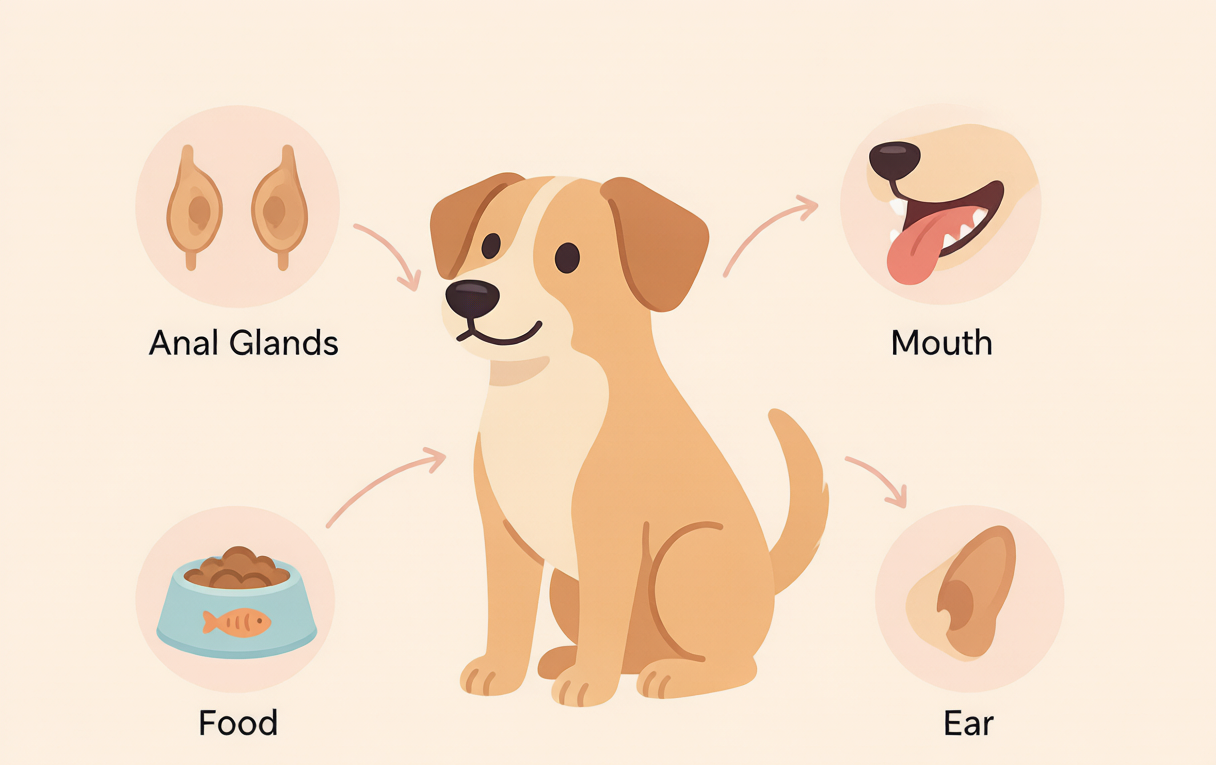
The most common cause of a fishy smell in a dog is the anal glands, those two small sacs on either side of the anus that release a thin, fishy-smelling fluid. When they are full, leaking, or infected, that smell is unmistakable and it tends to linger. But fishy odor can also come from dental disease, an ear infection, a urinary tract issue, or simply from fish-based ingredients in the diet. If the smell is coming from the rear end and happens repeatedly, the anal glands are the first thing to check, often with your vet. If it is coming from the mouth or ears, that points somewhere else. And if it started right after you changed food, the diet is the likely suspect. The location of the smell tells you most of what you need to know.
—
The Big One: Anal Glands
When people say their dog smells like fish, this is the cause in the majority of cases. Dogs have two small anal glands (sometimes called anal sacs) located right around the anus, roughly at four and eight o’clock. These glands produce a thin, oily fluid with a sharp, fishy scent. Normally your dog releases a little of this fluid during a bowel movement, which is how dogs mark territory with their own scent.
The trouble starts when those glands do not empty properly. They can become full, the fluid thickens, and a little can leak out, especially when your dog is relaxed, sleeping, or gets startled. That leak is the fishy smell. It is strongest right near the rear, but it can spread to furniture and bedding. If the glands get impacted or infected, the smell can turn stronger and more offensive, sometimes with other signs like scooting, licking the rear, or discomfort.
What can you do? For a mild, occasional smell, keeping the area clean helps, and a fiber-rich diet supports normal bowel movements, which help the glands empty naturally. But if your dog is scooting, licking, or showing signs of discomfort, or if the smell is constant, this is a job for a professional. Anal gland expression is best done by a vet or groomer who can also tell you if there is an infection. If you want the full breakdown of when to leave it to the pros and how to spot a problem, our anal gland expression guide covers it in detail. Do not try to squeeze them yourself if you are not sure what you are doing, because you can injure the area or push an infection deeper.
—
The Smell Is Coming From Where? A Quick Check
Before you guess, do a thirty-second sniff test to locate the smell. It is not glamorous, but it saves you from treating the wrong thing. The location narrows the possibilities faster than anything.
Smell strongest at the rear end, especially when your dog sits or sleeps. Almost certainly anal glands. This is the most common fishy smell.
Smell coming from the mouth, along with visible tartar or red gums. Dental disease. Bacteria in the mouth can produce a sour, fishy odor, and it tends to be worst when your dog first wakes up or yawns near your face.
Smell from the ears, or you notice your dog scratching and shaking its head. An ear infection, often yeast or bacterial. Infected ears can have a distinctly fishy or yeasty smell.
Smell strongest around your dog’s mouth, but the teeth look fine. Could be diet-related, especially if you recently switched to a fish-based food or added fish oil. The odor can linger on the breath and even come through the skin.
A general, persistent odor with no single hot spot. Could be a skin infection or, in some cases, a urinary tract issue. This is worth a vet look, especially if your dog is drinking or urinating more than usual.
That quick location check is genuinely the fastest way to a correct answer. If you are not sure, or if the smell has lasted more than a couple of days, a vet can pinpoint it in a minute.
—
Fishy Breath: Dental Disease and Diet
If the fishy smell is coming from your dog’s mouth, you are usually looking at one of two things: dental disease or the diet.
Dental disease is the more common culprit. When plaque and tartar build up on the teeth, bacteria multiply and produce sulfur compounds that can smell distinctly fishy or rotten. If your dog has yellowish-brown tartar, red or swollen gums, or bad breath that gets worse over time, that is the dental story. It is very treatable with brushing and professional cleanings. If your dog is a senior or a small breed, dental disease is even more likely, because small dogs and older dogs tend to accumulate tartar faster.
The other possibility is the diet. If you recently started a fish-based food, added fish oil, or gave your dog fish treats, that can absolutely show up as a fishy smell on the breath. This is usually harmless, though it can be a sign you are using more fish than your dog needs. Omega-3 fatty acids are genuinely good for dogs, but the source and amount matter. If you are adding fish oil and noticing a strong fishy smell, it may be worth checking the dose or the quality of the product. Our fish oil guide explains how to read the label and get the EPA and DHA benefits without going overboard.
—
Fishy Ears: When the Smell Is Coming From the Ear
A fishy or yeasty smell coming from your dog’s ears is a different story. It usually points to an ear infection, and it is more common in dogs with floppy ears, dogs that swim, or dogs with allergies. When the ear canal stays warm and moist, yeast and bacteria can overgrow, and that overgrowth has a recognizable odor.
The smell is often accompanied by other signs: your dog scratching at an ear, shaking its head, tilting its head to one side, or rubbing its ear along the floor. If you notice these, this is not something to leave. Ear infections can get worse and be painful, and they are best treated by a vet, who can look inside the ear with an otoscope and prescribe the right treatment. Do not poke around in your dog’s ear with cotton swabs, because that can push debris deeper and make things worse. A vet is the right call for a fishy-smelling ear, especially if your dog is uncomfortable.
—
The Diet Connection: What Your Dog Eats Can Change the Smell
Here is where the whole body comes together. What a dog eats affects how it smells, and this goes beyond just “fish breath.” The digestive tract and the skin are linked, and the balance of bacteria in the gut can influence overall body odor, including that fishy note.
This is where supporting the gut and the skin can genuinely help. Omega-3 fatty acids, like the EPA and DHA in our Omega 3-6-9 Complete Fatty Acid Complex, support skin barrier health and have an anti-inflammatory role, which can help with skin-related odor from a healthy angle. And our 12 Billion CFU Multi-Strain Probiotic includes a prebiotic and digestive enzyme blend designed to support gut flora and normal digestion, which is one angle on keeping the digestive system balanced. These are support steps for overall health, not a treatment for a specific smell, and they work best as part of a normal routine alongside good hygiene and a vet’s advice.
One honest note: if the smell is coming from anal glands, an ear infection, or dental disease, no supplement replaces the actual fix, which is addressing those specific causes. Diet support is a layer of overall health, not a shortcut around the real issue. So chase down the source first, and let supplements support a healthy baseline.
—
When to See the Vet
Most fishy smells are not emergencies, but a few situations call for a professional. See a vet if:
- The smell is constant and coming from the rear, and your dog is scooting, licking the rear, or seems uncomfortable.
- You notice blood, pus, or a very strong, offensive smell.
- Your dog is scratching its ears, shaking its head, or an ear smells bad.
- Your dog is drinking or urinating much more than usual, which can point to a urinary issue.
- The smell does not go away after a week of basic hygiene and home care.
The good news is that the most common cause, anal glands, is routine for any vet or groomer to manage, and most other causes are treatable once identified. The smell is rarely a sign of something dire, but it is always a sign worth reading. If you are unsure, a quick vet visit or even a phone call can give you the answer in minutes.
—
Frequently Asked Questions
Is a fishy smell from my dog always the anal glands?
Not always, but it is the most common cause. Anal glands are the number-one source of a fishy odor, especially when the smell is strongest at the rear. But fishy breath can come from dental disease or diet, and fishy ears usually point to an ear infection. Do the quick location check from this article to narrow it down before assuming it is the anal glands.
Can I fix a fishy dog smell at home?
For a mild, occasional smell, yes. Keeping the rear clean, supporting normal bowel movements with a fiber-rich diet, and addressing any obvious cause like dental buildup or ear wax can help. But if your dog is scooting, licking, or uncomfortable, or if the smell is constant, this is a job for a vet or groomer. Anal gland expression is best left to a professional.
Does fish oil make my dog smell like fish?
It can. If you are giving fish oil or a fish-based food and your dog develops a fishy smell, the diet is a likely contributor. This is usually harmless, but it may mean the amount is more than your dog needs or the quality could be better. You can adjust the dose or try a higher-quality product and see if the smell settles.
When should I worry about a fishy smell on my dog?
Worry if the smell comes with other signs: scooting or licking the rear, blood or pus, ear scratching and head shaking, excessive drinking or urination, or a smell that lingers for more than a week despite basic hygiene. These point to something that needs a vet’s attention rather than home care. —
Bottom Line
A fishy smell on your dog is almost never random. It is a clue, and most of the time it points to the anal glands, which is a routine, fixable issue for a vet or groomer. But it can also come from dental disease, an ear infection, a urinary issue, or simply the diet. The fastest way to the right answer is to locate the smell: rear end means anal glands, mouth means dental or diet, ears mean an ear infection. Once you know the source, the fix is usually straightforward. And if you are adding fish oil or changing food, know that what goes in can come out as a smell, so keep doses sensible and the quality high.
When in doubt, let a professional take a quick look. The smell is telling you something, and a vet can translate it in minutes.
—
References
- American Veterinary Medical Association (AVMA) — Canine health resources on common skin and gland conditions. avma.org
- Cummings School of Veterinary Medicine, Tufts University — Canine nutrition and skin health resources. vetmed.tufts.edu
- American Kennel Club (AKC) — Canine coat and skin care guidance for pet owners. akc.org
—
Disclaimer: This article is for informational purposes only and is not a substitute for professional veterinary advice, diagnosis, or treatment. These statements have not been evaluated by the FDA. This product is not intended to diagnose, treat, cure, or prevent any disease. Always consult a licensed veterinarian for any health concern regarding your pet.