
# Why Is My Dog So Gassy? The Real Causes of Excessive Dog Flatulence
Author: PurePalsLab Research Team
Reviewed by: Veterinary advisory panel
Reading time: 9 minutes
—
Every dog passes gas sometimes. It is a normal part of digestion, and a little smell now and then is not a health problem. But if your dog is constantly gassy, if the gas is frequent, strong, or comes with other signs like a gurgling belly, loose stools, or a poor appetite, it is worth understanding why. Excessive gas is almost always a clue about diet or digestion, and the good news is that most causes are manageable once you figure them out.
This guide helps you make sense of your dog’s gas. Why dogs get gassy, the most common food and digestion causes, the difference between normal gas and gas that signals a problem, and what you can do at home to reduce it.
—
The Short Answer
A dog passing gas occasionally is normal, but excessive or frequent gas usually comes down to one of a few things: eating too fast and swallowing air, a diet with ingredients that are hard to digest, a sudden food change, food allergies or sensitivities, or a digestive issue. You can often reduce gas by slowing your dog’s eating, switching to a gentle, high-quality diet, avoiding problem foods like too many scraps, and changing food gradually. If your dog is gassy and also has other symptoms, like diarrhea, vomiting, weight loss, a very swollen or painful belly, or a poor appetite, see a vet, because that points to a digestive problem that needs attention. For everyday digestive support, a probiotic can help maintain healthy gut flora as part of a balanced routine.
—
Why Dogs Get Gassy: How Gas Forms
Gas in a dog’s digestive tract comes from two main sources, and understanding them helps you know what to fix.
The first source is swallowed air. When a dog eats or drinks too fast, gulps food, or pants heavily, they swallow air, which has to come out somewhere, and a lot of it ends up as gas. This is why dogs who inhale their food are often gassier than slow eaters.
The second source is fermentation in the gut. When food reaches the large intestine, bacteria break down the undigested parts. That fermentation process produces gas as a byproduct. The more undigested material that reaches the colon, and the more certain ingredients that ferment, the more gas your dog produces.
So gas is a mix of swallowed air and bacterial fermentation, and both are influenced by how your dog eats and what they eat.
—
The Most Common Causes of Excessive Dog Gas
Most gassy dogs fall into one of these categories.
Eating too fast. Dogs that inhale their food swallow a lot of air, and that air comes out as gas. Eating too fast is one of the simplest and most common causes, and it is often easy to fix.
A diet that is hard to digest. Some foods and ingredients are harder for dogs to digest and produce more fermentation gas. This includes foods high in certain fibers or with ingredients your dog struggles to break down. A diet that is too rich, too fatty, or full of hard-to-digest ingredients can cause excess gas.
Sudden food changes. Changing your dog’s food too quickly can upset the gut and cause gas, along with loose stools. That is why food changes should be gradual.
Food allergies or sensitivities. Some dogs are sensitive or allergic to specific ingredients, and gas can be one of the signs. If your dog is gassy and also has itchy skin, loose stools, or other digestive signs, a food sensitivity may be involved.
Too many treats or table scraps. A dog that eats a lot of treats, table scraps, or foods meant for people can end up with gas, because these are often harder to digest or just more than the digestive system needs.
Lactose or dairy. Many dogs have trouble digesting lactose, the sugar in milk and dairy. Dairy can cause gas, bloating, and loose stools in dogs who are lactose intolerant.
Underlying digestive issues. Sometimes gas is a sign of a broader digestive problem, like a gut imbalance or an intestinal condition. If gas is severe or comes with other symptoms, it is worth a vet check.
—
Normal Gas vs. Gas That Signals a Problem
Not all gas needs attention. Here is how to tell the difference.
Normal gas looks like this:
- It happens occasionally, not constantly.
- It follows a pattern, like after eating or with certain foods.
- Your dog is otherwise eating, drinking, and acting normally.
- There are no other digestive symptoms.
Gas that warrants a vet visit looks like this:
- Constant or very frequent gas that does not improve with diet changes.
- Gas with diarrhea, vomiting, or a poor appetite.
- A swollen, hard, or painful belly, or a dog that seems distressed.
- Weight loss or changes in energy.
- Gas with loud gurgling or obvious discomfort after eating.
If your dog is gassy but otherwise bright, eating well, and acting normal, you have room to try the home steps below. If gas comes with other symptoms or does not improve, a vet visit is the right call.
—
What You Can Do to Reduce Your Dog's Gas
Most gas is manageable with a few everyday changes. Here is what genuinely helps.
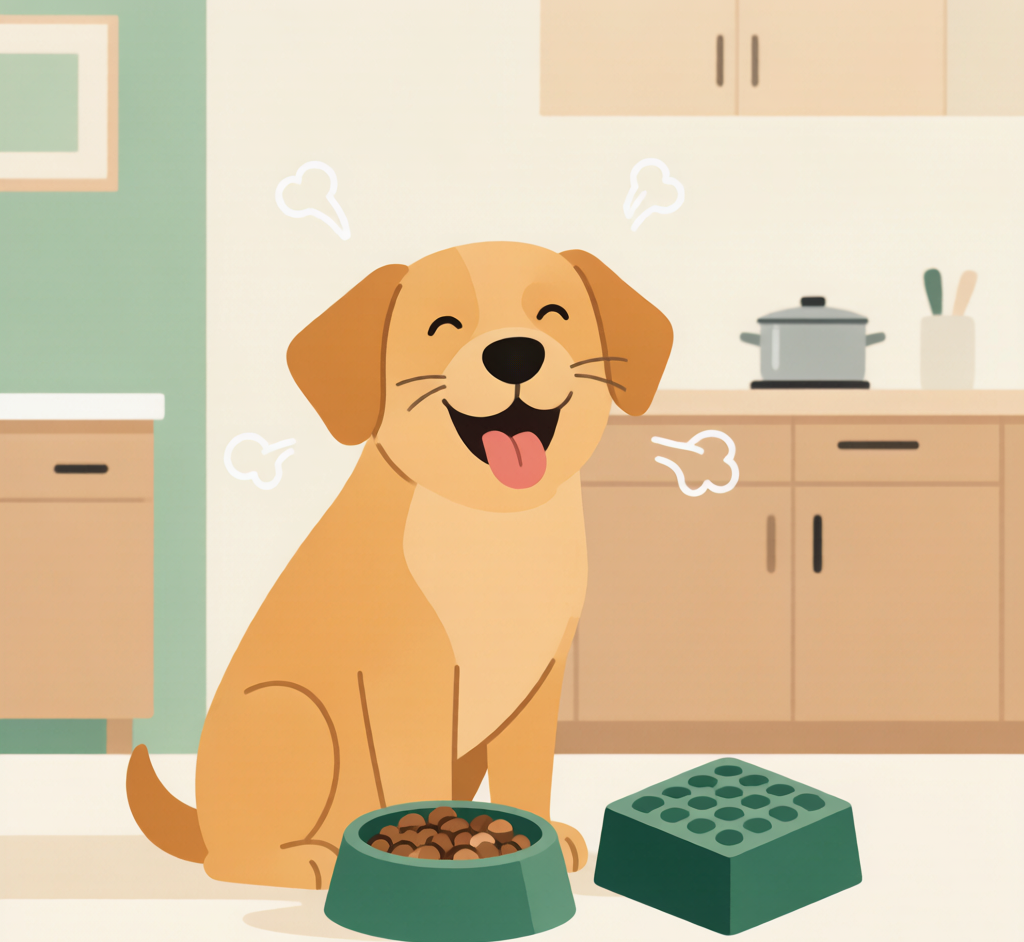
Slow down fast eaters. If your dog inhales their food, use a slow feeder bowl, a puzzle feeder, or feed smaller meals more often. Slowing eating reduces the air they swallow.
Choose a gentle, high-quality diet. Look for a complete, balanced dog food with easily digestible ingredients. Avoid foods with lots of fillers or ingredients that are hard to digest. If your dog’s food seems to be the problem, a change to a gentler formula can help.
Change food gradually. When you switch your dog’s food, do it slowly over a week or more, mixing the new food in with the old. A sudden change upsets the gut and causes gas.
Limit treats and table scraps. Cut back on extra foods, especially rich, fatty, or hard-to-digest scraps. Keep treats to a reasonable amount.
Watch for dairy. If your dog is lactose intolerant, avoiding dairy can noticeably reduce gas.
Support healthy digestion. A healthy gut flora helps digestion run smoothly. Our 12 Billion CFU Multi-Strain Probiotic supports gut health with a blend of probiotics, prebiotics, and digestive enzymes, as part of a normal, healthy baseline. It is everyday wellness support, not a treatment for a digestive problem, and it pairs well with what our probiotics guide covers about gut health. If your dog is also not eating well, our dog not eating guide covers the possible causes.
—
When to See a Vet
A vet visit is warranted if your dog’s gas is constant or severe, or if it comes with diarrhea, vomiting, a poor appetite, weight loss, a swollen or painful belly, or signs of distress. These can point to a digestive condition that needs proper diagnosis and treatment, not just diet tweaks. Your vet can help you find the cause and rule out more serious problems.
It can help to bring notes on when the gas started, what your dog eats, whether it comes with other symptoms, and any recent food or routine changes. That information helps your vet narrow things down.
—
Frequently Asked Questions
Why is my dog so gassy all of a sudden?
A sudden increase in gas often comes from something recent, like a change in food, more treats or table scraps, eating too fast, or a new ingredient your dog does not tolerate. If the gas appeared after a change, that is a strong clue. If it comes with diarrhea, vomiting, or a poor appetite, or does not improve after a few days of diet adjustments, see a vet.
What foods cause gas in dogs?
Foods that are hard to digest, too rich, or high in certain fibers tend to cause gas. Dairy is a common culprit in lactose-intolerant dogs, as are too many fatty table scraps and foods with lots of fillers. A sudden food change can also cause gas. A gentle, high-quality diet with gradual changes and limited scraps usually helps.
How can I stop my dog from being so gassy?
Slow down fast eaters with a slow feeder bowl, choose a gentle, easily digestible diet, change food gradually, and limit treats and table scraps. Watch for dairy sensitivity. A probiotic like our 12 Billion CFU Multi-Strain Probiotic can support healthy gut flora as part of everyday wellness. If gas is constant or comes with other symptoms, see a vet.
Is excessive dog gas a sign of a health problem?
Not always, most gas is dietary or from eating fast, but excessive gas can be a sign of a digestive issue, especially if it comes with diarrhea, vomiting, weight loss, a poor appetite, or a swollen, painful belly. If your dog is gassy but otherwise bright and eating well, diet changes often help. Persistent or severe gas with other symptoms warrants a vet visit.
Can dog food cause gas?
Yes. Certain dog foods, especially those with hard-to-digest ingredients, too many fillers, or ingredients your dog is sensitive to, can cause gas. A sudden food change can also cause gas while the gut adjusts. Switching to a gentle, high-quality food and changing it gradually often reduces gas. —
Bottom Line
A little gas is a normal fact of dog ownership, but excessive gas is a message from your dog’s digestive system, and it is usually a message about what or how they are eating. Most gas comes down to eating too fast, a diet that is hard to digest, sudden food changes, sensitivities, or too many extras like scraps and dairy. The good news is these are all manageable with simple changes, slow the eating, choose a gentle diet, change food gradually, and limit the extras. Support healthy digestion with good nutrition and, for everyday wellness, a probiotic. And keep the vet in mind, because gas that is constant, severe, or paired with other symptoms like diarrhea, vomiting, or a painful belly is a sign that your dog needs professional attention, not just a diet tweak.
Pay attention to the pattern, make the easy fixes first, and let your vet handle anything that looks more serious than normal digestion.
—
References
- American Veterinary Medical Association (AVMA) — Canine nutrition and digestive health resources. avma.org
- Cummings School of Veterinary Medicine, Tufts University — Canine gastroenterology and nutrition resources. vetmed.tufts.edu
- American Kennel Club (AKC) — Canine nutrition and digestive guidance for pet owners. akc.org
—
Disclaimer: This article is for informational purposes only and is not a substitute for professional veterinary advice, diagnosis, or treatment. These statements have not been evaluated by the FDA. This product is not intended to diagnose, treat, cure, or prevent any disease. Always consult a licensed veterinarian for any health concern regarding your pet.