
# Kennel Cough in Dogs: What That Honking Cough Really Means
It usually starts the same way. Your dog was fine last night. This morning it makes a sound you have never heard before, a deep, dry, honking cough that ends with a retch, as if something is stuck in its throat. Between coughs, your dog seems almost normal. It eats. It wags. Then it coughs again, hard enough to bring up a little foam.
That honking, retching cough is the signature of kennel cough, one of the most common respiratory problems in dogs and one of the most misunderstood. Many owners assume kennel cough only happens in boarding kennels or shelters, or that it requires a trip to the vet the moment it starts. Both assumptions miss the mark. Kennel cough is contagious, it spreads easily among dogs, and it can show up in a dog that has never set foot in a kennel. Yet most otherwise healthy adult dogs recover on their own with supportive care.
This guide explains what kennel cough actually is, how it spreads, how to tell it apart from more serious coughing, what you can do at home, and the specific signs that mean it is time to see a vet.
—
The Short Answer
Kennel cough, also called infectious tracheobronchitis, is a contagious inflammation of the windpipe and upper airways. It produces a dry, honking cough that often ends in a retch or a gag, and it is usually caused by a mix of viruses and bacteria, most commonly Bordetella bronchiseptica plus parainfluenza and other agents. It spreads through airborne droplets from coughing or sneezing and by shared bowls, toys, and nose-to-nose contact, which is why it moves fast through kennels, daycares, training classes, and dog parks. Most otherwise healthy adult dogs recover in one to three weeks with rest and supportive care, and many vets will treat mild cases without antibiotics. But kennel cough can look like more serious problems, and it can be dangerous for puppies, senior dogs, and dogs with underlying health issues. See a vet if the cough lasts more than about a week to ten days, if your dog is lethargic or off its food, has a fever, breathes with effort, coughs up blood, or turns blue, or if it is a puppy that has not finished its vaccines.
—
What Kennel Cough Actually Is
Despite its name, kennel cough is not one single disease. It is a syndrome, a set of symptoms that can be triggered by several different infectious agents acting alone or together. The most common cast of characters includes:
- Bordetella bronchiseptica, a bacterium that attaches to the lining of the airways and is the most well-known cause.
- Canine parainfluenza virus, a common viral contributor.
- Canine adenovirus type 2, another viral agent.
- Canine influenza virus and canine distemper virus in some cases, both of which can trigger similar coughing.
- Mycoplasma, a group of bacteria that sometimes joins the party.
When one or more of these irritate the trachea and bronchi, the airway lining swells and becomes inflamed. The cough reflex goes into overdrive, which is why the cough is so persistent and why even light pressure on the throat can set it off. This is also why the cough sounds so harsh. The airway is irritated and narrowed, and the dog is trying to clear it.
The name “kennel cough” comes from how easily it spreads in crowded settings. Any place dogs gather and share air, water, or contact is a potential hotspot: boarding kennels, shelters, doggy daycare, obedience classes, groomers, dog parks, and even a busy sidewalk where dogs greet each other. Your dog does not need to live in a kennel to catch kennel cough. It just needs to be near a dog that has it.
How It Spreads So Fast
Kennel cough spreads through two main routes, and both are hard to avoid in normal dog life.
Airborne droplets. When an infected dog coughs or sneezes, it launches tiny droplets carrying the bacteria and viruses into the air. Another dog that breathes them in can become infected, sometimes from several feet away. This is the reason outbreaks rip through crowded spaces so quickly.
Direct and indirect contact. Nose-to-nose greetings pass it directly. Shared water bowls, toys, food dishes, bedding, and even human hands and clothing can act as a bridge. The infectious agents do not survive long in the environment, but long enough to hop from one dog to the next.
After exposure, symptoms usually appear within two to fourteen days, most often around three to seven days. A dog can be contagious for a while even before it starts coughing, and it can keep spreading the infection for up to a couple of weeks after symptoms start, sometimes longer. That is why a coughing dog should be kept away from other dogs, both to protect them and to stop the outbreak from traveling further.
One more thing worth knowing: the Bordetella vaccine lowers the risk and the severity, but it does not make a dog bulletproof. Vaccinated dogs can still catch kennel cough from a different strain or agent. The vaccine is a seatbelt, not a force field. This matters because owners of vaccinated dogs sometimes dismiss an obvious kennel cough because “he’s had his shot.” The shot helps; it does not guarantee.
The Cough That Gives It Away
The hallmark symptom is the cough itself, and it has a distinctive quality worth learning.
The sound. A dry, harsh, honking cough, often described as sounding like a goose honking or a goose being squeezed. It typically ends with a retch or a hard gag, as if the dog is trying to bring something up, and sometimes a small amount of white foam or clear fluid comes up at the end.
The trigger. Often the cough is brought on by activity, excitement, or pressure on the throat. Pulling on a leash, drinking water, barking, or even gentle pressure on the windpipe can set off a fit. This is why a dog may cough every time it greets you at the door, then settle down.
The timing. The cough is often worse at night, during exercise, or right after excitement. Many owners report a dog that coughs on and off, seems fine in between, and then has a rough night.
Other signs that often tag along:
- A runny nose with clear discharge, which may thicken and change color if a bacterial infection takes hold.
- Sneezing.
- A hoarse or changed bark.
- Mild lethargy, though many dogs keep most of their normal energy.
- A reduced appetite in some dogs, often because coughing and a sore throat make eating less pleasant.
- Gagging or retching, which owners sometimes mistake for vomiting or a stuck object.
What is often notable is what is not there. In a typical mild case, the dog is bright, alert, eating reasonably, and not running a significant fever. That combination, a hacking cough with a mostly well dog, is the classic kennel cough picture.
Is It Kennel Cough, or Something Worse?
This is where things can get serious, because several conditions cause coughing and some are far more dangerous. Kennel cough is a diagnosis of pattern and exclusion, so it helps to know the look-alikes.
Kennel cough tends to produce a honking cough in an otherwise relatively well dog, with clear or mildly cloudy nasal discharge, no significant fever, and a normal appetite and energy level in mild cases.
Canine influenza can look very similar but often hits harder, with higher fever, more lethargy, and a cough that lingers longer. It is one of the reasons a “simple” kennel cough that gets worse needs a second look.
Heart disease can cause a chronic cough, often worse at night or with exercise, in an older dog. A heart cough is usually softer and wetter than the honk of kennel cough, but the two can be confused.
Tracheal collapse is common in small breeds like Yorkies, Pomeranians, and Chihuahuas, and it produces a honking cough that sounds remarkably like kennel cough, only the cause is structural rather than infectious. It often triggers with excitement, leash pulling, or heat.
Foreign object in the airway causes sudden, violent coughing in a dog that was completely fine a moment ago. This is an emergency.
Lung problems, including pneumonia, produce a cough along with labored breathing, fever, and a sick dog. This is more serious and needs prompt care.
Heartworm can cause coughing in a dog with a heavy infection and is why year-round prevention matters.
The practical takeaway: the cough alone does not make the diagnosis. The overall picture does. A honking cough in a bright, eating, playful dog points one way. A cough in a dog that is dull, feverish, not eating, or breathing hard with its elbows out points another, and that one goes to the vet.
What You Can Do at Home
For a mild case in an otherwise healthy adult dog, supportive care at home is often enough. The goal is comfort and rest, not fighting the infection directly in most cases.
Rest, and more rest. The single most useful thing you can do is keep your dog calm. Excited play, long walks, and leash pulling all trigger coughing fits and prolong recovery. Short, quiet, low-exertion bathroom breaks only for a while.
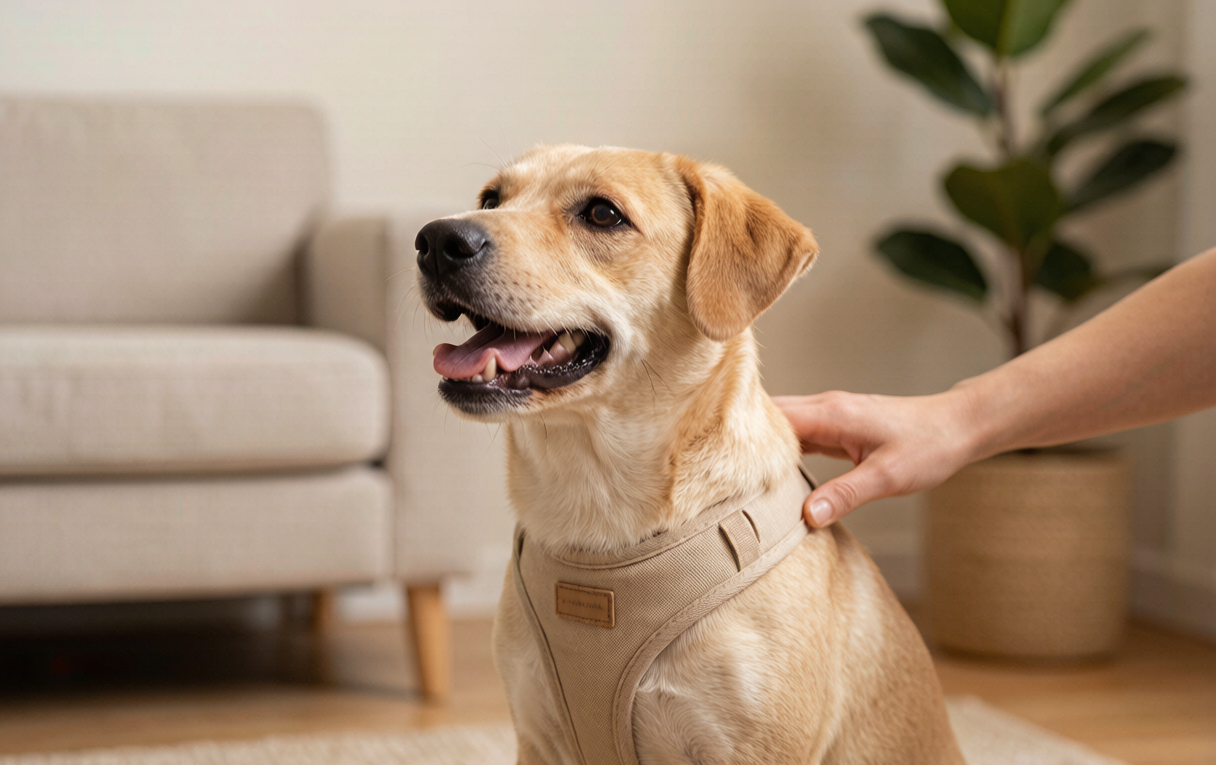
Use a harness instead of a collar. A collar puts pressure directly on the irritated trachea and can set off a coughing fit. A harness leaves the throat alone.
Keep the air comfortable. Dry, dusty, or smoky air aggravates a sore airway. A humidifier in the room, avoiding cigarette smoke and strong aerosols, and keeping the dog out of extreme cold all help. Steam from a warm bathroom can soothe a dry cough.
Offer soft, easy food and plenty of water. A sore throat makes crunchy food less appealing. Warm, soft food and fresh water keep the dog hydrated and eating. If your dog is refusing food entirely, our dog not eating guide walks through what to check.
Isolate your dog. This matters for every other dog in the neighborhood. Keep your coughing dog away from other dogs, skip the dog park, and do not take it to daycare or training until it has been cough-free for at least a week. Wash shared bowls and toys.
Do not reach for human cough medicine. Many human cough syrups and cold remedies contain ingredients that are toxic to dogs, including some decongestants and sweeteners. Never give human medication without a vet’s explicit guidance. Honey is sometimes suggested for soothing throats in dogs, but even that should be cleared with your vet, and it is not appropriate for puppies or diabetic dogs.
Most importantly, know that antibiotics are not automatically needed. Kennel cough is frequently viral or a mixed infection, and many vets will let a mild case run its course without antibiotics to avoid unnecessary use. If your vet does prescribe, finish the full course.
When to See a Vet
Call your vet rather than waiting if any of the following appear:
- A cough that lasts more than about a week to ten days, or that is getting worse instead of better.
- Lethargy, weakness, or a dog that seems genuinely unwell.
- Loss of appetite or refusal to drink.
- A fever, which you may notice as a hot body, shivering, or heavy panting at rest.
- Labored or rapid breathing, especially with the elbows held out or the belly working hard. This can signal pneumonia.
- Coughing up blood, or a cough that is wet and productive in a way that seems wrong.
- Blue or pale gums or tongue, which is an emergency.
- A puppy, a senior dog, or a dog with a weakened immune system. These dogs are at higher risk of the infection turning into pneumonia.
- A dog that has not finished its vaccine series, or an unvaccinated dog.
Your vet may listen to the chest, check the temperature, and, if the picture is unclear or the dog is more unwell, recommend chest X-rays or testing to rule out pneumonia, heartworm, or other causes. Puppies and high-risk dogs may need more active treatment, including antibiotics or supportive therapy.
And keep in mind that a cough that will not quit in an older small dog may not be kennel cough at all. Tracheal collapse and heart disease are common in that group, and both need a proper diagnosis. If your dog’s cough comes with ear or skin issues, or you are managing several problems at once, our how to clean dog’s ears guide covers the ear side of routine care.
Preventing Kennel Cough
You cannot eliminate the risk, but you can lower it meaningfully.
- Vaccinate. Talk to your vet about the Bordetella vaccine, especially if your dog boards, attends daycare, goes to training, or visits the groomer. Some clinics offer it as an injectable and some as an intranasal form. It reduces both the chance and the severity.
- Keep current on other vaccines too, including parainfluenza, adenovirus, and distemper, which are often part of a combination vaccine.
- Ask about outbreaks. Before boarding or daycare, ask whether there is a current outbreak in the area. A good facility will tell you.
- Avoid shared water and toys with unknown dogs, especially in busy public settings.
- Quarantine a coughing dog. It protects everyone and shortens the outbreak.
- Keep a generally healthy dog healthy. Good nutrition, regular exercise, and a well-managed immune system give a dog a better baseline for fighting off any infection.
Supporting Your Dog Through Recovery
While no supplement cures kennel cough, a dog recovering from an infection benefits from steady, complete nutrition. The immune system does the heavy lifting, and it needs the raw materials to do it. Vitamins C and the B-complex, zinc, and other micronutrients are part of normal immune function, and a dog that is off its food or recovering may not be getting a full spread from diet alone.
Our 26-in-1 Multivitamin Soft Chews are designed as a broad daily base, with vitamin C, the full B-complex, vitamin A, D3, E, zinc, and other micronutrients that support everyday immune and overall wellness. The soft chew format is easy for a dog with a sore throat that is less keen on hard kibble, and it comes in a 200 Chews bottle for daily use.
It is everyday wellness support, not a treatment for kennel cough or any infection, and it does not replace veterinary care or vaccination. For a coughing dog, rest, hydration, isolation, and a vet’s judgment come first.
Frequently Asked Questions
How long does kennel cough last in dogs?
Most mild cases in otherwise healthy adult dogs resolve in one to three weeks. The cough often lingers longest, sometimes for a couple of weeks after the dog otherwise feels fine, because the airway stays sensitive. If the cough lasts more than about a week to ten days or worsens, see a vet.
Is kennel cough contagious to other dogs?
Yes, it is highly contagious. It spreads through airborne droplets from coughing and sneezing and through shared bowls, toys, and nose-to-nose contact. Keep a coughing dog away from other dogs until it has been cough-free for at least a week, and avoid dog parks, daycare, and training during that time.
Can I treat kennel cough at home?
Mild cases in healthy adult dogs can often be managed at home with rest, a harness instead of a collar, comfortable air, soft food, and plenty of water, while the infection runs its course. Do not give human cough medicine, which can be toxic. If the dog is a puppy, senior, or unwell, or the cough persists or worsens, see a vet.
What does kennel cough sound like?
A dry, harsh, honking cough, often compared to a goose honking, that usually ends with a retch or gag and sometimes brings up a little white foam. It is often triggered by excitement, activity, or pressure on the throat, and it tends to be worse at night.
Does the kennel cough vaccine prevent it completely?
No. The Bordetella vaccine significantly reduces the risk and the severity, but vaccinated dogs can still catch kennel cough, since it can be caused by multiple agents and strains. It is still strongly recommended for dogs that board, attend daycare, or spend time in group settings.
Disclaimer
This article is for general education only and is not a substitute for veterinary advice. Kennel cough can resemble more serious conditions such as pneumonia, heart disease, or tracheal collapse, and it can be dangerous for puppies, senior dogs, and immunocompromised dogs. If your dog has a persistent or worsening cough, labored breathing, fever, lethargy, or loss of appetite, contact your veterinarian. Product references describe nutritional supplements and are not intended to diagnose, treat, cure, or prevent any disease.
References
- American Kennel Club. “Kennel Cough in Dogs: Symptoms, Treatment, and Prevention.”
- VCA Animal Hospitals. “Kennel Cough in Dogs.”
- Merck Veterinary Manual. “Infectious Tracheobronchitis (Kennel Cough) in Dogs.”
- American Veterinary Medical Association. “Canine Infectious Respiratory Disease.”