
# How Long Do Dogs Live? The Numbers, the Breed Lottery, and What You Actually Control
It is the question every dog owner asks eventually, usually at night, usually while a sleeping head rests on their knee: how much time do we have? The standard answer, somewhere between 10 and 13 years, is accurate and useless at the same time, because the spread behind that average runs from five to fifteen and beyond, and where your dog lands in that range is decided partly by genetics, partly by luck, and more than most owners realize, by choices that are still on the table.
In 2024, researchers at the Royal Veterinary College published the largest lifespan dataset ever assembled for companion dogs: over 580,000 dogs from UK veterinary records, with median life expectancy calculated across 155 breeds and crossbred groups. For the first time, the “how long do dogs live” question has an answer grounded in half a million real lives rather than breed-club lore. This article walks through what those numbers say, why the size of a dog warps them so dramatically, and which of the levers that extend a dog’s life actually have evidence behind them.
—
The Short Answer
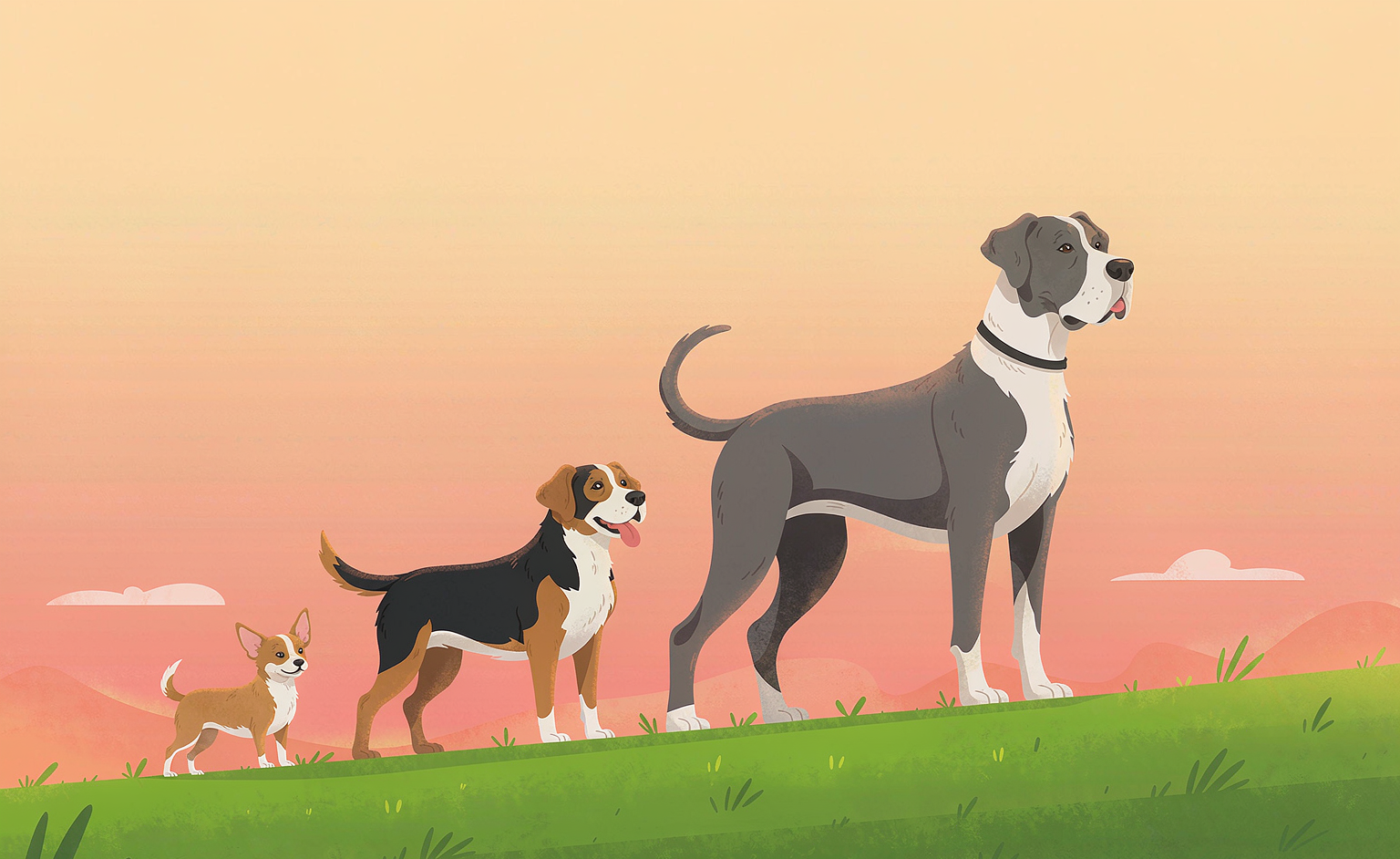
The median dog lifespan sits at about 12.5 years, but size bends the number hard: small breeds commonly reach 13 to 15, while giant breeds often live 7 to 10. Across breeds, every extra 2 kilograms of body mass costs roughly a month of life expectancy. Pure longevity is largely genetic, and crossbreeds hold no automatic advantage. The single best-evidenced lever an owner controls is keeping a dog lean: a landmark lifelong trial found dogs fed 25 percent fewer calories lived a median of about 1.8 years longer than their freely fed siblings. Dental care, early disease screening, and consistent exercise fill out the list.
—
Where the Numbers Come From
The 2024 study, led by researchers at the Royal Veterinary College using VetCompass primary-care records, followed over 580,000 dogs and calculated median life expectancy for 155 breeds plus a crossbred group. Median, in plain language, means half the dogs lived longer and half did not. It is not a prediction for your dog, and it is not an average dragged around by a few 20-year-old outliers. It is the honest midpoint of a real population.
Two caveats keep the numbers honest. The data is British, so lifespans in countries with different veterinary access, parasite pressure, or breed populations will shift somewhat. And a median says nothing about an individual: a Great Dane can reach 12 and a Chihuahua can die at 8, and neither breaks the statistics. What the table does capture, with unusual precision, is the shape of the risk.
Before the numbers, one distinction worth memorizing: life expectancy at birth versus lifespan once a dog reaches adulthood are different figures, because puppyhood mortality, accidents and infections mostly, removes some dogs early. The breed medians below reflect the overall population.
The Size Paradox Dogs Live On the Wrong Side Of
In nearly every mammal group, bigger means longer-lived. Elephants outlive mice, whales outlive elephants. Dogs are the famous exception, and the violation is so clean it has its own research literature.
Across breeds, the working rule from field data is that each additional 2 kilograms of body mass trims roughly a month off life expectancy. That does not sound devastating until you apply it: a 4-kilogram Chihuahua and a 60-kilogram Labrador are separated by 28 kilograms, which is over a year of raw expectancy gap, before breed-specific disease stacks further weight on the difference. Between a Chihuahua and an 80-kilogram Great Dane, the raw gap approaches two years, and observed breed medians stretch even wider.
The mechanism is not simply wear. Large dogs appear to age faster at a cellular level, and their disease profile is worse in ways scale alone does not explain: bone cancer is dramatically more common in giant breeds than in small ones, and the big breeds carry higher rates of the cancers and cardiac conditions that cut lives short. A giant breed is running a different aging program, not the same program on a bigger chassis.
The Breed Table, From Half a Million Records
Medians from the 2024 UK dataset, sorted short to long. Note the total spread: nearly ten years between the bottom and the top of the table.
| Breed | Median life expectancy |
|---|---|
| Bulldog | 9.8 years |
| French Bulldog | 9.8 years |
| Bernese Mountain Dog | 10.1 years |
| Great Dane | 10.6 years |
| German Shepherd Dog | 11.3 years |
| Greyhound | 11.5 years |
| Chihuahua | 11.8 years |
| Crossbreed (all) | 12.0 years |
| Beagle | 12.5 years |
| Border Collie | 13.1 years |
| Labrador Retriever | 13.1 years |
| Golden Retriever | 13.2 years |
| Jack Russell Terrier | 13.3 years |
| Miniature Dachshund | 14.0 years |
| Tibetan Spaniel | 15.2 years |
| Lancashire Heeler | 15.4 years |
Three observations worth pulling out of the table. The brachycephalic (flat-faced) breeds cluster at the bottom, where their airways put them. The giant breeds sit low despite magnificent veterinary care being available. And the top of the table is a roll call of small and modest-sized working dogs, with the Lancashire Heeler, a rare herding breed under 30 pounds, holding the crown at 15.4 years.
The Chihuahua number surprises people who assume tiny dogs live the longest. Small breed medians in this dataset scatter between 11.8 and 15.4, because “small” is not one strategy: breed disease matters at every size, which is the next section’s point.
Why the Shortest-Lived Breeds Die Young
Every cluster of short lifespans has a mechanism, and knowing it changes how you live with the dog you have.
The flat-faced group. Bulldogs and French Bulldogs, both at 9.8 years in the UK data, spend their lives breathing through compressed airways. Heat stress, exercise intolerance, and breathing surgery are recurring events, and the same conformation that owns the internet drives the number down.
The giant group. Great Danes and Bernese Mountain Dogs carry the bone cancer burden. Osteosarcoma shows up in giant breeds at rates small dogs almost never see, it typically arrives in middle age, and it moves fast. Cardiac disease adds its own share.
The breed-specific landmines. Some breeds carry one dominant disease that shapes their whole actuarial profile: Cavalier King Charles Spaniels and their hearts, Dachshunds and their spines, Golden Retrievers and their above-average cancer rates. If you know your breed’s signature condition, you know what to watch and which screening conversations to start early. A breeder who health-tests breeding stock is moving those odds before you ever meet the puppy.
And the crossbreed row deserves its own paragraph, because it overturns a piece of folk wisdom. The median crossbreed, at 12.0 years, lands mid-table: longer than the brachycephalic and giant breeds, shorter than the small working breeds. Hybrid vigor is real for some inherited recessive diseases, but it is not a longevity cheat code. A randomly bred dog dodges some bullets and carries no particular plan for the rest.
What Actually Extends a Dog's Life, Ranked by Evidence
The internet lists dozens of longevity tips. The honest ranking puts them on very different footing.
1. Keep the dog lean. This is the only intervention with a lifelong controlled trial behind it. Starting in the late 1980s, Purina researchers followed 48 Labrador Retrievers in sibling pairs for their entire lives, feeding one dog of each pair freely and the other 25 percent fewer calories. The restricted dogs needed less treatment for arthritis and other chronic diseases, and they lived a median of about 1.8 years longer than their freely fed siblings. In a species with a 12-year median, 1.8 years is enormous, and the intervention is free. The ribs-you-can-feel body condition is the visible version of that trial.
2. Protect the teeth. Periodontal disease is the most common clinical condition in adult dogs, and the chronic inflammation it seeds does not stay in the mouth. Daily brushing is the gold standard, and the step-by-step brushing guide covers how to build the habit without a wrestling match. The payoff compounds over a decade.
3. Screen for the quiet diseases early. Kidney disease, diabetes, and Cushing’s disease announce themselves slowly, and the earliest signs are often dismissed as aging. Increased thirst is the single most useful household signal, and the excessive thirst guide explains what it can mean and when to worry. Semi-annual exams with bloodwork in the senior years move diagnoses months or years earlier, which is time you spend treating rather than reacting.
4. Feed inflammation intelligently. Aging runs on chronic inflammation, and omega-3 fatty acids, EPA and DHA from fish oil, are the best-studied nutritional counterweight, with evidence for joints, the heart, and cognitive health. Our omega 3-6-9 salmon oil chews exist for exactly this job: 800 mg of omega-3s per serving, including 300 mg each of EPA and DHA, alongside glucosamine, turmeric, and MSM, in a form dogs accept as a treat rather than a chore, 200 chews per bottle, sourced from USA ingredients. It is nutritional support for the long game, not a treatment for any specific disease, and it works alongside the levers above it on this list.
5. Move the body and the brain. Muscle mass and cognitive engagement are the two systems that decay fastest when unused. Daily exercise scaled to the dog’s age, plus problem-solving play, costs nothing and protects the two things owners most want to keep: mobility and personality.
Notice what the list does not contain. It does not contain anti-aging supplements with better marketing than data, or breed-picking as a strategy once the dog is already on your couch. The levers with real evidence are almost embarrassingly plain, which is the good news: every one of them is available to every owner this week.
The Senior Window Opens Earlier Than You Think
The 7-year rule of thumb hides a size split. A Great Dane is a senior dog at 5 or 6. A Chihuahua might not hit the same physiological threshold until 10 or 11. The practical translation is that the “watch closely” phase, the semi-annual vet visits, the appetite and thirst monitoring, the willingness to investigate small changes, should start years earlier in big dogs than in small ones.
That window is also when support products earn their place. The senior dog care guide details what changes after dogs age out of the middle years: joints that need management, senses that dull gradually, cognition that benefits from routine and adjustment. None of it reverses aging. All of it changes how the last third of the dog’s life feels, which is a different and equally real prize.
One last myth deserves a dignified burial, because it distorts expectations at every visit: the idea that one dog year equals seven human years. A team at UC San Diego, comparing DNA methylation patterns in Labrador Retrievers against humans, derived a logarithmic translation: roughly 16 times the natural log of the dog’s age, plus 31. A 1-year-old dog maps to about 31 human years, a 4-year-old to 53, a 10-year-old to 68. Dogs race through a compressed adolescence, cruise through a long middle, and the arithmetic of their later years is kinder than the 7:1 myth suggests.
Frequently Asked Questions
Which dog breed lives the longest?
By median life expectancy in the largest UK dataset, the Lancashire Heeler leads at 15.4 years, followed closely by the Tibetan Spaniel at 15.2. Small and medium working breeds dominate the top of the table, with several terriers, spaniels, and small herding dogs in the 13 to 15 range. No giant breed cracks the top half.
Do mixed breed dogs live longer than purebreds?
Less than folk wisdom claims. In the 580,000-dog dataset, the median crossbreed lived 12.0 years, which sits mid-table among the 155 breeds: ahead of Bulldogs and Great Danes, behind Border Collies and most small terriers. Mixed dogs avoid some inherited recessive diseases, but they carry no systematic longevity advantage.
Does neutering or spaying change how long a dog lives?
It shifts specific risks rather than moving one number up or down. Desexing eliminates several reproductive cancers and the deadly uterine infection pyometra in females, while recent breed-specific studies suggest the timing of neutering can influence joint disease and certain cancers in some larger breeds. The right call depends on breed, sex, and your dog’s circumstances, and it is a genuine conversation to have with your vet rather than a default setting.
Is the 7 dog years to 1 human year rule accurate?
No, and it was never based on biology. Dogs mature through adolescence in their first year or two, then age more slowly relative to humans later in life. The methylation-based formula from UC San Diego researchers, roughly 16 times the natural log of a dog’s age plus 31, maps a 2-year-old dog to about 42 human years and a 9-year-old to about 66, which fits observed development far better than a flat ratio.
What is the single biggest thing I can do to help my dog live longer?
Keep the dog lean. In the lifelong Labrador trial, dogs fed 25 percent fewer calories than their siblings developed chronic disease later and lived a median of about 1.8 years longer. Maintaining a body condition where you can feel the ribs and see a waist costs nothing, requires no product, and has better evidence than any other longevity choice an owner makes.
Bottom Line
A dog’s lifespan is a genetic hand dealt at conception, with a median near 12.5 years and a spread from 5 to 15 that size and breed shape in predictable ways. The breed lottery cannot be re-run, but the game after the deal is far from over. A lean body condition, a clean mouth, early screening of the quiet diseases, intelligent anti-inflammatory nutrition, and a life that keeps both muscles and brain working are the levers with actual evidence, and the biggest of them is free. Half a million dogs wrote the numbers. The part of the table you occupy is still being written by daily choices, starting with what lands in the bowl tonight.
Disclaimer
This article is for general education only and is not veterinary advice. Lifespan statistics describe populations, not individual dogs, and breed tendencies are not destiny. Discuss screening schedules, diet, and body condition targets with your veterinarian, especially for senior dogs or dogs with chronic conditions. Dietary supplements are not intended to diagnose, treat, cure, or prevent any disease, and you should consult your veterinarian before starting any supplement.
References
- McMillan M, Pegram C, Brodbelt DC, et al. “Longevity of companion dog breeds: those at risk from the life expectancy divide.” Scientific Reports. 2024.
- Dogs Trust. “Life Expectancy for 155 Breeds and Crossbred Group.” 2024.
- Kealy RD, Lawler DF, Ballam JM, et al. “Effects of diet restriction on life span and age-related changes in dogs.” Journal of the American Veterinary Medical Association. 2002;220(9):1315-1320.
- Wang T, Ma J, Hogan AN, et al. “Quantitative translation of dog-to-human aging by conserved remodeling of the DNA methylome.” Cell Systems. 2020;11(2):176-185.
- Britannica. “Dog Years Explained.”