
# How to Brush a Dog’s Teeth: A Step-by-Step Guide to a Healthier Mouth
Author: PurePalsLab Research Team
Reviewed by: Veterinary advisory panel
Reading time: 9 minutes
—
Brushing your dog’s teeth might be the single most skipped part of pet care, and it is easy to understand why. It feels awkward, many dogs resist it, and when your dog is healthy and happy, dental care does not seem urgent. But here is what most owners do not realize: dental disease is one of the most common health problems in dogs, and a huge amount of it is preventable with a simple daily habit. That habit is brushing.
This guide makes brushing your dog’s teeth feel doable, not scary. Why it matters, what you actually need, a step-by-step way to get your dog comfortable with it, how often to brush, and the dental-care mistakes to avoid. By the end you will have a clear routine you can start today, gently and without a struggle.
—
The Short Answer
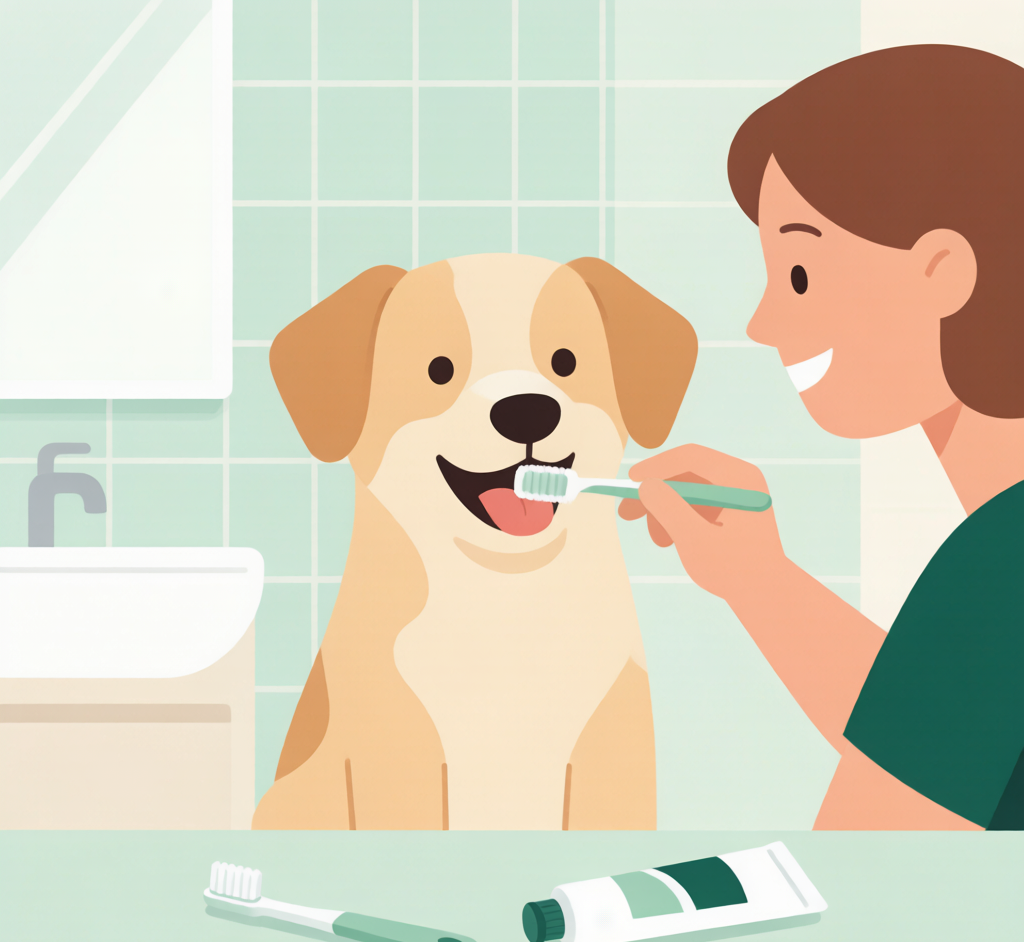
Brushing your dog’s teeth regularly, ideally daily, is the most effective way to reduce plaque and prevent dental disease, which affects most dogs by age three. You need a dog-safe toothbrush and dog toothpaste, never human toothpaste, which can be toxic to dogs. Introduce it slowly, let your dog taste the paste, lift the lip, and brush in small circles along the gumline, focusing on the outer surfaces of the back teeth where plaque builds up most. Keep sessions short and positive, and give lots of praise. Even a few times a week is far better than nothing. Alongside brushing, dental chews, a healthy diet, and regular vet dental checkups round out a good oral-care routine. And if your dog already has bad breath, red gums, or difficulty eating, see a vet rather than trying to fix it with brushing alone. We cover the signs more in our dog bad breath guide.
—
Why Brushing Your Dog's Teeth Matters
Most people know they should brush their dog’s teeth, but few know just how common dental disease is. It is one of the most frequent health problems in dogs, and most dogs show some sign of it by age three. It starts as plaque, a sticky film of bacteria that builds up on the teeth. If plaque is not removed, it hardens into tartar, and that is where the real trouble begins.
Tartar irritates the gums, leading to gingivitis, red, swollen, painful gums that can bleed. Left untreated, the infection can spread under the gumline and damage the roots and bone that hold the teeth in place. This is painful, it can cause tooth loss, and it can even affect the heart, kidneys, and liver as bacteria travel through the bloodstream.
Here is the encouraging part: this whole chain is largely preventable. Daily brushing removes plaque before it hardens, which stops the problem at the very start. That is why brushing is not a nice-to-have, it is one of the most effective things you can do for your dog’s long-term health, and it is something you can do at home for a few minutes a day.
—
What You Need to Brush Your Dog's Teeth
Getting the right supplies makes the job easier and safer. Here is the short list.
A dog toothbrush. You can use a finger brush, a regular dog toothbrush, or a long-handled one made for dogs. Pick what feels comfortable for you and your dog. Finger brushes are great for getting a nervous dog used to the idea, while a handled brush reaches the back teeth better.
Dog toothpaste. This is essential, and it is not optional. Dog toothpaste is specially formulated to be safe to swallow, and it comes in flavors dogs like, like poultry or peanut butter. Never use human toothpaste. Human toothpaste contains ingredients like xylitol and fluoride that are toxic to dogs and can make them sick.
A calm, comfortable setup. Pick a quiet time and place. You do not need much, just you, the brush, and a patient dog.
Praise and treats. Positive reinforcement makes the whole experience work better. Keep a few treats ready.
—
The Step-by-Step Way to Brush Your Dog's Teeth
The key to success is moving slowly and making it positive. Do not try to do a full brushing on day one. Build up to it over a few days.
Step 1: Let your dog get used to the taste. Put a small amount of dog toothpaste on your finger and let your dog lick it off. Do this for a day or two until your dog is comfortable and looks forward to the taste.
Step 2: Introduce the brush. Let your dog sniff and lick the toothbrush, and let them taste the paste from the brush. Keep it relaxed and rewarding.
Step 3: Lift the lip and touch the teeth. Gently lift your dog’s lip and touch the teeth and gums with your finger or the brush, without brushing yet. Use a calm voice and praise. If your dog is nervous, do just a little and stop.
Step 4: Start brushing the outer surfaces. Once your dog is comfortable, put a small amount of paste on the brush and brush the outer surfaces of the teeth, the sides that face the cheeks, in small circular motions, especially along the gumline and on the back teeth, where plaque builds up most. You do not need to brush the inside of the teeth as much, the tongue naturally helps clean those surfaces.
Step 5: Keep sessions short and positive. Aim for about 30 to 60 seconds per side. End each session with praise and a treat, so your dog associates brushing with something good. If your dog is difficult, do less and stop on a positive note, then try again.
That is the whole routine. It takes a few minutes once you and your dog get used to it, and it becomes a normal part of the day.
—
How Often Should You Brush Your Dog's Teeth?
Daily brushing is the gold standard, because it removes plaque before it hardens into tartar, and that is the point. But daily is not always realistic, especially at first, and the honest answer is that a few times a week is still far better than not brushing at all.
| Frequency | What it does |
|---|---|
| Daily | Best plaque removal, strong prevention |
| 3-4 times a week | Good prevention, still very beneficial |
| Weekly or less | Better than nothing, but less effective at stopping tartar |
| Never | Highest risk of plaque, tartar, and dental disease |
The goal is to build a habit you can actually keep. If daily feels like too much to start, commit to a realistic schedule, even a few times a week, and build from there. Consistency matters more than perfection.
—
Beyond Brushing: The Rest of a Dental Routine
Brushing is the foundation, but a complete oral-care routine includes a few more pieces.
Dental chews and toys. Chewing helps reduce plaque mechanically and keeps the teeth active. Look for dental chews designed to promote oral health, and offer safe chew toys. These are helpful complements, not replacements for brushing.
A healthy diet. Good nutrition supports overall health, including the mouth. Crunchy kibble can offer some mechanical cleaning, though it is no substitute for brushing. If your dog’s digestion is a concern, a balanced diet matters for their whole mouth and body, and our 12 Billion CFU Multi-Strain Probiotic supports gut health as part of a normal, healthy baseline. It is everyday wellness support, not a treatment for dental disease, and it works best alongside good dental care and your vet’s guidance.
Regular vet dental checkups. Professional dental cleanings, done under anesthesia by a vet, remove tartar and check for problems below the gumline that brushing cannot reach. Most dogs benefit from a professional cleaning at some point, and your vet can tell you the right schedule for your dog.
Know the signs of dental disease. Bad breath, red or bleeding gums, yellow-brown tartar, loose teeth, drooling, difficulty eating, or pawing at the mouth are all signs that brushing alone cannot fix. If you see these, a vet visit is the right call, not just more brushing.
—
Common Mistakes to Avoid
A few mistakes can turn brushing from helpful into harmful, so keep these in mind.
Using human toothpaste. This is the biggest one. Human toothpaste can contain xylitol, which is highly toxic to dogs, and fluoride, which is not meant to be swallowed. Always use dog toothpaste.
Brushing too hard. Be gentle. You are removing soft plaque, not scrubbing a stain. Brushing hard can damage the gums.
Forcing an unwilling dog. If your dog is scared or struggling, forcing it will make brushing harder every time. Go slower, use more treats, and build up gradually.
Giving up too quickly. Many dogs resist at first, but most adapt with patience and positive reinforcement. Do not quit after one bad session.
Ignoring signs of dental disease. Brushing will not fix established tartar, gingivitis, or tooth problems. If your dog has signs of dental disease, see a vet for a professional cleaning and treatment.
—

Frequently Asked Questions
How do I start brushing my dog’s teeth if they hate it?
Start slow and make it positive. Let your dog taste the dog toothpaste first, then introduce the brush, then lift the lip and touch the teeth before actually brushing. Keep sessions short, use lots of praise and treats, and stop on a positive note. Many dogs adapt with patience. If your dog has signs of dental disease, see a vet first before starting a brushing routine.
Can I use human toothpaste to brush my dog’s teeth?
No. Human toothpaste can contain xylitol, which is highly toxic to dogs, and fluoride, which is not safe to swallow. Always use a dog toothpaste that is specially formulated to be safe for dogs and comes in flavors they like.
How often should I brush my dog’s teeth?
Daily brushing is the best way to remove plaque and prevent dental disease, but even a few times a week is very beneficial. The key is consistency. Start with a realistic schedule and build up. Combine brushing with dental chews and regular vet dental checkups for the best protection.
Do I need to brush the inside of my dog’s teeth?
You mostly need to focus on the outer surfaces of the teeth, the sides that face the cheeks, especially along the gumline and on the back teeth. The tongue naturally helps keep the inside of the teeth clean. Brushing the outer surfaces well is the most important part.
My dog has bad breath. Will brushing fix it?
Brushing helps prevent plaque and dental disease, but established bad breath is often a sign of tartar, gingivitis, or an underlying dental problem that brushing alone cannot fix. If your dog has bad breath, red or bleeding gums, or difficulty eating, see a vet for a professional cleaning and checkup. Our [dog bad breath guide](/dog-bad-breath/) covers the causes in more detail. —
Bottom Line
Brushing your dog’s teeth is one of the highest-value habits in pet care, and it is far more doable than it seems. Dental disease affects most dogs, but it is largely preventable with regular brushing that removes plaque before it hardens. Start slow, use dog toothpaste and a dog toothbrush, focus on the outer surfaces along the gumline, and keep sessions short and positive. Daily is ideal, but a few times a week still makes a real difference, so build a routine you can actually keep. Add dental chews, good nutrition, and regular vet dental checkups, and you give your dog a much better chance at a healthy mouth for life. And if you already see signs of dental disease, bad breath, red gums, or difficulty eating, let a vet handle it, because brushing is for prevention, not for treating an established problem.
A few minutes a day is a small investment in your dog’s comfort and long-term health, and it is one your dog will thank you for.
—
References
- American Veterinary Medical Association (AVMA) — Canine oral health and dental care resources. avma.org
- Cummings School of Veterinary Medicine, Tufts University — Canine dental and oral health resources. vetmed.tufts.edu
- American Kennel Club (AKC) — Canine dental care guidance for pet owners. akc.org
—
Disclaimer: This article is for informational purposes only and is not a substitute for professional veterinary advice, diagnosis, or treatment. These statements have not been evaluated by the FDA. This product is not intended to diagnose, treat, cure, or prevent any disease. Always consult a licensed veterinarian for any health concern regarding your pet.