
# Why Do Dogs Drag Their Butt: Sorting the Five Causes Behind the Scoot
The scoot is one of the most recognizable behaviors in dogs and one of the most consistently misunderstood. An owner sees a dog dragging its rear across the carpet, concludes the anal glands need expressing, books a gland expression, and feels the problem is solved. Two weeks later the dog is scooting again, and the cycle repeats until someone finally asks a different question: which of the several reasons a dog drags its butt is actually happening here?
Because there are five, and only one of them is the gland-fullness story that dominates internet advice. The others include an itchy rear from allergies, a parasite problem, a painful area the dog is trying to soothe, and in the worst case, a mass. Telling them apart does not require a veterinary degree, but it does require knowing what separates them, because the treatments have almost nothing in common and applying the wrong one wastes weeks.
This article gives you the discriminators: what each cause looks like, which signs point away from the glands, and the specific situations where the scoot is not a grooming problem at all but an early signal of something that needs prompt attention.
—
The Short Answer
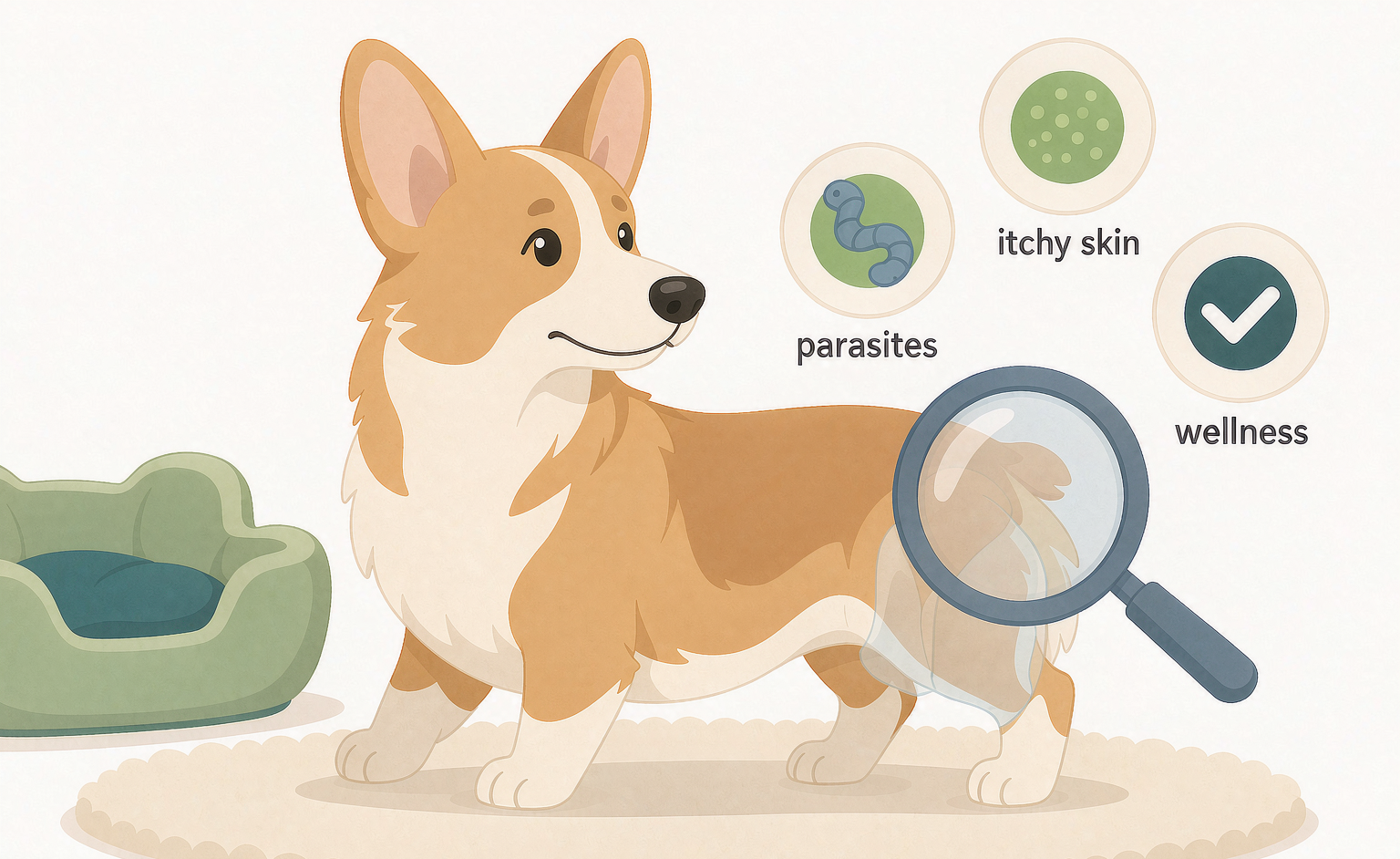
Dogs drag their butt, or scoot, most often because of anal sac discomfort, but that is only one of five common causes. The others are allergies causing an itchy rear, intestinal parasites like tapeworms and giardia, pain or irritation around the anus from diarrhea, matted fur, or perianal disease, and masses including anal sac tumors. The key discriminators: a dog who scoots and also has soft stool, a fishy smell, or a visible swelling is likely gland-related; a dog who scoots with intense generalized itch, licking of paws, or seasonal timing points to allergy; a dog with visible rice-like segments near the anus has tapeworms. Any swelling, blood, or persistent scooting past a week needs a vet.
—
First, What the Scoot Actually Is
The behavior itself is diagnostic information. A dog dragging its rear along the ground is doing one of two things: trying to relieve pressure or itch in the anal region, or trying to reach an area it cannot otherwise scratch.
That distinction sounds academic and is actually practical. Pressure relief, the classic gland-fullness pattern, produces a quick, purposeful drag, often on a hard surface, followed by the dog getting up and carrying on. Itch produces a longer, more frantic drag, sometimes with licking and biting at the flanks and rear, and often accompanied by other itchy behaviors elsewhere on the body. Watching how your dog scoots, not just that they scoot, is the first discriminator.
Two quick notes on what the scoot is not. It is not a sign of worms in the sense most people mean, though worms can cause it indirectly through itch. And it is not a behavioral quirk or a sign of displeasure. A dog scooting is a dog with a physical sensation it is trying to resolve.
Cause One: Anal Sac Problems, the Usual Suspect
This is the most common cause and the reason the behavior is nearly synonymous with glands in popular understanding. The mechanics are straightforward: the two sacs beside the anus fill with secretion, normal defecation expresses them, and when that fails the sac becomes uncomfortably full.
What makes it fail. Soft stool is the leading reason, because firm stool is what presses on the sacs during defecation. Chronic diarrhea, a low-fiber diet, or a diet that does not suit the dog all produce stool too soft to do the job. Obesity reduces the mechanical pressure. Anatomy, particularly in small breeds with narrow ducts, contributes. And inflammation narrows the duct opening.
What it looks like. A quick, purposeful scoot, usually on carpet or a hard floor. The dog may lick the rear afterward. There is often a fishy odor, which is the secretion itself, and the smell may appear suddenly on bedding or furniture when a full sac leaks. Some dogs show a visible swelling on one or both sides of the anus. Stool may be normal, or may be soft, depending on the underlying reason.
The progression to watch. Fullness leading to infection, and infection leading to abscess, is the sequence behind the most painful version of this problem. A dog who goes from scooting to crying when the tail area is touched, or who develops a hot swollen area beside the anus, has moved from discomfort to a veterinary case. Our guide to anal gland problems in dogs covers the long-term management picture, and the anal gland infection guide covers the abscess stage specifically.
Important nuance. Fullness alone is common and usually benign. A dog who scoots occasionally, has a normal-looking rear, and passes normal stool is a different patient from one who scoots daily with soft stool and a visible swelling. The first may need a diet adjustment. The second needs a vet.
Cause Two: Allergies, the Most Underdiagnosed
This is the cause that gets missed most often, and it is worth understanding why the allergy itch lands on the rear in the first place.
A dog with allergic skin disease, whether environmental atopy, food allergy, or flea allergy, does not itch in one tidy location. The itch is systemic and shows up wherever the skin is most exposed and most inflamed. For many dogs, that includes the perianal area, the base of the tail, the flanks, and the paws. The result is a dog who scoots not because the glands are full but because the skin back there itches and scooting is the only available scratch.
The discriminators. Look for the company the scoot keeps. An allergic dog usually has other signs: licking or chewing at the paws, rubbing the face, recurrent ear infections, reddened skin in the armpits and groin, and a seasonal or year-round pattern that correlates with pollen, mold, or a particular food. The scoot may be less purposeful and more frantic, and it often comes with generalized restlessness.
A specific pattern worth knowing: the fall itch. In many regions, late summer and fall bring a surge of allergic scooting, driven by environmental allergens. A dog who scoots every September and is fine in February is telling you something about the cause.
The trap. A dog with allergy-related scooting often gets repeated gland expressions, each of which gives brief relief because the manipulation soothes the area, and each of which fails because the itch returns. Months pass, the allergy goes untreated, and the dog’s skin progressively worsens. Our dog itching guide covers the allergy workup, and the skin problems overview covers the broader diagnostic ladder.
Cause Three: Parasites
Tapeworms are the classic parasite associated with rear-end itch, and the reason is mechanical: the tapeworm’s segments, which look like small grains of rice or sesame seeds, migrate out of the anus and onto the fur and bedding. The dog scoots to relieve the sensation of crawling segments.
The discriminator. You can often see the evidence. Look at the fur immediately around the anus and on the bedding where the dog sleeps, and look for small white or yellowish segments that may be moving or may have dried into hard, seed-like specks. A dog with tapeworms often also has fleas, because the flea is the intermediate host: the dog swallows a flea while grooming, and the tapeworm develops. So an untreated flea problem and a tapeworm problem usually travel together, and treating only one leaves the other in place.
Giardia and other intestinal parasites can cause soft stool and perianal irritation, which produces scooting indirectly by making the stool too soft to express the sacs and by irritating the skin. A fecal examination is the way to identify these, and it is a standard part of the workup for a dog with chronic soft stool.
Fleas themselves cause itch around the tail base, which is a favorite flea location. The combination of flea allergy and tapeworm risk makes flea control a two-for-one intervention in scooting dogs.
What does not work. Over-the-counter “wormers” of uncertain composition, and assumptions. A fecal exam plus a look at the dog’s parasite prevention history settles the question quickly.
Cause Four: Pain or Irritation Around the Anus
Sometimes the dog is scooting because the area hurts or is irritated, and the scoot is an attempt to soothe it rather than to express a gland.
Chronic diarrhea. Repeated loose stools leave the perianal skin inflamed, excoriated, and itchy. The scooting may be entirely about the skin, with the glands as an innocent bystander. This is a common pattern in dogs with colitis or dietary intolerance, and the fix is the gut, not the glands.
Matted or soiled fur. Long-coated dogs can develop mats around the rear that trap feces and moisture, causing irritation and infection. Regular grooming and trimming the area solves what no amount of gland expression will.
Perianal fistulas and inflammatory conditions. These are relatively uncommon but produce significant discomfort and a characteristic appearance. The dog may scoot, strain, and show a licking and biting pattern focused tightly on the perianal region.
Foreign material. Grass awns, burrs, and other plant material can lodge in the area and cause acute irritation. This tends to be sudden in onset and seasonal.
Anal fissures from passing hard stool are another possibility, particularly in dogs with a history of constipation. The pain makes the dog avoid defecating, which makes the stool harder, which worsens the fissure.
Cause Five: Masses
This is the cause nobody wants to consider and the one that makes a persistent scoot worth a veterinary visit rather than another round of home remedies.
Anal sac adenocarcinoma is a malignant tumor of the glands associated with the anal sac. It occurs in dogs and is more common in older dogs and in certain breeds, with Cocker Spaniels and English Springer Spaniels overrepresented. The classic presentation includes a persistent scoot that does not respond to expression, a visible or palpable mass beside the anus, and sometimes a raised blood calcium level, which produces increased drinking and urination, weakness, and lethargy.
Perianal adenomas are benign tumors common in intact male dogs, driven by testosterone. They present as a mass near the anus and can cause scooting and straining. They are usually benign but need to be distinguished from malignant masses.
The rule that matters. A dog who scoots despite appropriate gland management, or who has a visible or palpable swelling near the anus, or who is an older dog with a new scoot, needs a veterinary examination rather than another expression. The distinction between benign and malignant in this area cannot be made by appearance, and early diagnosis changes outcomes substantially.
The Practical Discriminator Table
| Feature | Points to glands | Points to allergy | Points to parasites | Points to pain/irritation | Points to mass |
|---|---|---|---|---|---|
| Stool quality | Often soft | Normal or variable | Often soft (giardia) or normal | Soft or hard | Variable |
| Fishy odor | Common | Uncommon | Uncommon | Possible | Possible |
| Other itch | Minimal | Paw licking, ear issues, face rubbing | Flea bites, tail base | Focused on rear | Minimal |
| Visible segments | No | No | Yes, rice-like | No | No |
| Visible swelling | Sometimes | No | No | Sometimes | Often |
| Response to expression | Brief relief | Brief relief, then returns | Slight | Brief or none | None, or worsens |
| Timing | After soft stool | Seasonal or year-round | After flea exposure | After diarrhea episode | Progressive |
What to Do, in Order
First, look. Examine the rear in good light. Note whether there is a swelling, a discharge, visible rice-like segments, matted fur, or reddened skin. This takes two minutes and changes the plan.
Second, note the stool. Soft stool points toward glands and gut. Normal firm stool with persistent scooting shifts suspicion toward allergy, parasites, or a mass.
Third, check the pattern. Seasonal, year-round, after a diet change, after a groomer visit, or after flea exposure. Pattern is a diagnostic tool.
Fourth, get a vet visit if any of these apply: a visible mass or swelling, blood or pus, pain when the area is touched, a scoot that persists past a week despite expression, an older dog with a new scoot, or accompanying signs like increased thirst or lethargy.
Fifth, address the maintenance layer once the acute cause is handled. For gland-prone dogs, that means firm stool through diet and fiber, regular exercise, weight control, and appropriate grooming. Our dog scooting guide covers the home management side in more detail.
Where Gut Support Fits
For the gland-related version of scooting, the mechanism is stool consistency, and stool consistency is a gut outcome. A dog whose gut ferments fiber well produces the kind of firm stool that expresses the sacs naturally on every bowel movement, and a dog with chronic loose stool never gives the sacs that help.
This is the narrow and legitimate role for daily digestive support. Our 12 Billion CFU Multi-Strain Probiotic Soft Chews combine eight probiotic strains with four prebiotics, five digestive enzymes, and a pumpkin and flaxseed fiber blend, all pointed at the stool-consistency lever described above. The prebiotic fibers feed the bacteria that ferment soluble fiber, and the fiber blend supports normal stool form. It is daily gut support, not a treatment for anal sac impaction, infection, parasites, allergies, or any tumor, all of which need specific diagnosis and treatment. Used as maintenance under a vet’s plan, it addresses the mechanism behind the most common version of the scoot.
Frequently Asked Questions
Why does my dog drag his butt on the carpet?
The most common reason is anal sac discomfort, where the sacs are full and the dog is trying to relieve the pressure. But it is not the only reason: allergies causing an itchy rear, intestinal parasites, perianal irritation, and masses all produce the same behavior. A dog who scoots despite regular gland expression needs a different diagnosis, not more expressing.
Does scooting mean my dog has worms?
Not necessarily. Tapeworms can cause scooting because the migrating segments irritate the anus, and you can often see rice-like segments in the fur or on bedding. But most scooting is gland-related, not parasite-related. A fecal examination settles the question, and flea control matters because fleas carry tapeworms.
How can I tell if it is anal glands or allergies?
Look at what else is happening. Gland-related scooting often comes with soft stool, a fishy odor, and possibly a visible swelling, and the dog may scoot purposefully on hard surfaces. Allergy-related scooting usually comes with other itchy signs: paw licking, ear infections, face rubbing, and a seasonal or year-round pattern.
Why does my dog keep scooting after having his glands expressed?
Because the expression treated the fullness and not the reason it kept refilling. If the stool is chronically soft, the sacs never express naturally between visits. If the cause is allergy, the itch returns within days. If there is a mass or chronic infection, expression gives brief relief at best. Persistent scooting after expression is a signal to investigate, not to schedule another expression.
When should I worry about dog scooting?
Worry when there is a visible or palpable swelling near the anus, blood or pus, obvious pain when the tail area is touched, scooting that continues past a week despite appropriate gland care, or accompanying signs like increased thirst, increased urination, or lethargy. Older dogs with a new scoot deserve particular attention because of the tumor risk.
Should I express my dog’s anal glands at home?
Only after your vet has examined the dog, confirmed the glands are appropriate for home expression, and shown you the technique. Never express a swollen, hot, painful, or draining gland, because forcing material through an inflamed duct can rupture the sac internally and spread infection.
Can changing my dog’s food stop the scooting?
It can, if soft stool is the cause. Firming the stool through appropriate fiber, suitable protein sources, and adequate water intake lets the sacs express naturally during defecation, which resolves a large share of chronic gland fullness. Food does nothing for allergy-driven or mass-related scooting.
Bottom Line
The scoot is a symptom with five common causes, and the reason it becomes a chronic problem in so many dogs is that owners and sometimes clinicians stop at the first one. Gland fullness is the most common and the easiest to treat, but it is also the one most likely to recur if the stool stays soft or the allergy stays unmanaged, and a dog who scoots month after month is not a dog who needs more frequent expressions, it is a dog whose actual problem has not been named yet. Watch the pattern, look at the rear, note the stool, and take seriously the three situations that change the category: a visible mass, blood, or pain. Those are not grooming problems, and a week of waiting on them is a week too long.
Disclaimer
This article is for general education only and is not veterinary advice. Scooting can indicate conditions including anal sac tumors, perianal masses, and parasitic infections that require veterinary diagnosis and treatment. Do not attempt to express your dog’s anal glands without veterinary instruction, particularly if the area is swollen, painful, or draining. Seek prompt care if your dog has a visible mass or swelling, blood or pus, pain when the area is touched, or systemic signs such as increased thirst or lethargy. Dietary supplements are not intended to diagnose, treat, cure, or prevent any disease, and you should consult your veterinarian before starting any supplement.
References
- Merck Veterinary Manual. “Disorders of the Anal Sac in Dogs” and “Perianal Tumors in Dogs.”
- VCA Animal Hospitals. “Anal Sac Disease in Dogs” and “Why Does My Dog Scoot?”
- Veterinary Partner (VIN). “Anal Gland Problems in Dogs.”
- Companion Animal Parasite Council. “Tapeworm Infections in Dogs.”
- Cornell University College of Veterinary Medicine. “Anal Sac Disease.”