
# Cat Anal Glands: Why Most Cats Never Need Expressing, and the Ones That Do
Search for how to express a cat’s anal glands and you will find a long list of tutorials, most of them lifted wholesale from dog content with “dog” replaced by “cat.” Follow one and you will spend a confusing twenty minutes trying to find two sacs that, in most cats, are not where the tutorial says they are and are not meant to be squeezed from the outside at all.
That is not a failure of technique. It reflects a real anatomical difference that gets almost no attention. Cats have anal sacs, they can and do develop problems with them, but the feline arrangement is built differently from the canine one, and the practice of routine manual expression that is normal maintenance in some dog breeds is close to meaningless in cats. Most cats go their whole lives without anyone touching their anal glands, and the ones who do need attention usually need a veterinarian rather than a pair of gloves.
This article covers what feline anal sacs actually are, why the dog-based advice misleads, the specific conditions that affect cats, and the narrow set of situations where a cat’s glands genuinely need intervention. It also covers the one feline anal sac disease that is far more serious than anything in dogs, because it is the reason a swelling near a cat’s rear deserves a prompt look rather than a wait-and-see.
—
The Short Answer
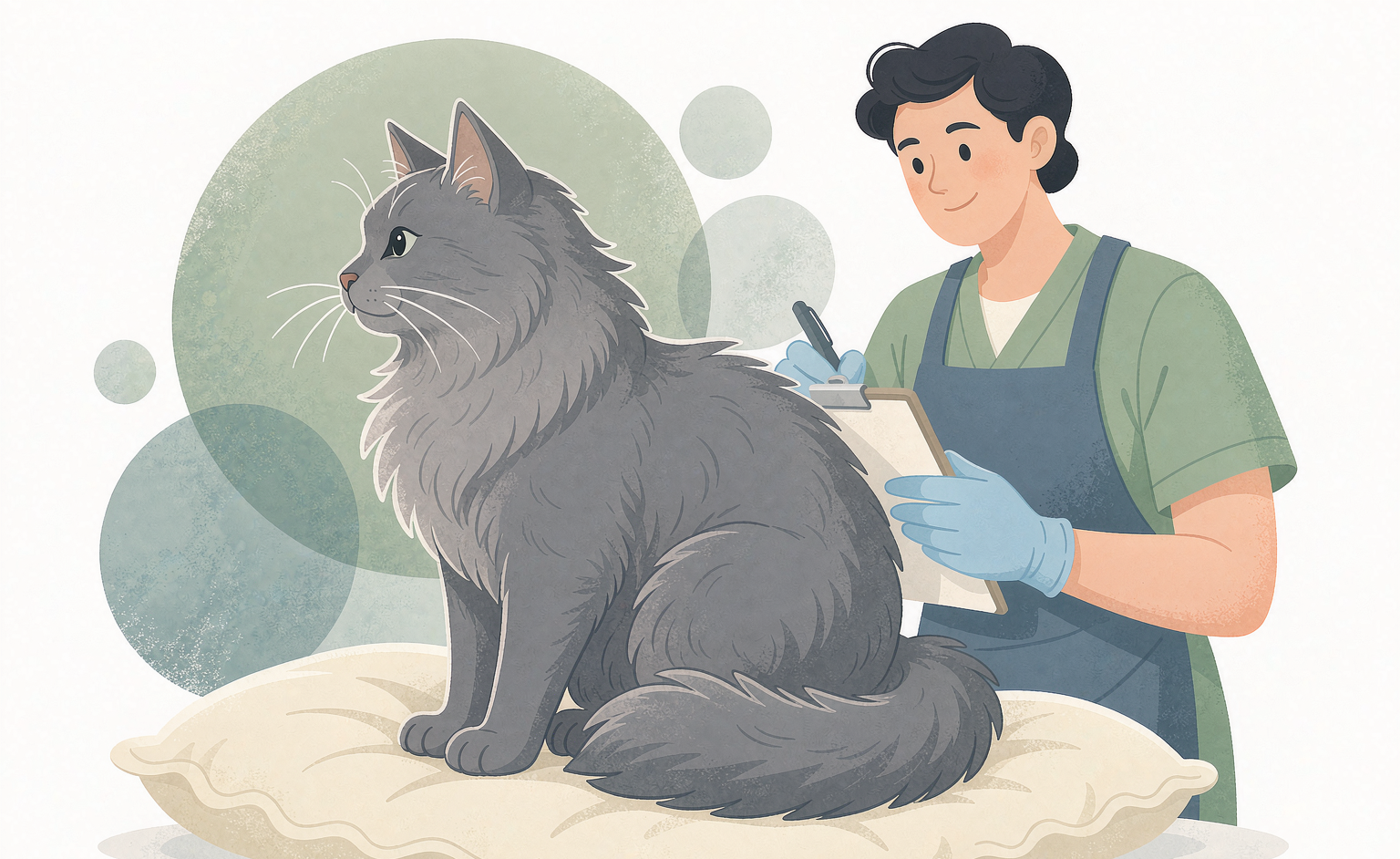
Cats have two anal sacs, one on each side of the anus, that hold a foul-smelling secretion used for scent marking. Unlike dogs, cats rarely develop impaction from failure to empty, and routine manual expression is not recommended because the sacs sit deeper, the ducts are more delicate, and the risk of damage exceeds the benefit. Cats do develop anal sac problems: impaction, infection, abscess, and inflammation, all of which cause scooting, licking, pain, and sometimes a visible swelling. The important feline-specific concern is anal sac adenocarcinoma, a malignant tumor that is far more common in cats than in dogs and demands prompt veterinary evaluation of any persistent swelling or blood-tinged discharge. Never squeeze a cat’s anal glands at home without veterinary instruction.
—
The Anatomy, and Why It Changes the Advice
Dogs and cats both have paired anal sacs positioned at roughly the four and eight o’clock positions around the anus, each drained by a small duct opening just inside the anal margin. That is where the similarity ends.
Cats’ sacs sit deeper and are smaller. In dogs, particularly small breeds, the sacs are relatively superficial and can be palpated and expressed by pressing from the outside through the skin. In cats, they are positioned deeper in the tissue with less accessible openings, and the ducts are finer. The mechanics of external expression that work in a dog do not translate, and pressing harder to compensate is how damage happens.
Cats’ ducts open differently. The feline duct opening is a narrow slit, and it is more prone to being occluded by thickened secretion. This matters for the type of disease cats get.
The secretion differs in composition. Feline anal sac secretion is a complex mix of fatty acids, cholesterol, and sulfur compounds, and it is used for scent communication in a species that relies far more heavily on chemical signaling than dogs do. Its composition makes it prone to thickening and plugging rather than the simple overfilling pattern common in dogs.
Cats are fastidious about the area. A cat who is uncomfortable back there will lick constantly, and a cat who is in pain will stop grooming. The behavioral signs are often the first clue, and they are easy to miss because cats hide discomfort well.
The practical upshot: in dogs, a large share of anal sac problems are “the sac is full and nobody emptied it.” In cats, that pattern is uncommon. When a cat has a problem, there is usually a specific cause, and it is worth finding.
The Conditions That Actually Affect Cats
Impaction. The sac fills with thickened, paste-like secretion that cannot drain. Signs are scooting, excessive licking of the rear, and sometimes visible swelling. In cats, impaction often follows a bout of diarrhea or a period of soft stool, because normal firm stool helps express the sacs, or follows inflammation that narrows the duct. It is uncomfortable and needs veterinary attention, but it is the least serious of the group.
Anal sacculitis. Inflammation of the sac lining, usually with bacterial involvement. The sac becomes painful and swollen, the secretion becomes purulent, and the cat may show systemic signs like reduced appetite and lethargy. Cats with underlying skin disease, especially allergic dermatitis, seem predisposed, likely because the same inflammatory process affects the gland lining as affects the skin.
Abscess. Infection progresses to a walled-off pocket of pus. This is painful, and the cat may be reluctant to sit, may cry when the tail area is touched, and may run a fever. An abscess can rupture through the skin beside the anus, producing a draining tract that looks dramatic and, confusingly, often makes the cat feel better immediately because the pressure is relieved. A ruptured abscess is not resolved; it is a draining wound connected to an infected sac and needs veterinary management.
Anal sac adenocarcinoma. This is the condition that makes feline anal sac disease genuinely different, and it deserves its own emphasis. Anal sac adenocarcinoma is a malignant tumor of the apocrine glands associated with the sac, and while it occurs in dogs, it is proportionally more common and behaves more aggressively in cats. It is also associated with a specific paraneoplastic syndrome: hypercalcemia, where the tumor produces a hormone-like substance that raises blood calcium, causing increased drinking and urination, lethargy, weakness, and in severe cases kidney damage and cardiac arrhythmias. In cats, this hypercalcemia association is clinically important and is one reason routine bloodwork in an older cat with an anal mass matters.
The clinical lesson is blunt: an anal sac mass in a cat is not something to monitor. It should be sampled and staged promptly, because the difference in outcome between an early and a late diagnosis is substantial.
Perianal fistulas and other skin disease. Less common in cats than dogs, but inflammatory conditions around the anus can involve the sac region and mimic sac disease.
The Signs, Translated
Cats do not scoot the way dogs do, and this is why feline anal sac disease gets missed. A dog scoots across the rug in front of the whole family; a cat licks in private and hides under the bed.
Watch for these:
- Excessive licking or biting at the base of the tail, the rear, or the hind legs. A cat grooming that area more than usual, or developing a bald or inflamed patch there, is the feline equivalent of scooting.
- Scooting, which some cats do, though less dramatically than dogs.
- Reluctance to sit, or sitting oddly. A cat who suddenly prefers to stand, or sits with the tail tucked oddly, may be avoiding pressure on a painful area.
- Crying or flinching when the tail base is touched. This is a significant sign and one owners often dismiss as “he’s just sensitive.”
- A visible swelling or a draining hole beside the anus. Abscess or tumor territory. Prompt veterinary attention.
- Blood or pus on the bedding or in the litter box area.
- Straining to defecate, or avoiding the litter box entirely. A painful rear makes cats associate the box with pain, and litter box avoidance is a common and misread consequence.
- For the tumor specifically: increased thirst, increased urination, lethargy, weakness. These are hypercalcemia signs and warrant bloodwork promptly.
The behavioral framing matters for another reason. A cat who stops using the litter box because defecation hurts gets labeled as having a behavioral problem, and the actual medical cause goes untreated for months. Our cat constipation guide covers the litter box signs on the gut side, and our why is my cat not eating guide covers the appetite loss that often accompanies feline pain.
What a Vet Does
The examination starts with palpation of the perianal area under gentle restraint, and in cats this is often done with sedation because the area is painful and the anatomy is not forgiving.
Rectal examination lets the vet palpate the sacs from inside, which is the reliable way to assess feline anal sacs. This is not something an owner can replicate at home.
Cytology of expressed material, examined under a microscope, distinguishes inflammation from infection and shows whether bacteria or inflammatory cells dominate.
Fine needle aspirate of any mass is the key step for ruling out adenocarcinoma. It is a quick, minimally invasive procedure and the results change the plan substantially.
Bloodwork, including calcium, is standard for any cat with an anal mass or with the thirst and lethargy pattern described above. Hypercalcemia is the finding that links an anal mass to the rest of the clinical picture.
Imaging, either ultrasound or advanced imaging, is used for staging if a tumor is confirmed, and to assess whether the sac disease has extended.
Treatment depends entirely on the finding. Impaction gets the sac emptied and the underlying stool problem addressed. Sacculitis gets the sac flushed and antibiotics. Abscess gets drainage, flushing, antibiotics, and often pain control. Adenocarcinoma gets surgical removal and oncology input, with the specific approach depending on staging.
Why Home Expression Is the Wrong Default for Cats
The internet’s cat anal gland tutorials are, in the vast majority of cases, bad advice, and the reasons are worth stating plainly.
The anatomy does not cooperate. You cannot reliably locate and empty a feline anal sac by pressing through the skin the way you can with many dogs. Attempting it means pressing hard on structures you cannot feel properly, in an area full of delicate tissue.
The tissue damages easily. The ducts are fine, the sac wall is thin, and rough handling can rupture the sac, spread infection into surrounding tissue, or create scarring that narrows the duct and causes the very problem you were trying to prevent.
Pain makes it dangerous. A cat in pain will bite and struggle, and the combination of a struggling cat and a hand applying pressure to a delicate area is a recipe for injury to both parties.
It treats a symptom without the cause. Even if you successfully empty an impacted sac, the reason it impacted remains. In cats, that reason is frequently a stool quality problem, an inflammatory condition, or a mass, and none of those are addressed by squeezing.
The exception, stated carefully. Some cats with a documented history of recurrent impaction are taught to their owners by their veterinarian, who demonstrates the technique and confirms the cat’s anatomy is appropriate for it. That is a specific arrangement made with a specific cat, and it is not a general practice. For every other cat, the correct answer to “should I express my cat’s anal glands at home” is no.
Where Stool Quality Fits
In both species, normal firm stool pressing against the sacs during defecation is the mechanism that keeps them draining. Cats with chronic soft stool, diarrhea, or irregular bowel movements lose that mechanical help, and the sacs are more likely to become impacted.
This is why the maintenance conversation for a cat with recurrent sac issues usually turns to digestion. Firm, well-formed stool is the outcome of a gut that ferments fiber properly and absorbs water normally, and cats on all-dry diets with low water intake are working against both.
Our 12 Billion CFU Multi-Strain Probiotic Soft Chews combine eight probiotic strains, four prebiotics including inulin and FOS, five digestive enzymes, and a pumpkin and flaxseed fiber blend, and the feeding guide includes cats. The prebiotic fibers support the bacteria that ferment soluble fiber, and the fiber blend supports stool consistency, which is the mechanical lever described above. It is daily gut support, not a treatment for anal sac impaction, infection, abscess, or any tumor, all of which need veterinary diagnosis and treatment. Used as the maintenance layer after a vet has addressed the acute problem, it works on the mechanism that keeps the sacs draining.
Frequently Asked Questions
Do cats need their anal glands expressed?
Most cats never need it. Feline anal sacs sit deeper than canine ones with more delicate ducts, and routine manual expression is not recommended because the risk of damage outweighs the benefit. Cats who repeatedly impact may be taught home expression by their vet, but that is a specific arrangement for a specific cat, not general practice.
How do I know if my cat has an anal gland problem?
Watch for excessive licking or biting at the tail base and rear, scooting, reluctance to sit, crying when the tail area is touched, a visible swelling or draining hole beside the anus, straining to defecate, or sudden litter box avoidance. Cats hide discomfort, so a change in grooming behavior in that area is often the earliest sign.
Why do cats get anal gland problems?
Usually because the secretion thickens and the narrow duct plugs, often following soft stool or diarrhea that fails to express the sacs naturally. Underlying skin inflammation or allergy can also affect the gland lining. In cats, a persistent mass or swelling must be evaluated for anal sac adenocarcinoma, which is proportionally more common and more aggressive in cats than in dogs.
Can I express my cat’s anal glands at home?
Not unless your veterinarian has examined your cat and specifically taught you the technique. Feline sacs sit deeper and cannot be reliably reached by external pressure, the ducts damage easily, and pressing hard on a painful area risks rupture, infection spread, and injury to both you and the cat.
What is anal sac adenocarcinoma in cats?
A malignant tumor of the glands associated with the anal sac. It matters in cats for two reasons: it is proportionally more common and behaves more aggressively than in dogs, and it frequently causes hypercalcemia, raising blood calcium and producing increased thirst, increased urination, weakness, and lethargy. Any anal mass in a cat should be sampled promptly rather than monitored.
What are the signs of high calcium from an anal tumor in a cat?
Increased drinking and urination, lethargy, weakness, reduced appetite, and in severe cases vomiting, constipation, and heart rhythm changes. These signs are easily attributed to kidney disease or old age, which is why bloodwork including calcium is important in any older cat with an anal mass or unexplained thirst.
When should I take my cat to the vet for an anal gland problem?
Same day if there is a visible swelling, a draining hole, blood, obvious pain when sitting, fever, or loss of appetite. Within a day or two for persistent scooting or licking that does not settle. Any mass or persistent swelling beside the anus warrants prompt evaluation and sampling, not observation.
Bottom Line
Cats have anal glands, but they do not have the dog’s anal gland problem, and the internet’s dog-derived advice about routine expression does not transfer. Feline sacs sit deeper, their ducts are finer, and the sensible default is to leave them alone. When something does go wrong, the signs are quieter than in dogs, which is why a cat who suddenly grooms the base of the tail obsessively, cries when touched there, or stops using the litter box deserves a veterinary look rather than a behavioral explanation. The one thing worth remembering above all the rest is that an anal mass in a cat is not the same proposition as in a dog. It carries a higher chance of malignancy and a specific association with high blood calcium, and it should be sampled, not watched.
Disclaimer
This article is for general education only and is not veterinary advice. Anal sac disease in cats can indicate serious conditions including malignant tumors, and only veterinary examination, cytology, and bloodwork can distinguish them. Do not attempt to express your cat’s anal glands without veterinary instruction. Seek prompt care if your cat has a swelling or draining tract beside the anus, is in pain when sitting, has blood or pus in the area, or shows increased thirst, urination, weakness, or appetite loss. Dietary supplements are not intended to diagnose, treat, cure, or prevent any disease, and you should consult your veterinarian before starting any supplement.
References
- Merck Veterinary Manual. “Disorders of the Anal Sac in Cats.”
- VCA Animal Hospitals. “Anal Sac Disease in Cats.”
- Veterinary Partner (VIN). “Anal Sac Tumors in Cats.”
- Withrow and MacEwen’s Small Animal Clinical Oncology. “Anal Sac Adenocarcinoma.” Elsevier.
- Cornell Feline Health Center, Cornell University College of Veterinary Medicine. “Anal Sac Disorders in Cats.”